A primer on the potential impacts of Trump's tariffs on the North American seafood industry
Tariffs would be terrible.
Aquaculture economists agree that imposing tariffs will shift a long-established free trade partnership in North America. It will likely trigger more inflationary pricing throughout the seafood sector’s supply chain. However, when it comes to predictions on how this will impact the fish farmer, the vision remains unclear.
Sylvain Charlebois, senior director of Agri-Food Analytics Lab at Dalhousie University, said for a long time, North America has enjoyed a close trade relationship that has allowed the continent to be more resilient to macroeconomic shocks in the global food market. For example, when Russia’s invasion of the Ukraine triggered a global wheat shortage in 2022, the impact on North American supply was halved (10-11 percent) compared to other continents, like Europe and Asia (more than 20 percent).
However, Charlebois admits that this trade war could shift that paradigm.
Advertisement
“I always considered North America to be a food security bubble,” he says. “However, when you have someone in the White House who’s playing around with borders like that, it really can jeopardize the established bubble that we have. And we’re seeing that right now.”
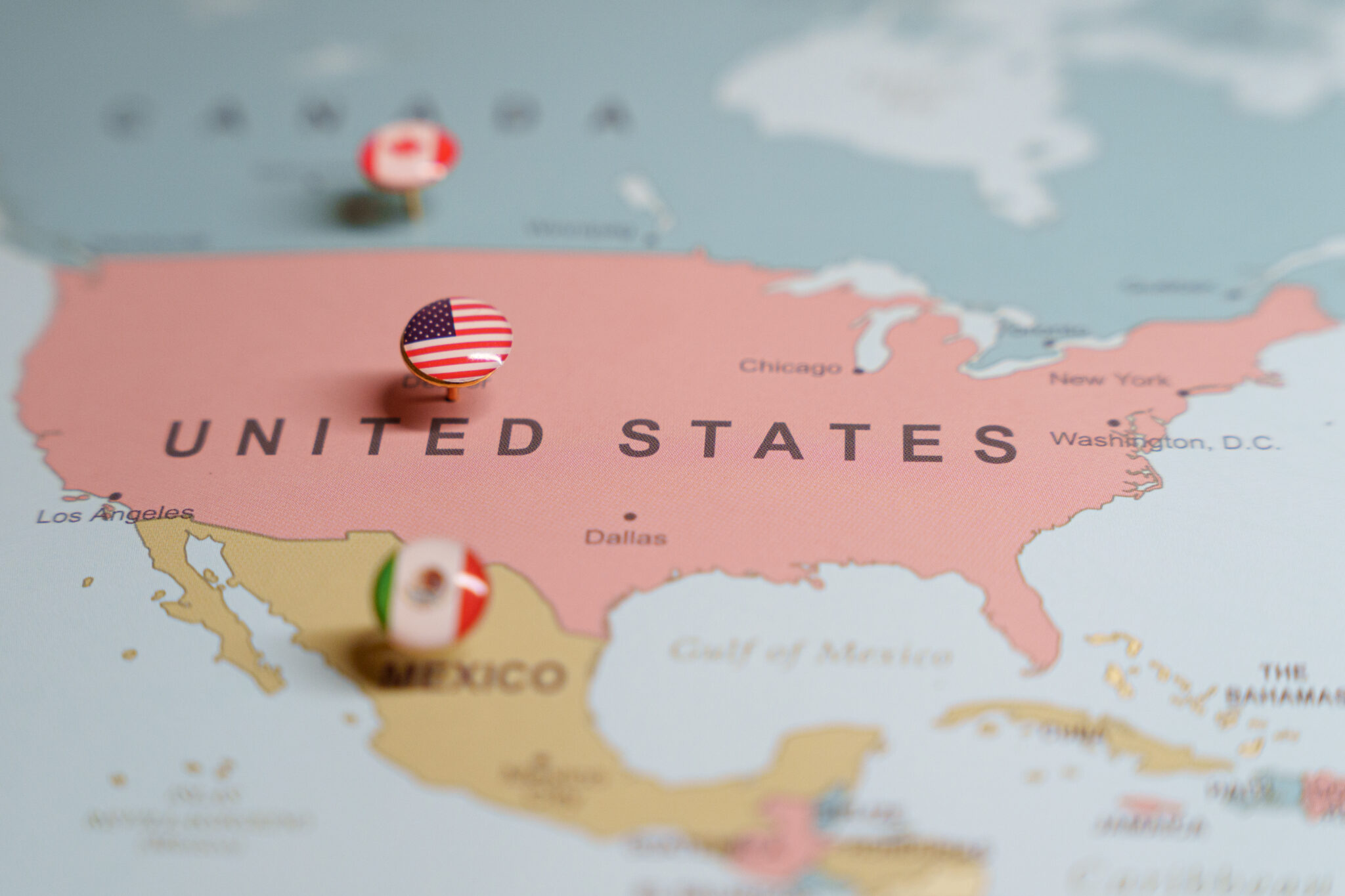
On Feb. 1, U.S. President Donald Trump signed an executive order to impose tariffs on imported goods from Canada, Mexico, and China. The government outlined that these emergency measures are in response to “extraordinary threats” over immigration and drug enforcement policies.
Until the crisis is alleviated, the U.S. government says it will implement:
- 25 per cent tariffs on all imports from Canada and Mexico;
- 25 per cent additional tariffs on Canadian steel and aluminum;
- 10 per cent tariffs on all energy imports from Canada;
- 10 per cent tariffs on all imports from China.
Tariffs on Chinese goods took effect on Feb. 2, resulting in retaliatory tariffs from Beijing on select U.S. coal, natural gas, crude oil, farm equipment, and big-engine vehicles. Canadian and Mexican leaders negotiated a 30-day pause until March 4, promising increased security and oversight at its borders.
Advertisement
North American leaders are using the reprieve to continue trade negotiations, but specific impacts are harder to predict while policies have not yet been solidified.
“Tariffs are terrible, for sure, for business. What’s worse is the uncertainty because you’re always on the edge and trying to figure out what’s going to happen,” says Charlebois. “But I think that over time, because of Trump’s games, because they are games, my guess is that the entire North American food ecosystem will learn to cope with uncertainty.”
How tariffs work
A tariff is a government-imposed tax on goods and services from a foreign country.
Countries have primarily used it in international trade to protect domestic industries by making foreign products more expensive. It can also be used as a retaliatory tactic against unfair trade practices with foreign trade partners. Tariffs can also be a source of government revenue. However, many economists agree that the costs are largely passed on to consumers.
Advertisement
The tariffs that will be imposed by the United States will be paid by American importers. To protect its profit margins, the importer may raise its retail price for the consumer to compensate for the extra costs of bringing foreign goods to the U.S. market.
The exporting country will also be impacted. Exporters may cut prices in an effort to hold on to their market share and mitigate sales slumps caused by increased prices.
“Some species will be severely impacted, like lobster,” says Charlebois. “Lobster in Canada, if they get hit by a tariff going to the U.S., Canadians may actually see some surpluses of certain products. And therefore, you want to make American products less attractive to promote your own products. Basically, I think that’s what Ottawa had in mind.”
Charlebois is also a professor in food distribution and policy in the Faculties of Management and Agriculture at Dalhousie University in Halifax, N.S. Before his role as senior director at the university’s Agri-food Analytics Lab, he co-founded University of Guelph’s Arrell Food Institute.
He has authored five books on global food systems and published more than 500 peer-reviewed journal articles. He also sits on several boards, including the Global Food Traceability Centre in Washington, D.C. and the Canadian Food Inspection Agency in Ottawa, Ont. He also co-hosts “The Food Professor” podcast with Michael LeBlanc.
“If Canada retaliates, which I think they would, they would probably aim at seafood,” says Charlebois. “It wasn’t on the list we saw on (Feb. 2) which I thought was interesting, but I wouldn’t be surprised if there’s some focus for the second wave… I was expecting fish and seafood to be on that.”
Seafood trade in numbers
Imports take up the majority market share of seafood supply for the United States.
According to NOAA Fisheries, the United States imported more than 79 percent of the seafood Americans consumed in 2020. In fact, the data shows that seafood imports have been trending upward for the past three decades.
The U.S. Department of Agriculture (USDA) and its Economic Research Service says that the value of seafood imports exceeded exports in 2023, expanding the trade deficit to about US$20.3 billion. The increase of imports puts pressure on domestic seafood prices and limits revenue for U.S. aquaculture operations.
“Our seafood trade deficit in the U.S. is huge,” says aquaculture economist, Carole Engle. “Our aquaculture farmers in the U.S. are competing in a large seafood market, but it’s dominated by imports, and they’re at a price disadvantage generally.”
Engle has studied aquaculture marketing and economics for more than 40 years. She is a prolific author, researcher, and educator on the subject, including five books, 168 journal articles, 38 editorial articles, 50 book chapters/monographs, and 93 different grants and contracts.
Engle believes that U.S. tariffs could make U.S. aquaculture products more competitive in a market dominated by lower priced imports. Several studies show that American consumers more readily substitute among different types of seafood compared to its European counterparts.
“What it means is somebody who tends to eat salmon, and buy salmon, because it’s less expensive than maybe some other kinds of seafood,” Engle explains. “The price of salmon goes up, they’re going to want to eat seafood, and they’re likely to choose a different kind of seafood…. It again, comes down to specifics, but the majority of consumers tend not to be really focused on one specific kind of fish that they want to eat.”
China is the United States’ biggest seafood export. The USDA’s Foreign Agricultural Service says that China accounted for US$1.04 billion in export value in 2023. The U.S.’s top seafood products for China are crab, lobster, oyster, and various fish.
Canada and the European Union tie for second place with an estimated US$1.03 billion in American seafood exports each.
“Unbeknownst to some people, over half of all the salmon we eat (in the U.S.) comes from Chile, and then maybe another third of the salmon we eat comes from Norway,” said Engle.
“The next one is Canada. So if there are tariffs on that, but that’s a smaller volume, and the volume we grow in the United States is quite small… It could spur some increase in U.S. salmon production. And I would expect Maine is in the best situation to respond to that, with increased prices of salmon, but it’s not going to replace the huge volume coming in from Chile. That would take long term investment for that to happen.”
Canada is the fifth largest fish and seafood exporter in the world and the United States is by far, Canada’s largest export market for lobster, crab, salmon, halibut, and mussels. Agriculture and Agri-Food Canada estimated that the United States took up 70.3 percent of Canada’s seafood export in 2021.
China is Canada’s second largest export destination, taking up 12.6 percent share, mainly providing lobster, crab, and shrimp. Other species include clams, halibut and geoduck.
The United States is also a big seafood customer for Mexico. Trend Economy data suggests that in 2023, Mexico exported 37 percent or US$18.4 million worth of fish and seafood to the United States. Korea is listed as the top customer for Mexican seafood with 38 percent or US$18.6 million of exports in 2023.
Growing local
With a potential trade war looming, consumers grew more concerned about how this would impact their household grocery bills.
A “Buy Canadian” movement emerged and has been endorsed by several Canadian officials. So far, Charlebois believes this rising sentiment to support local food might just be the silver lining to these ongoing tariff negotiations.
“Building awareness around where food is coming from is a plus. And you want embargoes, you want boycotts, you want a Donald Trump to piss everyone off, to get people to really look into some of these things, which is great,” he says. “But it’s not really a cut and dry thing.”
Charlebois explains domestic business can benefit from consumers becoming more discerning about where their food comes from, but consumers must also understand that food systems in North America are more dynamic than one might think.
“People are wondering, ‘Okay, what’s Canadian? What’s not?’ And there are different levels of Canadian,” he explains. “Are you looking at processed in Canada? Are you looking for ingredients in Canada? Are you looking for the brand from Canada? Are you looking for that company that’s Canadian that sells it to you, which would exclude Walmart and Costco?”
Engle says this growing support for local food products have been on the rise in America, as well, even before talks of tariffed goods.
“What we pick up in consumer surveys is there is a growing preference for buying local,” says Engle. “And we pick that up all across the United States, and some aquaculture producers have really tapped into it. I’ve heard some trout producers say, ‘It’s a real thing. They want our fish, and they wait to buy our fish’… And so, having local production in the U.S. and domestic production fits that very nicely.”
Charlebois and Engle agree that these shifting trade relationships being negotiated between the United States, Canada, and Mexico could present some interesting opportunities for fish farmers. Although it might be too soon to predict how the aquaculture industry will be specifically impacted, farmers must stay focused on the business.
“My guess is that the entire North American food ecosystem will learn to cope with uncertainty,” says Charlebois. “I do think that Trump will continue to use tariffs as a weapon. I don’t think he’s actually going to roll out tariffs, to be honest. He’ll be looking for some concessions because he can. And I think you need to just focus on the business. Don’t focus on the noise.”
As for predictions about the ongoing negotiations, Charlebois recently visited Mexico and he believes that Canada has something to learn from leaders there.
“My recent visit to Mexico provided insight into how they are responding to these threats. Officials and industry leaders there are actively engaging in negotiations and exploring alternative measures to address the concerns behind the proposed tariffs. If they can present viable concessions or assurances, it could defuse the situation before March,” he says.
Related
US consumers: pawns in the US-China trade war ‘Implement a ban’: U.S. congressmen concerned about shrimp from India
Tags