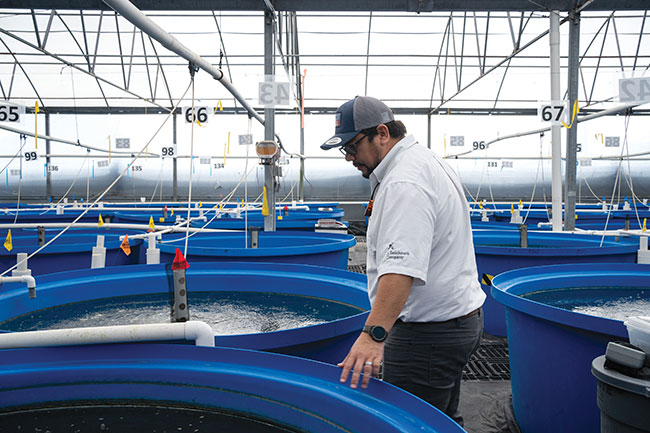
Tilapia is one of the world’s most important food fish species and is widely cultured in tropical and subtropical regions. Today, tilapia is farmed in more than 140 countries, with China remaining the leading producer, followed by Indonesia, Egypt, Brazil, Thailand, and several emerging producers across Africa, Latin America, and the Middle East.
However, disease outbreaks remain one of the biggest challenges in tilapia farming. We have all heard the phrase commonly associated with aquaculture: “Prevention is better than cure.” This is especially true in fish farming. Prevention remains one of the most effective tools for disease management, but the strategies used for prevention are equally important.
What are the key challenges?
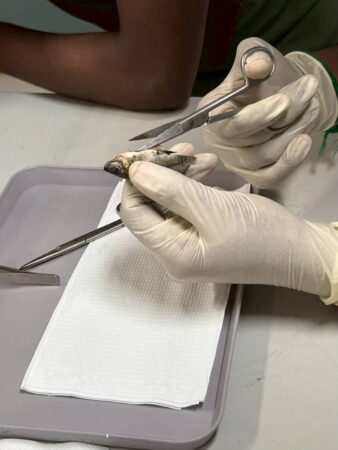
Several bacterial and viral diseases continue to threaten tilapia aquaculture. Among the most important are Tilapia Lake Virus (TiLV), streptococcosis, and Aeromonas infections, along with various secondary opportunistic pathogens that worsen mortality during outbreaks. Farmers commonly use probiotics, functional feeds, organic acids, and essential oils as preventive tools. While these approaches may improve overall health, they often fail to provide complete protection during severe disease outbreaks. As a result, antibiotic use continues to increase, raising serious concerns regarding antimicrobial resistance (AMR), environmental sustainability, and food safety.
The risk from AMR
Recent global reports predict that antimicrobial resistance could become one of the leading causes of death in the future, potentially exceeding mortality from several major diseases. This highlights the urgent need to reduce unnecessary antibiotic usage in aquaculture. For this reason, vaccines are increasingly being recognized as a sustainable solution for disease prevention in fish farming.
Understanding fish vaccines
Unlike shrimp, finfish possess adaptive immune memory, making vaccination a practical disease prevention strategy. The immune system of tilapia can develop specific memory responses against pathogens, helping fish resist infections under farm conditions. Several types of vaccines have been developed and tested in aquaculture:
- Inactivated vaccines – prepared using killed pathogens;
- Live attenuated vaccines – developed from weakened pathogens with reduced pathogenicity;
- Protein or subunit vaccines – using specific proteins from pathogens to stimulate immunity;
- DNA vaccines – using genetic material from pathogens to induce immune responses.
Among these, whole-cell inactivated vaccines remain the most commercially used in aquaculture because they are comparatively safer, easier to produce, and cost-effective.
Would You Like to Know How Whole-Cell Inactivated Vaccines Are Produced? Let’s Explore the Process in a Simple Way
Vaccine production requires specialized laboratory work and careful pathogen selection. Choosing the correct pathogenic strain is one of the most important steps. For example, streptococcosis is one of the most serious bacterial diseases in tilapia, capable of causing mortality rates of up to 50-60 per cent during outbreaks. Identifying highly virulent strains is therefore critical before developing a vaccine.
The general production process includes:
- Isolation and culture of the pathogen;
- Inactivation using heat or chemicals such as formalin;
- Sterility testing to confirm complete inactivation;
- Centrifugation and collection of bacterial pellets;
- Dilution and formulation of the vaccine.
The process may sound simple, but vaccine development requires extensive validation and quality control before field application.
Validation and efficacy testing
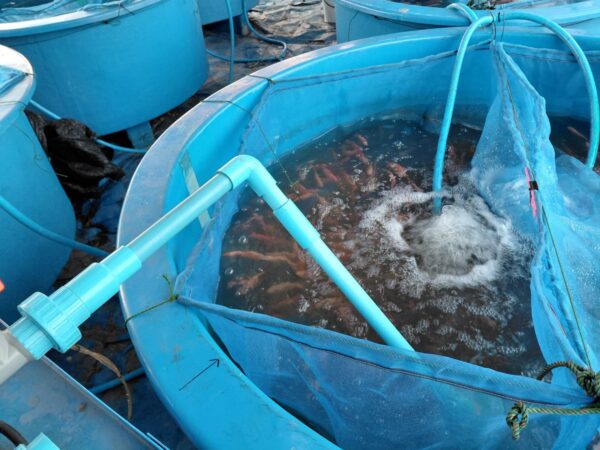
Before commercial use, vaccines must undergo both laboratory and farm level testing. Initial pilot trials are conducted to determine whether vaccinated fish develop stronger immune responses. Fish are vaccinated and monitored over time, with immune parameters such as immunoglobulin levels (IgM) evaluated at regular intervals. After confirming immune stimulation, vaccinated fish are challenged with the target pathogen to determine whether mortality is reduced. Successful vaccines are then further evaluated under real farm conditions before commercial adoption.
Is a single strain enough?
This remains an important question in fish vaccination. Aquatic environments are highly complex and fish are continuously exposed to multiple bacterial species and opportunistic pathogens. Because of this, vaccines targeting a single strain may not always provide broad protection. To overcome this challenge, researchers are increasingly developing multivalent vaccines that contain multiple pathogenic strains. Several studies have reported promising results in tilapia using these broader spectrum vaccines.
Autogenous vaccines: a new opportunity?
Autogenous vaccines are custom made vaccines developed from pathogens isolated directly from local farm outbreaks. Compared to commercial vaccines, autogenous vaccines generally involve fewer regulatory barriers and may provide better protection against locally circulating strains.
In freshwater aquaculture, bacterial serotypes can rapidly change over time. By the time a commercial vaccine completes development and regulatory approval, the dominant field strain may already have evolved. Autogenous vaccines help overcome this problem by allowing rapid development of vaccines targeting the specific serotype responsible for outbreaks in a particular region or farm.
This approach may significantly reduce disease spread and improve protection under field conditions. However, adjuvants playing a crucial role for the delivery.
One of the most critical factors in vaccine formulation is the selection of suitable adjuvants. During the rapid growth of salmon vaccination programs in the 1990s, water-in-oil emulsion adjuvants played a major role in improving vaccine performance throughout the production cycle. However, warm-water species such as tilapia require further optimization of adjuvant systems before large-scale commercial application.
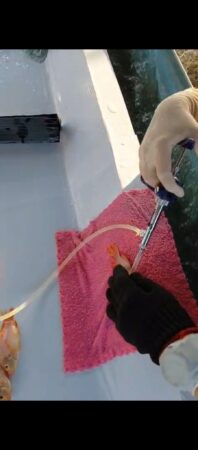
Adjuvants help stimulate stronger and longer lasting immune responses. Recent studies have also explored innovative approaches such as ozone and oxygen nanobubble technologies to improve vaccine effectiveness and immune stimulation in fish (Nguyen Vu Linh et al.,2022). The most common vaccination methods in aquaculture include; Intraperitoneal injection, Immersion vaccination, Oral vaccination through feed. However, a common concern from farmers is: “How can we inject every fish?”
How could vaccination benefit hatcheries?
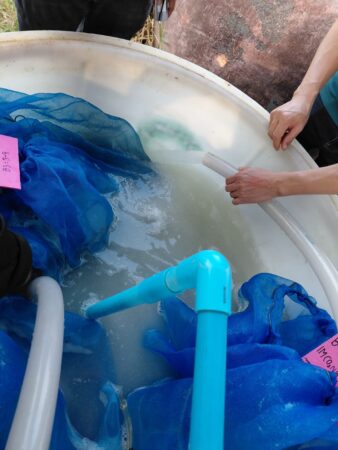
Vaccination strategies in hatcheries are gaining increasing attention, especially in broodstock immunity research. A study by Mai T. et al. (2022) showed that broodstock vaccinated with a heat-killed TiLV inactivated vaccine successfully transferred immunity to eggs and offspring. However, specific immunity against TiLV was no longer detectable in larvae at 7–14 days post-hatching. Although this may not guarantee complete protection, maternal immune transfer could improve early stage resistance in fry and fingerlings. Another promising strategy is immersion vaccination of fry or fingerlings before transportation to grow out farms. This area still requires further research and commercial validation.
Limitations and regulatory challenges
Despite the progress in fish vaccination, several limitations remain:
- Requirement for skilled manpower;
- Difficulties in mass vaccination;
- Emerging new pathogens and serotypes;
- Farmer awareness and acceptance;
- Strict regulatory approvals for commercial vaccines.
These challenges continue to slow the wider adoption of vaccines in tilapia aquaculture.
What about the cost?
Cost-effectiveness remains an important consideration, particularly for small-scale farmers. A recent study by Vinh NT et al. (2026) reported that a heat-killed bivalent vaccine developed against two serotypes of Streptococcus agalactiae achieved a relative percent survival (RPS) of 94.5 per cent under pond conditions, compared to 66.8 per cent in the control group during disease outbreaks. The vaccination program required an additional investment of approximately 3,784 THB per crop, equivalent to 4.83 THB per kg of harvested fish. However, vaccinated fish generated nearly 45 per cent higher revenue and showed improved feed conversion ratio compared to the control group. These findings highlight the potential of autogenous vaccination as a cost-effective strategy for reducing disease-related losses in tilapia farming.
Looking ahead
Autogenous vaccines may become one of the most promising disease prevention strategies in tilapia aquaculture. However, further research is still needed in areas such as hatchery application, broodstock vaccination, adjuvant optimization, and large-scale field implementation. If research institutes, private companies, and farmers work together, vaccination programs could significantly reduce disease outbreaks and antibiotic usage in aquaculture. The fight against disease and antimicrobial resistance cannot rely on treatments alone. Prevention, innovation, and collaboration will shape the future of sustainable tilapia farming.
Dhivagar Pugazhenthi is currently pursuing a Master’s degree in Aquaculture and Aquatic Resources Management at the Asian Institute of Technology, Thailand. My research interests focus on integrating aquaculture nutrition and health strategies. My current research focuses on trace mineral nutrition to improve growth performance and disease resistance in Litopenaeus vannamei. (dhivagarfcri2000@gmail.com)
Acknowledgements
I would like to sincerely thank Professor Dr. Ha Thanh Dong for arranging the farm visit during the vaccination program. All attached images were taken by me during the field visit to Nam Sai Farm, Thailand.
References
Nguyen Vu Linh, Le Thanh Dien, Pattiya Sangpo, Saengchan Senapin, Anat Thapinta, Wattana Panphut, Sophie St-Hilaire, Channarong Rodkhum, Ha Thanh Dong, Pre-treatment of Nile tilapia (Oreochromis niloticus) with ozone nanobubbles improve efficacy of heat-killed Streptococcus agalactiae immersion vaccine, Fish & Shellfish Immunology, Volume 123, 2022, Pages 229-237, ISSN 1050-4648, https://doi.org/10.1016/j.fsi.2022.03.007.
Mai, T. T., Kayansamruaj, P., Soontara, C., Kerddee, P., Nguyen, D. H., Senapin, S., Costa, J. Z., Del-Pozo, J., Thompson, K. D., Rodkhum, C., & Dong, H. T. (2022). Immunization of Nile Tilapia (Oreochromis niloticus) Broodstock with Tilapia Lake Virus (TiLV) Inactivated Vaccines Elicits Protective Antibody and Passive Maternal Antibody Transfer. Vaccines, 10(2), 167. https://doi.org/10.3390/vaccines10020167
Vinh NT, Dong HT, Turner JK, Senapin S and Turner WA (2026) Back to basics: locally produced vaccines offer a practical alternative to antibiotics for prevention of streptococcosis in farmed tilapia (Oreochromis spp.). Front. Vet. Sci. 13:1740757. doi: 10.3389/fvets.2026.1740757