The cloud of DOGE cuts loomed over Aquaculture 2025, but the industry remains resilient.
I’ve tried many times to write this column in a way that told the truth about the reality that many in the U.S. sector are facing right now. But at the same time, I refuse to risk the individuals who are directly affected.
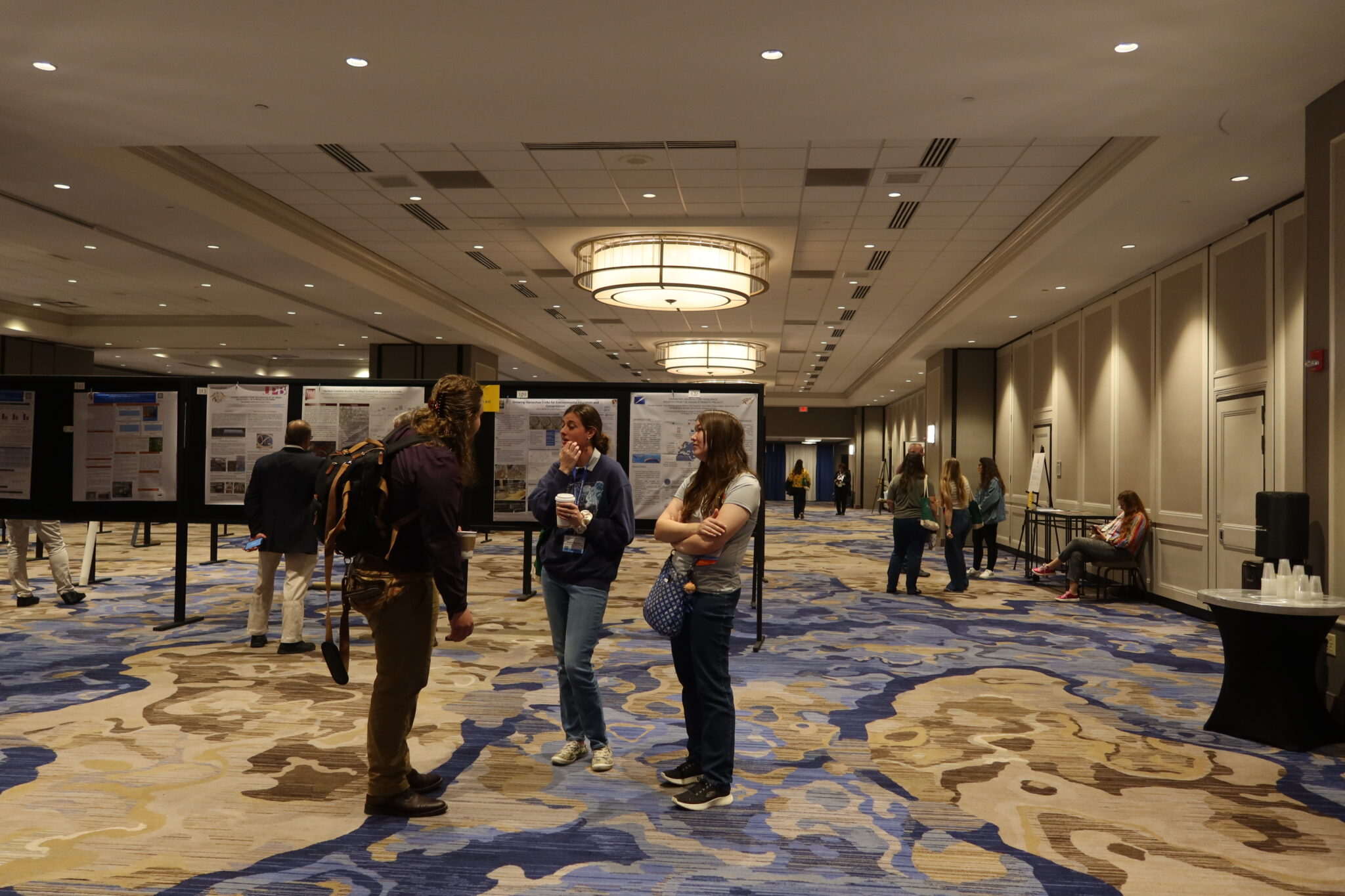
More than a week ago now, I attended the triennial Aquaculture 2025 meeting (March 6-10) in New Orleans, La. Thousands of aquaculturists in North America (and from around the world) gathered together to connect outside of their day-to-day network and talk about how to drive progress in the industry. But even in the lively setting of Mardi Gras, there was more than just an elephant in the room. In fact, the elephant was missing in the room, which was even more worrying.
Hundreds of attendees were not in attendance this year that should have been. Many of them worked for federal agencies, like the United States Department of Agriculture (USDA), the National Oceanic and Atmospheric Administration (NOAA), and the United States Fish and Wildlife Service (USFWS). These agencies have been victim to the recently established Department of Government Efficiency (DOGE).
Although the White House administration denies that Elon Musk is a government employee at DOGE, U.S. President Donald Trump has acknowledged the billionaire businessman as the man in charge of wide-sweeping cuts across several federal agencies. This effort to reduce government spending has resulted in mass layoffs and branch closures across the country and unfortunately, the aquaculture sector was not immune.
Advertisement
An email had gone out on the Friday (Feb. 28) before the triennial meeting to all government staff saying that all travel has been frozen. Many who had already planned on presenting their latest research had been crossed out of the schedule last minute. Many who scheduled meetings with their colleagues from other states were missing.
The past few weeks of DOGE cuts had many people walking on egg shells already. Many attendees were terrified after hearing hundreds of stories from their colleagues in which their jobs, their research, and their funding seemed to have disappeared overnight.
I heard stories of people receiving that dreaded email in the morning and only having less than an hour to pack up their desk before their access to the building was completely revoked. Staff who have bought homes and raised families in one town are now having to commute to the nearest agency office three hours away, in order to keep their work going. There were stories of government-issued credit cards suddenly showing a $1 credit limit which left staff stranded in paid parking lots on government grounds.
Many who were on probationary or temporary contracts have been easy candidates for these DOGE cuts. Even those who have worked in an agency for decades were terminated because they had recently received a promotion that placed them under probationary status as they settled into their new roles. Aquaculture talent was being indiscriminately sacrificed for the sake of the bottom line.
Advertisement
And yet, I would say that the majority of the people that I talked to at the triennial carried a stubborn hopefulness for the future of the aquaculture industry. This meant that they were determined to continue their work in whatever capacity they could.
People were pulling all-nighters, in between poster presentations and trade show networking, to rewrite proposals without including banned words, like “climate change” and “sustainability.” I heard stories of research proposals in which they had to write in “non-male” triploids or describe marginalized minority groups as “underserved communities” in their communications.
These people were going to bend over backwards to continue their work in what seems like impossible conditions. But, they were going to keep going until someone told them they couldn’t anymore.
I also witnessed small moments of resistance at the show. There were people wearing friendship bracelets with “Gulf of Mexico” spelled out in the beading. I saw American colleagues that were apologizing profusely to their Canadian counterparts, even though they were not to blame for tariff threats and trade wars. Some presentations of research and programs that have recently been defunded were still taking place at the show. There were more sessions and presentations about Diversity, Equity, Inclusion and Accessibility (DEIA) than ever before, despite the U.S. government calling these programs “radical and wasteful.”
Advertisement
This is not to say that there were also those who were supportive of the current effort to reset the federal government. They appreciate it as an opportunity to strongly support federal programs that have been beneficial to U.S. aquaculture. This could become a moment of internal restructuring that could rewrite the regulatory barriers that have held industry progress hostage for a long time.
As many fellow millennials have expressed before me, I am sick of living through these unprecedented times. But at the same time, giving up is not an option. Many people at the conference taught me that we must insist on a path forward. As frustrating or terrifying or confusing the current situation is, we cannot disengage. Instead, we must stare unflinchingly and be driven by the fact that aquaculture remains an integral part of a thriving society.
As a Canadian, I reserve sharing my own judgements because democratic change only takes place between the U.S. government and its voters. As a journalist, I knew these truths could not remain hidden and this was the best way I could think of to do it. And most importantly, as a friend to many of you in the industry, your trust is more important than the news and I hope that this shows that your stories are safe with me.
These stories will not be left untold. My inbox is always open at jkodin@annexbusinessmedia.com.
Related