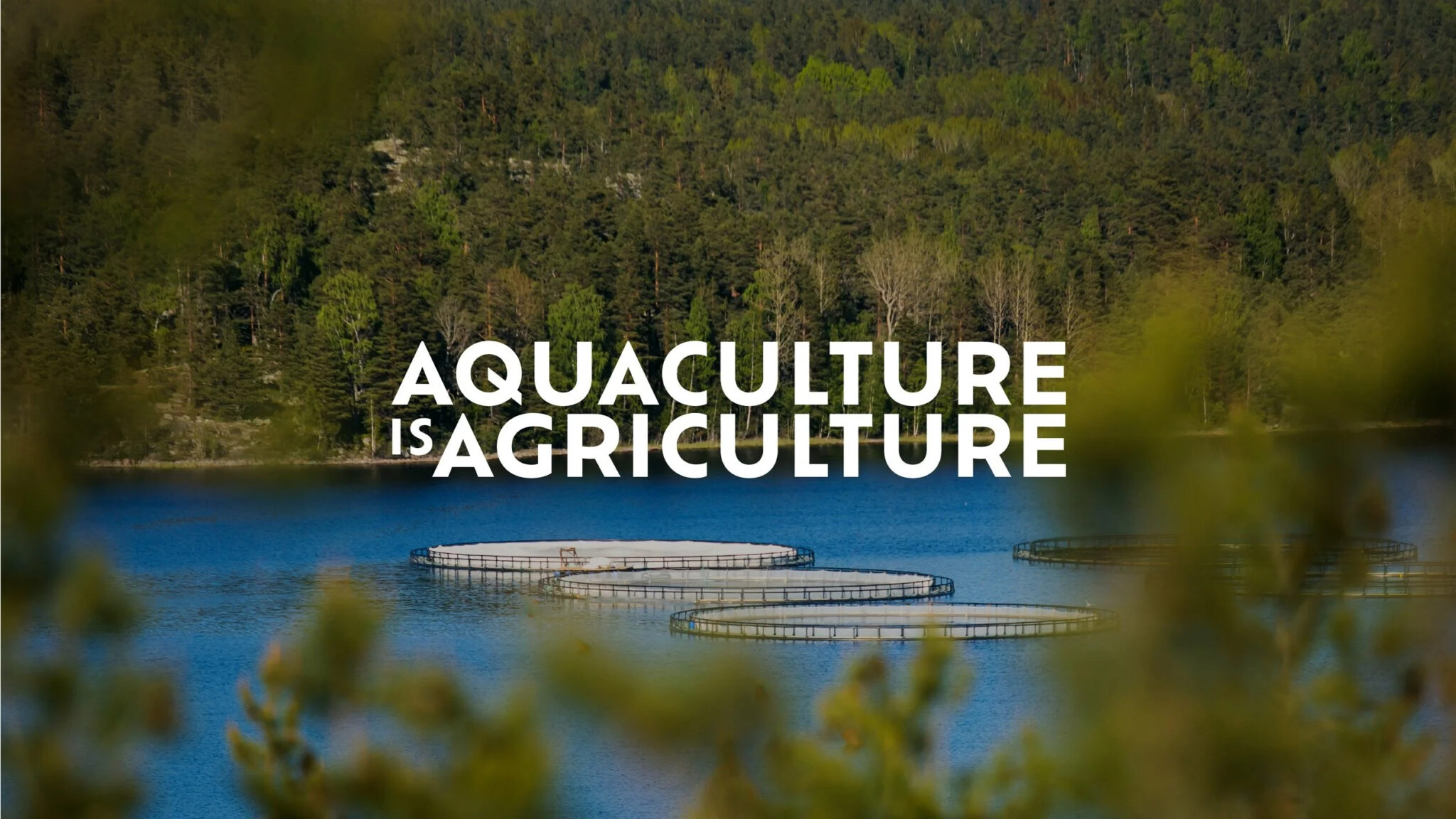
The Canadian Aquaculture Industry Alliance wants the government to recognize the aquaculture industry as critical part of Canada's food production economy. (Photo: CAIA)
There were no surprises for the aquaculture industry when it came to Canada’s federal budget announcement.
With a new government elected this year, Prime Minister Mark Carney also announced his first federal budget for 2025-2026 fiscal year and beyond. The document, which was tabled in the House of Commons on Nov. 4, outlines the Liberal government’s promise to make a “generational investment” in build one of the strongest economies in the G7.
The federal budget, titled “Budget 2025: Canada Strong,” is essentially the government’s statement of its fiscal, economic and social policies. Finance Minister François-Philippe Champagne introduced the budget to the House of Commons and is now to be followed by a four-day debate period before Parliament moves to vote in favour or against the budget.
What does this mean for the Canadian seafood industry? After combing through the 493-page document, Aquaculture North America highlights its potential impact on the seafood industry’s supply chain and related activities.
Small wins to report
There is no direct mention of aquaculture in the federal budget. Rather, the language of the document refers to “fish and seafood” and it is often mentioned in the same phrase as “agriculture and agri-food.
Tim Kennedy, president of the Canadian Aquaculture Industry Alliance, said he and his colleagues didn’t expect much direct mention, especially with the government’s looming plan to shut down B.C. salmon farming by 2029.
“When it comes to the salmon farming in B.C. issue, the budget’s not really the place you would see that. You wouldn’t see a policy change attached to it,” said Kennedy. “But something we’re watching carefully is that our sector really checks the boxes for these nation-building investments that the government wants to do.”
As previously announced earlier this year, Budget 2025 reaffirms a C$75-million commitment over five years to an AgriMarketing Program. Agriculture and Agri-food Canada will spearhead this initiative to support “diversification and promotion of Canada’s agriculture, agri-food, fish, and seafood products into new markets.”
Budget 2025 proposes to double its non-U.S. trade export market from its current C$296 billion to an estimated C$600 billion in the next decade. The government promises to restructure the country’s trade infrastructures to open the economy to non-U.S. markets, especially Europe and the Indo-Pacific region.
The government intends to open a new Strategic Exports Office at Global Affairs Canada. Budget 2025 also allocates C$80.5 million to modernize the Canadian Food Inspection Agency to streamline export processes through digitalisation of export certificate processes and increase efficiencies.
Budget 2025 also makes mention of upgrading airport infrastructure, revitalizing CanExport to support Canadian-owned small and medium businesses and amending the Export and Import Permits Act to restrict importation or exportation of items “in response to actions of another country that harm Canada or to create more secure and reliable supply chains.”
“With global demand for high-quality, nutritious food and plant protein on the rise, Canada is ready to meet the moment: expanding agriculture and agri-food, fish, and seafood exports, adding more value at home, and making export processes faster, more efficient, and more digital to help agriculture producers, harvesters, and processors reach new markets,” the budget writes.
The budget also outlines a review of the Farm Credit Canada Act to require regular reviews of the agri-food sector needs. About C$1 billion in new lending has been earmarked to help reduce financial barriers for the agriculture and agri-food sector.
“We tick all those boxes around sustainability, and Indigenous partnership, and secure food, and innovation technology, so we hope that that’s the case. And we’ll continue to try and clarify that,” said Kennedy.
Big pieces missing
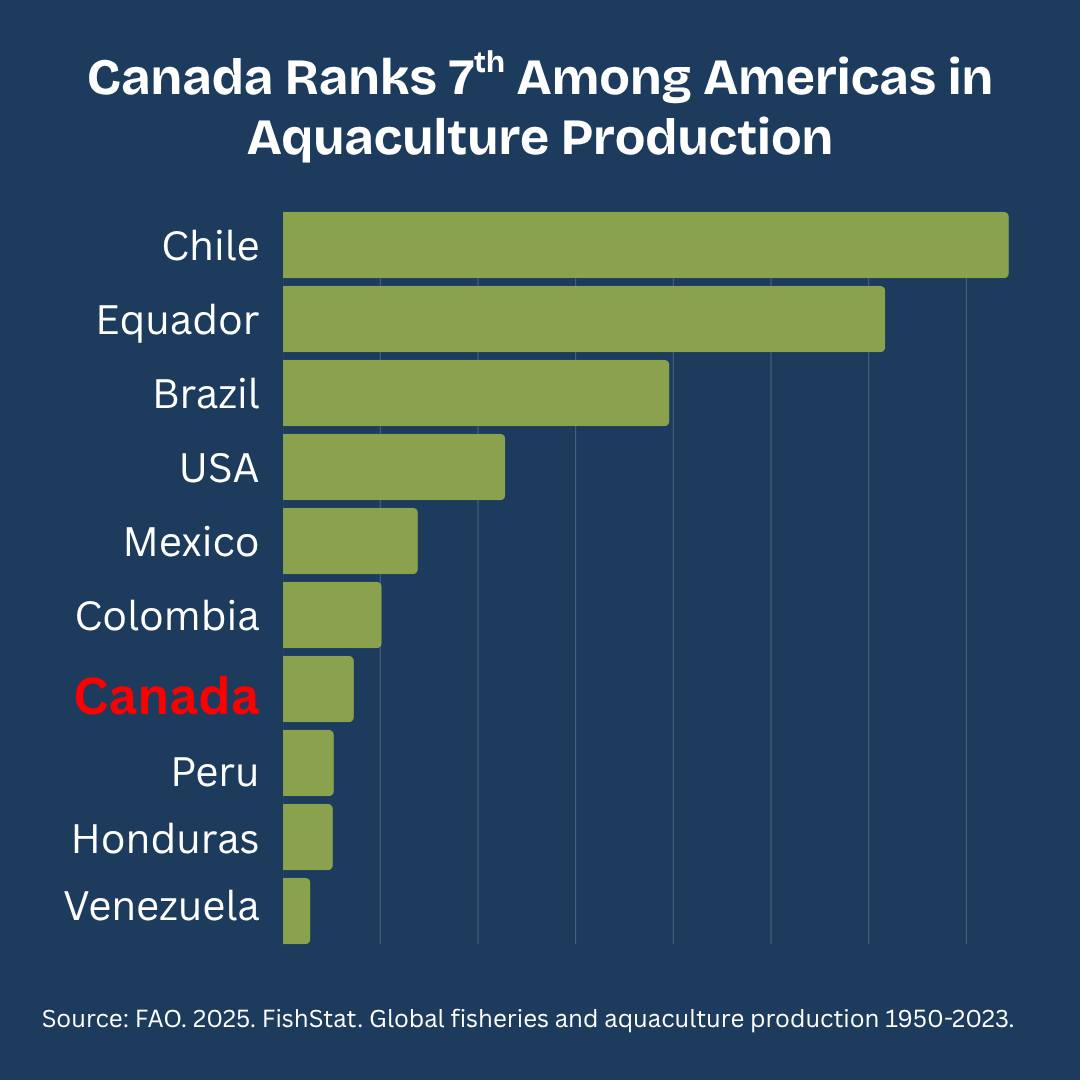
On a macroeconomic level, Kennedy said the government’s bold expansion of Canada’s trade export market is a good thing. However, there are many things that the government must first address for aquaculture.
“The B.C. salmon farming ban, which has constrained us by reducing production at B.C. by 40-50 per cent, and then also the crisis in Atlantic Canada with dermo and MSX disease in the shellfish community… These things are crises that are impacting our very ability to produce food,” Kennedy explained.
“So, it’s nice to think about exporting a lot more food, but we simply can’t. That’s our current crisis. And really, there’s nothing in the budget that’s about addressing that.”
As part of the government’s pre-budget consultations last summer, the Canadian Aquaculture Industry Alliance (CAIA) submitted a list of recommendations on July 31 for review by the Department of Finance.
As part of this year’s submission, CAIA outlines five recommendations:
- The federal policy decision to ban B.C. salmon aquaculture would be “the biggest impediment to the survival of the sector in Canada.” CAIA calls for a “clear, performance-based pathway” that stabilizes investor confidence and a path for future growth of the sector.
- The proposal for the South Coast National Marine Conservation Areas and Marine Protected Areas must be significantly redesigned or withdrawn. The federal government must undertake economic and social impact analyses that achieves sustainable job and economic growth, as well as environmental protection.
- CAIA recommends that the government double funding for the Canadian Shellfish Sanitation Program, co-managed by the Canadian Food Inspection Agency, Environmental and Climate Change Canada, and Fisheries and Oceans Canada.
- Agriculture and Agri-food Canada must take leadership over the development strategy, innovation, and farm-support programs, transitioning this responsibility from Fisheries and Oceans Canada.
- CAIA recommends a pilot program for a Business Risk Management insurance program for Canadian shellfish farmers.
“This is just obviously our key issues that we’ve been advocating for in Ottawa, and some of these are not necessarily budgetary issues. These are more policy issues,” said Kennedy.
“That being said, we can’t even satisfy the Canadian market right now because we don’t have enough food. If we were given the support and the pathway to produce a lot more food in Canada, we could do it. And then we could export it to your nations of interest.”
Science funding cuts
Budget 2025 also promoted “ambitious savings” when it was first tabled this week, up to 15 per cent over the three years.
In the months leading to the budget announcement, Prime Minister Carney warned about austerity measures. Big cuts outlined in the document include reducing the federal public service to 333,000 employees by 2029. Housing, Veterans Affairs, and the Canada Revenue Agency have outlined savings ranging from C$4.1-5.4 billion.
For the aquaculture world, Fisheries and Oceans Canada (DFO) has been tapped to cut $0.5 billion in internal services over four years. This includes the transfer of the Canadian Coast Guard to now fall under the Department of National Defense.
About 15 per cent of savings targets over three years have been earmarked for the DFO, “winding down” research and monitoring activities, which is said to reduce management layers, streamline processes with artificial intelligence, and simplify reviews.
Cyr Couturier is CAIA treasurer and president of the Aquaculture Association of Canada. He recently retired as an aquaculture scientist and academic at the Fisheries and Maritime Institute of Memorial University in Newfoundland. He worries that these budget cuts could mean less research and science-based monitoring in the federal agency overall.
“A cut in the sciences proposed in the budget is not going to help aquaculture,” he said. “In fact, it’s regressive because how are they going to make informed policy decisions without the science?”
Couturier added that in reading the federal budget as it is currently tabled, there is not much for aquaculture right now. However, he also insists that the budget is not the only place where the government could provide this support.
“If the industry was allowed to expand and grow, I don’t see why they can’t. We just need a green light,” he said. “Aquaculture needs a signal from the government to open up the industry and encourage investment, and that’s not going to cost the Canadian taxpayer anything.”