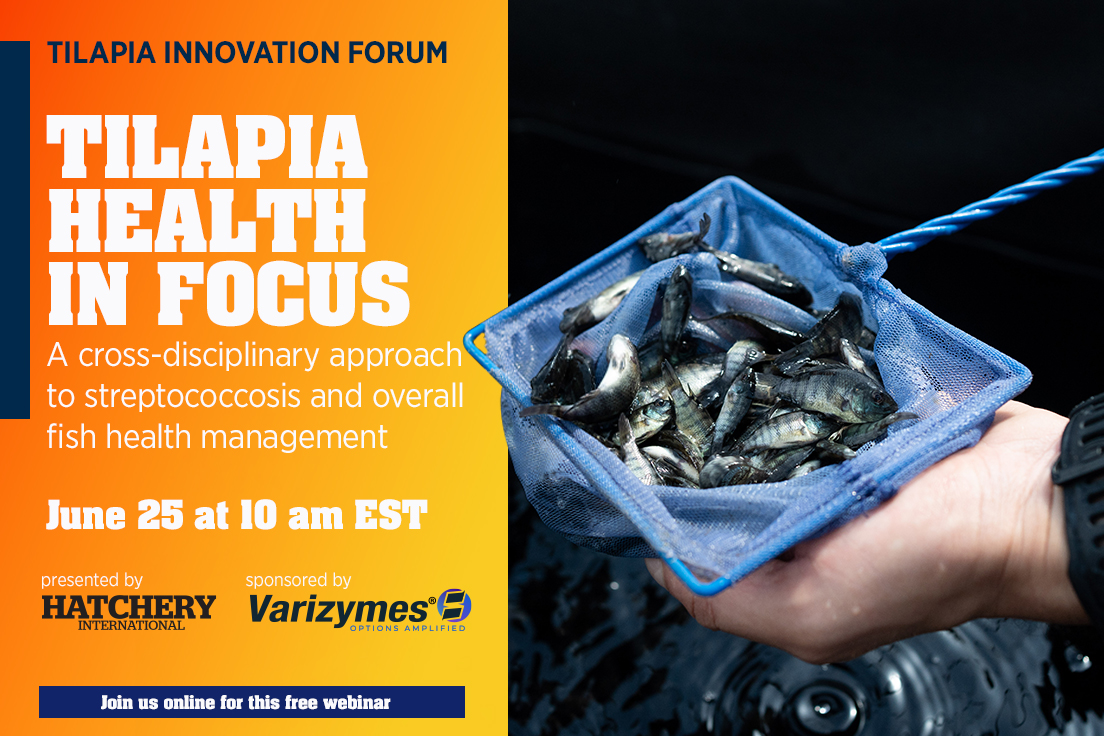
Tilapia health experts from around the world came together on June 25 to share helpful guidance for farmers. Below is a summary of the key takeaways from the live discussions.
The webinar’s featured speakers included:
- Carlos Lopez, commercial director at Spring Genetics (USA)
- Amighty Ricketts, aquaculture specialist & lecturer at University of Agriculture, Makurdi (Nigeria)
- Dhivagar Pugazhenthi, graduate student at the Asian Institute of Technology (Thailand)
Key takeaways
Biosecurity strategies and breeding programs
- Carlos Lopez emphasizes the importance of biosecurity in tilapia culture, particularly in maintaining a bio-secure breeding nucleus.
- He highlights common diseases affecting tilapia, including bacterial diseases like Streptococcus, Aeromonas, and viruses like Tilapia Lake Virus (TILV) and ISKNV.
- Carlos explains the role of breeding programs in improving resistance to pathogens through controlled challenge testing and targeted selection for specific pathogens.
- He discusses the need for a controlled water source, robust health surveillance programs, and strict movement protocols for staff, equipment, and stock.
- Carlos highlights the role of well-trained staff in identifying and containing disease outbreaks.
- He provides a checklist for farmers to ask their genetic suppliers about health certificates, water sources, and biosecurity protocols.
Preparation and acclimation of fingerlings
- Carlos advises farmers to be prepared before the shipment of fingerlings arrives, including checking health certificates and preparing quarantine areas.
- He emphasizes the importance of matching water quality parameters and gradual acclimation to avoid stress on the fish.
- Carlos recommends a quarantine period of two to four weeks to monitor the fish for mortality and feed response before mixing them with other cohorts.
- He stresses the importance of using dedicated equipment for quarantine areas to prevent pathogen spread to the rest of the production.
Fish nutrition and management
- Amighty Ricketts discusses the importance of good management, record keeping, and nutrition in tilapia health.
- He provides an overview of the current status of aquaculture production in Africa, highlighting the role of countries like Egypt, Uganda, and Nigeria.
- Amighty explains the challenges of tilapia production in Nigeria, including input challenges, infrastructure and financial constraints, and biological and environmental management issues.
- He emphasizes the importance of seed selection, feed formulation, and water quality management in ensuring healthy tilapia production.
Innovations in vaccines and treatment strategies
- Dhivagar Pugazhenthi discusses the latest innovations in vaccines and treatment strategies for tilapia.
- He highlights the importance of autogenous vaccines in preventing disease outbreaks and the role of inactivated vaccines in tilapia farming.
- Dhivagar explains the production process of autogenous vaccines, including isolation, inactivation, sterility testing, and formulation.
- He discusses the role of adjuvants in enhancing vaccine efficacy and the importance of validating vaccine effectiveness through antibody titers and gene expression studies.
Q&A Session with Panelists
- Jean Ko Din moderates a Q&A session with the panelists, addressing questions from the audience about vaccines, broodstock immunity, and fish nutrition.
- Carlos Lopez explains the importance of brood stock immunity and the need for more research on its effectiveness in transferring immunity to offspring.
- Amighty Ricketts discusses the role of nutrition in enhancing the immune system and the challenges of using phytogenics in fish feed.
- Dhivagar Pugazhenthi provides advice on the use of autogenous vaccines in different regions and the importance of record keeping and analysis in disease management.