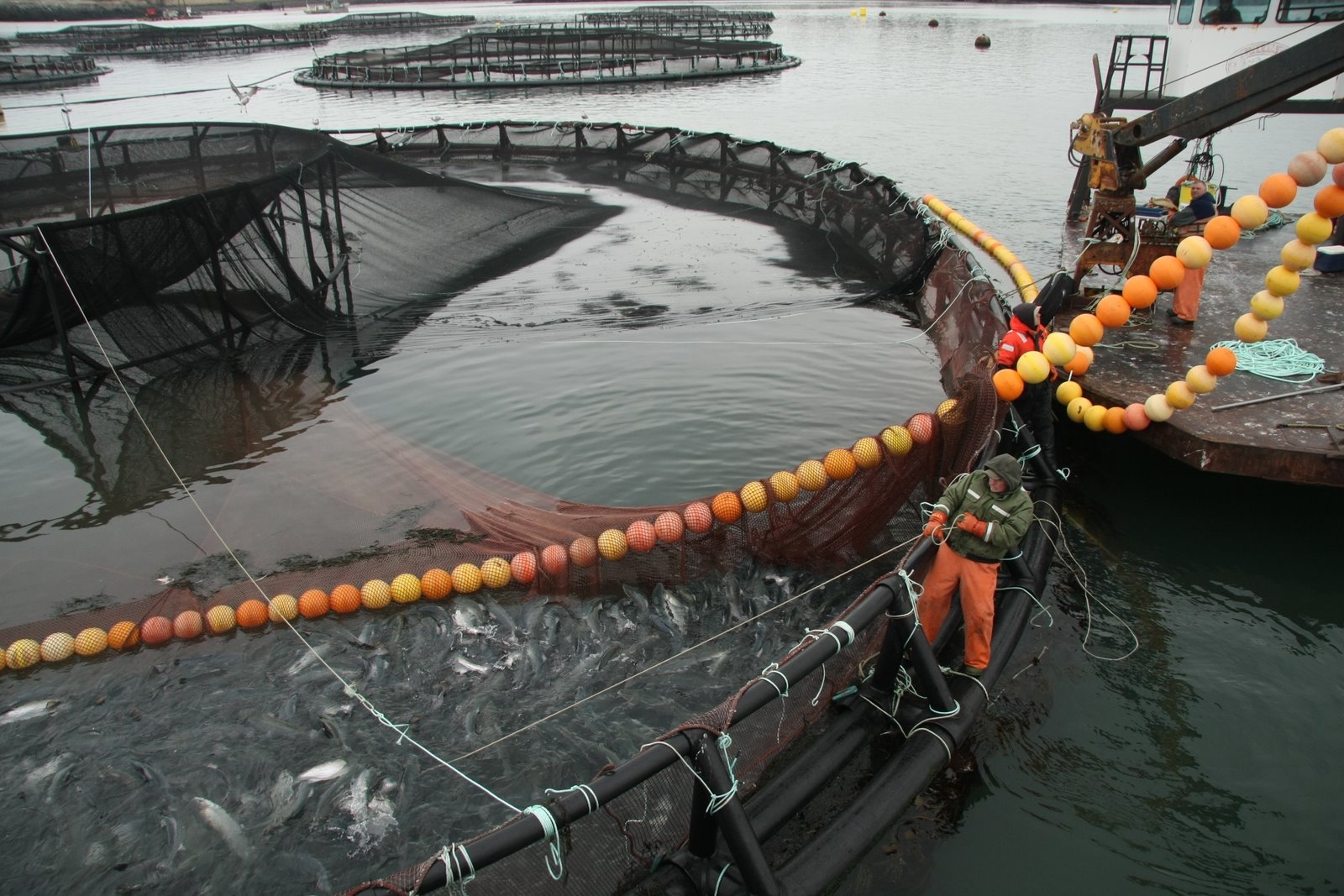
Cooke currently employs over 80 individuals directly in Washington State. (Photo: Cooke Aquaculture)
Aquaculture industry advocates are frustrated by a recent vote that would uphold a proposed ban of commercial net pen fish farming in Washington State.
On Jan. 7, the Washington State Board of Natural Resources voted 4-0 with two members abstaining to uphold a ban on all commercial aquaculture in state waters. Board chair, Hilary Franz, pushed the vote only days before her term as commissioner of the Washington State Public Lands on Jan. 15.
According to the Department of Natural Resources (DNR), more than 80 per cent of the public comments the agency received before the hearing also supported the ban. But the Northwest Aquaculture Association (NWAA) said the decision fails to account for the science that supports sustainable practices, the economic impact on rural communities, and the growing demand for local food security.
“Franz insisted on rushing the rule-making process so that the Board could vote on the proposed ban in its Jan. 7 meeting, largely to appease her supporters—which we view as short-sighted and politically motivated,” said Jeanne McKnight, NWAA executive director.
“In doing so, Franz deprived the board of the ability to thoughtfully deliberate and review the enormous body of peer-reviewed science in the record. Had they done so, they would not have voted for this unsupportable ban.”
In November 2022, the Washington State Department of Natural Resources (WDNR) first announced it would not be renewing two trout farming leases to Cooke’s Rich Passage and Hope Island sites in Puget Sound. The company was given 30 days to harvest its fish and remove all farm equipment.
Days later, on Nov. 18, 2022, Franz issued an executive order banning all net pen finfish farming in Washington state-owned waters.
Cooke Aquaculture and Jamestown S’Klallem Tribe filed separate lawsuits in response.
Cooke Aquaculture filed a lawsuit with the Superior Court of the State of Washington in January 2023 to appeal the WDNR’s decision, seeking the reinstatement of the company’s leases in Puget Sound.
Jamestown S’Klallem Tribe, which works in partnership with aquaculture company Jamestown Seafood, filed its own lawsuit in March 2023, saying Franz’s “unilateral orders violates its sovereign rights.” The NWAA joined the lawsuit with the Jamestown S’Klallem Tribe, alleging that the WDNR failed to consult with community stakeholders before imposing this legislation.
On October 2023, a Thurston County superior judge ruled the executive order had “no legal effect” and constitutes nothing more than an internal directive to begin the rule-making process. This ruling marked a temporary victory that supported continued aquaculture operations in the Puget Sound region.
In March 2024, Cooke Aquaculture announced that it will be filing a motion to dismiss its appeal.
“Despite the request being pending for almost a year, DNR refused to work with Cooke on the timeline to provide records and has never provided any substantive responses that would allow Cooke to explain to the Court the arbitrary basis for the lease denials,” the company statement said.
“A further hearing on this matter is futile without Cooke having an opportunity to review DNR’s internal records and ensure the record before the Court is complete. Such a hearing would be a waste of judicial resources and everyone’s time, therefore, Cooke has filed a motion to dismiss its appeal.”
Now following this recent vote by the Washington State Board, NWAA President and Jamestown Seafood CEO Jim Parsons said the future of aquaculture industry in the region is once again at risk.
“At a time when tariffs threaten to raise the prices of imported seafood and the cost of groceries for average Americans remains very high, the Washington State Board of Natural Resources has voted to take away from our citizens an important and affordable source of protein that can be sustainably grown right here in our own waters,” Parsons said in a statement to Aquaculture North America.
“In addition to being a blatant disregard for the hundreds of pages of thoughtful testimony from aquaculture experts, civic leaders, respected fisheries scientists, veterinarians, Tribal leaders, and consumers, the Jan. 7 decision sets a dangerous precedent that should serve as a warning to anyone in the business of growing food in this state on leased land—be it producers of shellfish, apple, grapes, or beef—that the Department of Natural Resources could shutter any business or sector that the Commissioner of Public Lands doesn’t like.”
Drue Winters, campaign manager for Stronger America Through Seafood (SATS), said she worries that this most recent vote in Washington could signal a potential spread of anti-aquaculture sentiment to other states.
Washington State joins Alaska, Oregon and California in banning open net-pen fish farming in state waters. British Columbia is also in the process of banning net-pen salmon farming in its coastal waters by 2029.
“What I am concerned about is the larger impacts of this decision, and the various groups who might not want aquaculture for their own protectionist reasons, perhaps, to spread this to other states, to spread the idea that aquaculture can’t be done well or isn’t being done well and shouldn’t be done in other states coastal waters, and that would be a really unfortunate outcome of this situation,” Winters told Aquaculture North America.
It flies in the face of the established science on the impacts of aquaculture, despite numerous scientific reports by NOAA and the support of the support of the scientific community. It really did not take into account the advances in science and technology over the last 30 years that have led to a science a sustainable and environmentally sound aquaculture industry.”
Winters added that the conversation revolving around this ban must emphasize the industry’s need to be more vocal and engage in the conversation.
“We have been working for many years to combat false, misleading misinformation that’s out there. Really, it’s vitally important that people who are supportive, either join organizations like SATS, or work in tandem with other aquaculture associations to make sure that their voice is heard,” said Winters.
“People who don’t want aquaculture are very, very vocal and are doing those things. And so people who are supportive certainly need to be doing more to combat that.”