June 10, 2026
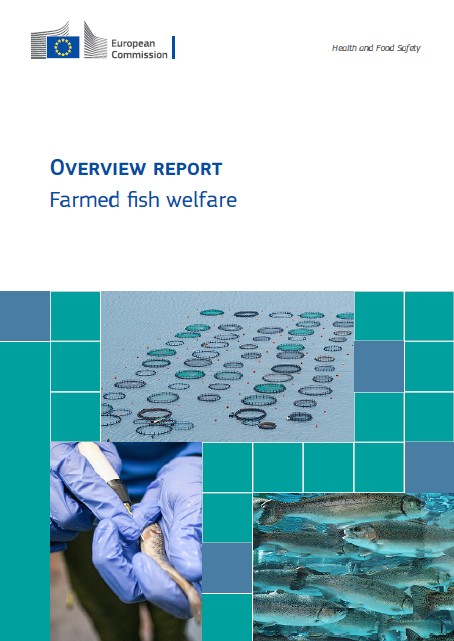
The Federation of European Aquaculture Producers (FEAP) has released a statement in response to the European Commission’s newly published fish welfare report.
The Commission’s overview report, “Farmed fish welfare,” was published in April. Authors of the report found that “fish welfare in the European Union (EU) remains uneven and less developed than for other farmed animals.” The report highlights that while good practices, research and technologies are emerging, key challenges like lack of clear welfare indicators, limited expertise, and difficulties in inspecting remote farms, still remain.
FEAP published a statement on June 8 criticizing the major conclusions of the report, explaining that it “overlooks fundamental scientific and operational challenges facing the sector.”
“FEAP fully supports science-based welfare improvements, but they must be practical, achievable, and proportionate,” said Javier Ojeda, FEAP secretary general, in a press statement. “The Commission’s report risks setting unrealistic expectations that fail to account for the diversity of our sector, from small family-owned lagoon farms to larger marine operations. Legislation that ignores farm-level realities will not improve fish welfare; it will simply drive production outside the EU, where standards may be lower. We need to focus on developing reliable documentation measures before imposing unworkable legal demands.”
The FEAP statement lists specific criticisms in the overview report, emphasizing that welfare needs are not homogenous across species, production systems, or life stages. FEAP asserts that the report fails to understand the nuances and unique challenges of aquaculture that is different from terrestrial livestock production.
“FEAP notes that the report’s strong assertion that scientific evidence confirms that fish are sentient and capable of experiencing pain, fear, and stress is not without its limits and degrees. Differences exist between farmed fish species… Generalisation is therefore problematic,” the FEAP explains. “Regarding public concerns, the Commission references NGO studies almost exclusively, whereas other widely recognised sources such as Eurobarometer surveys could offer a more comprehensive understanding. FEAP urges the Commission to include such data to avoid reinforcing a partial narrative.”
FEAP adds that the organization remains committed to working with EU institutions and Member States to develop workable welfare standards that protect both fish and the future of European aquaculture.