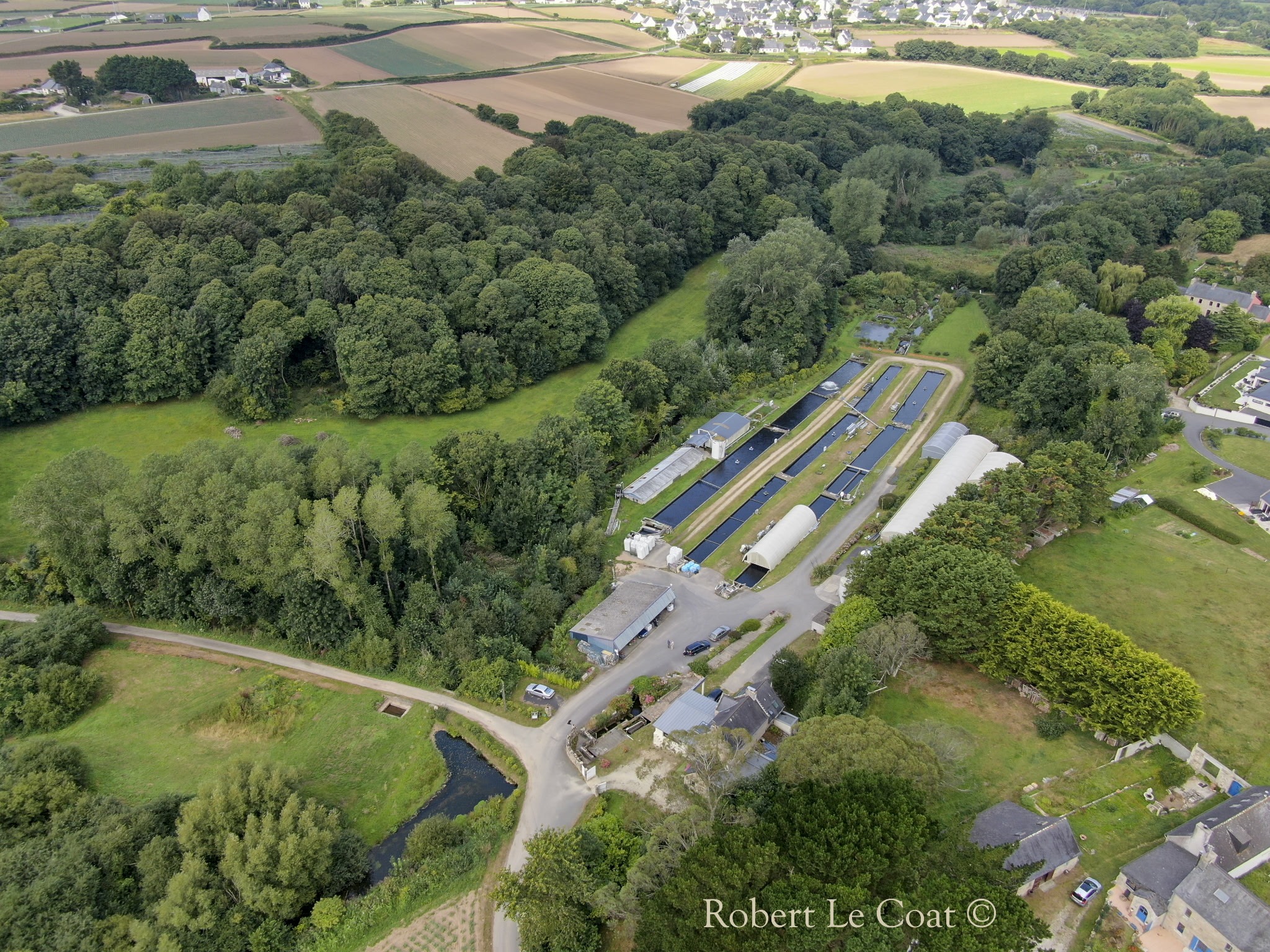
Success story of a change in practices that improved rainbow trout farming against proliferative kidney disease
Proliferative kidney disease (PKD) is a disease of salmonids caused by a parasite (Tetracapsula bryosalmonae). The infection mainly triggers an excessive immune response, leading to renal hyperplasia and severe anemia. Contamination occurs throughout the year. When water temperature exceeds 9 °C (Gay et al., 2001), parasite spores are released by their host, a bryozoan (Fredericella sultana), which is present in rivers (Okamura and Wood, 2002).
Once released in its free form, the parasite remains infective for only 12-24 hours. It enters fish through the gills and skin. PKD manifests when water temperature rises above 15 °C, especially in fish naïve to the parasite. The disease induces 100% morbidity and can cause more than 90 % mortality and, primarily during summer. However, fish that survive an initial exposure recover normal renal structure and blood parameters; thereafter, they become resistant and continue to grow.
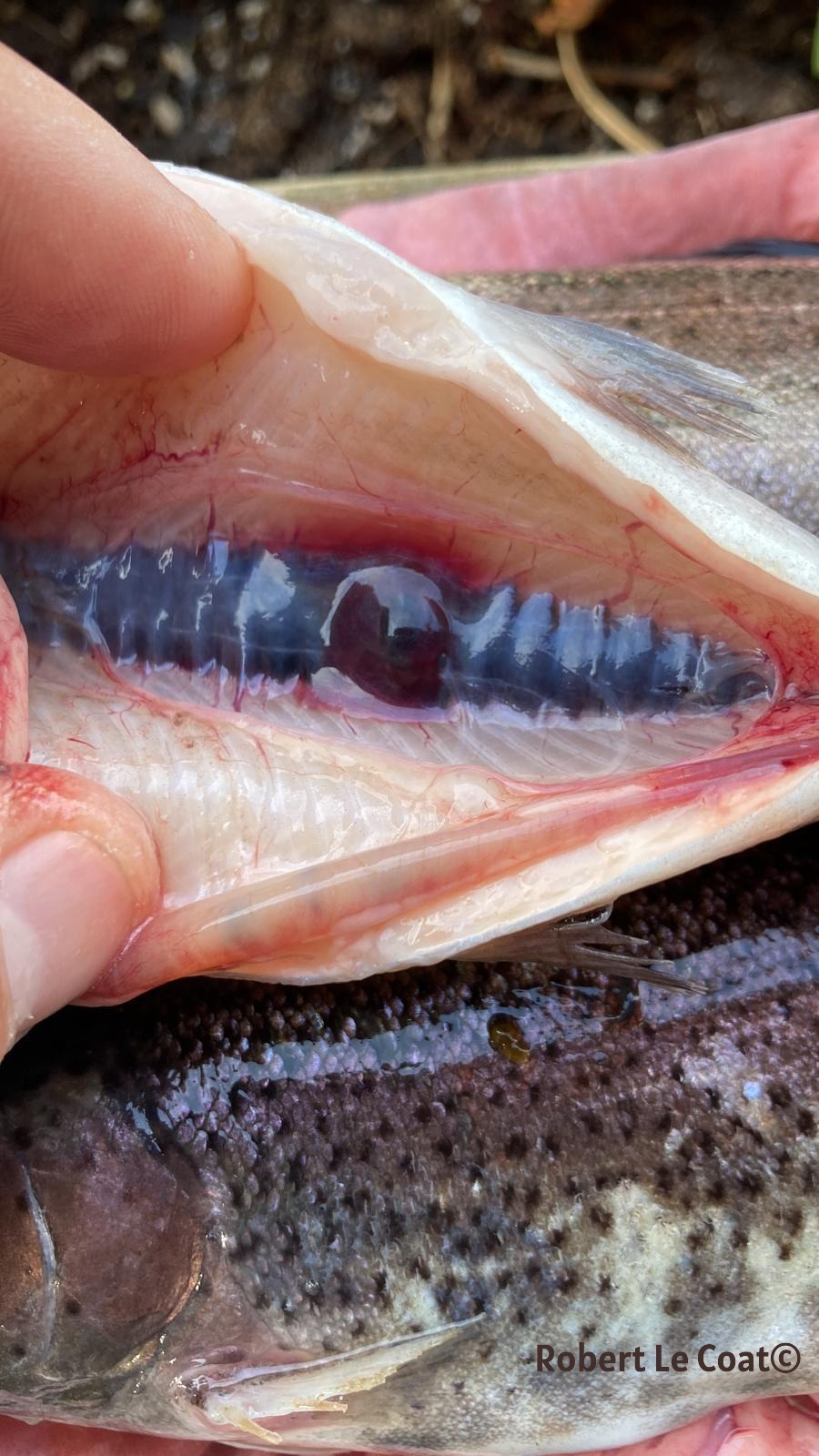
There are several PKD strains, and fish develop strain-specific immunity. Consequently, immunity acquired at one site may not protect against a different parasite strain at another site, requiring caution when transferring fry or juveniles between sites. PKD is not transmitted directly from fish to fish. To complete its life cycle and become infective again, the parasite must pass back through its original host. From brown trout (Salmo trutta) and brook trout (Salvelinus fontinalis), the parasite is released and can infect bryozoans, whereas other salmonid species appear to be dead-end hosts for the parasite. To date, no curative or preventive treatments exist.
In the context of climate warming, PKD is expected to become increasingly prevalent in salmonids, both in aquaculture and in wild populations. Conventional solutions usually focus on costly, generic technologies and biotechnologies. Aquaculture therefore needs practical, specific adaptations. Because no vaccine or antiparasitic drug is available, alternative approaches are required. Agroecology applied to animal production addresses this need: by investigating disease causes and adapting rearing practices, animal health can be improved. The example below illustrates this approach, showing how modified rearing practices can control PKD by considering both the pathogen’s biology and the farm’s production goals.
Fish farm and rearing protocol
The Dourduff fish farm (Plougoulm, France) annually produces ≈ 250 tons of rainbow trout (Oncorhynchus mykiss). Production runs from late January to late November, starting with very large trout (> 2.5 kg) and ending with caviar production. The farm comprises a hatchery (fertilized eggs are purchased in April and November) and a nursery.
In both hatchery and nursery, fish are raised on well water free of the parasite. They are then transferred to outdoor raceways supplied with river water; the raceways are equipped with jet-oxygenation platforms. River water temperature is recorded daily, with historical data available since 1992; all procedures and measurements have been recorded in KAMAHU’s software since 2016. The nursery consists of two independent buildings, each dedicated to a specific egg batch (spring or autumn) and employing a distinct rearing strategy.
Spring-egg fry experience a contamination window (water > 9 °C) followed by disease expression (water > 15 °C). To prevent early disease, spring-egg fry are raised in a recirculating-water system supplied with well water (parasite-free and 12 °C throughout the year). After an acclimation period, starting in July, river water (carrying the parasite) is gradually added, with the mixing ratio adjusted to keep temperature below 15 °C. Consequently, infected fish do not develop clinical signs. In September, after the high-temperature risk period, the spring-egg fry are moved to raceways at an average weight of 15 grams.
Autumn egg fry are also raised in recirculating water, but their circuit receives only well water. These fish grow to ≈ 100 g before the critical summer period (July to August). The strategy is to keep them naïve to the parasite until they enter the raceways. Because exposure occurs late, the infection threshold is reached after the critical temperature window, when conditions are less favorable for parasite development, preventing progression to advanced clinical disease. Moreover, at this age, fry have more mature immune and physiological systems, enhancing their ability to resist infection.
Rationale for the management change
PKD has been present since at least the 1990s. Until 2003, disease levels were controlled with a combined formalin and malachite-green treatment. After malachite-green was banned in French aquaculture, an alternative was required. Two hypotheses were explored: (i) induce an early, short-duration infection to act as a natural vaccine, or (ii) trigger a late infection so the disease lacks time to fully develop. The second hypothesis was supported by experimental data showing that rainbow trout infected and reared at an average temperature of 10 °C accumulated 1 300 °C-days, developing sufficient resistance to avoid clinical signs when subsequently exposed to temperatures > 15 °C (De Kinkelin and Loriot, 2001).
Because production must be spread throughout the year, autumn-egg batches are necessary. However, limited well-water volume prevented the same low-temperature regime used for spring egg fry. The revised hypothesis posited that larger, naïve fish exposed later to the parasite would better withstand infection during a shortened critical period. This aligns with experiments indicating that naïve trout kept at temperatures > 15 °C continuously became PKD-positive after 55 days, with first mortalities observed after 73 days of exposure (De Kinkelin and Loriot, 2001).
Results obtained
Adapting the nursery protocol according to egg-batch timing yielded major benefits. The survival rate has improved significantly. For instance, survival to the 15-gram juvenile stage increased from 30% to 95 %, especially during the first summer growth phase. The higher survival rate coincided with an overall improvement in farm health status, leading to reduced use of antibiotics and antiparasitic products. Growth performance also improved significantly. For instance, autumn-batch trout weighed 250 grams at 14 months, compared with 700 g today. The combined effect of higher survival and faster growth allowed production targets to be met with fewer fish (e.g., 300,000 eggs previously for the spring batch vs. 140,000 today), decreasing the number of purchased fertilized eggs. Overall, the working environment is now better for the fish farmer.
Key success factors
- Access to parasite-free well water, necessitating a closed-loop recirculating system because sufficient well water was unavailable for an open-flow setup.
- For spring egg fry, recirculation enabled precise temperature control (< 15 °C) and prolonged stabilization of fish under these conditions.
- In 2018, an additional recirculating-water nursery building was erected near a second well to house autumn-egg fry until mid-summer.
- Continuous daily monitoring of river water temperature, supported by a long-term historical record, allowed accurate identification of the critical period and informed nursery management decisions.
- A shift in production from table-size trout to very large trout and caviar.
References
De Kinkelin, P., Loriot, B., 2001. A water temperature regime which prevents the occurrence of proliferative kidney disease (PKD) in rainbow trout, (Oncorhynchus mykiss) (Walbaum). J. Fish Dis. 24 (8), 489-493. https://doi.org/10.1046/j.1365-2761.2001.00312.x
Gay, M., Okamura, B., de Kinkelin, P., 2001. Evidence that infectious stages of Tetracapsula bryosalmonae for rainbow trout (Oncorhynchus mykiss) are present throughout the year. Dis. Aquat. Org. 46 (1), 31-40. https://doi.org/10.3354/dao046031
KAMAHU, 2012. Fish-farm management software. https://www.kamahu.com
Okamura, B., Wood, T.S., 2002. Bryozoans as hosts for Tetracapsula bryosalmonae, the PKX organism. J. Fish Dis. 25 (8), 469-475. https://doi.org/10.1046/j.1365-2761.2002.00376.x
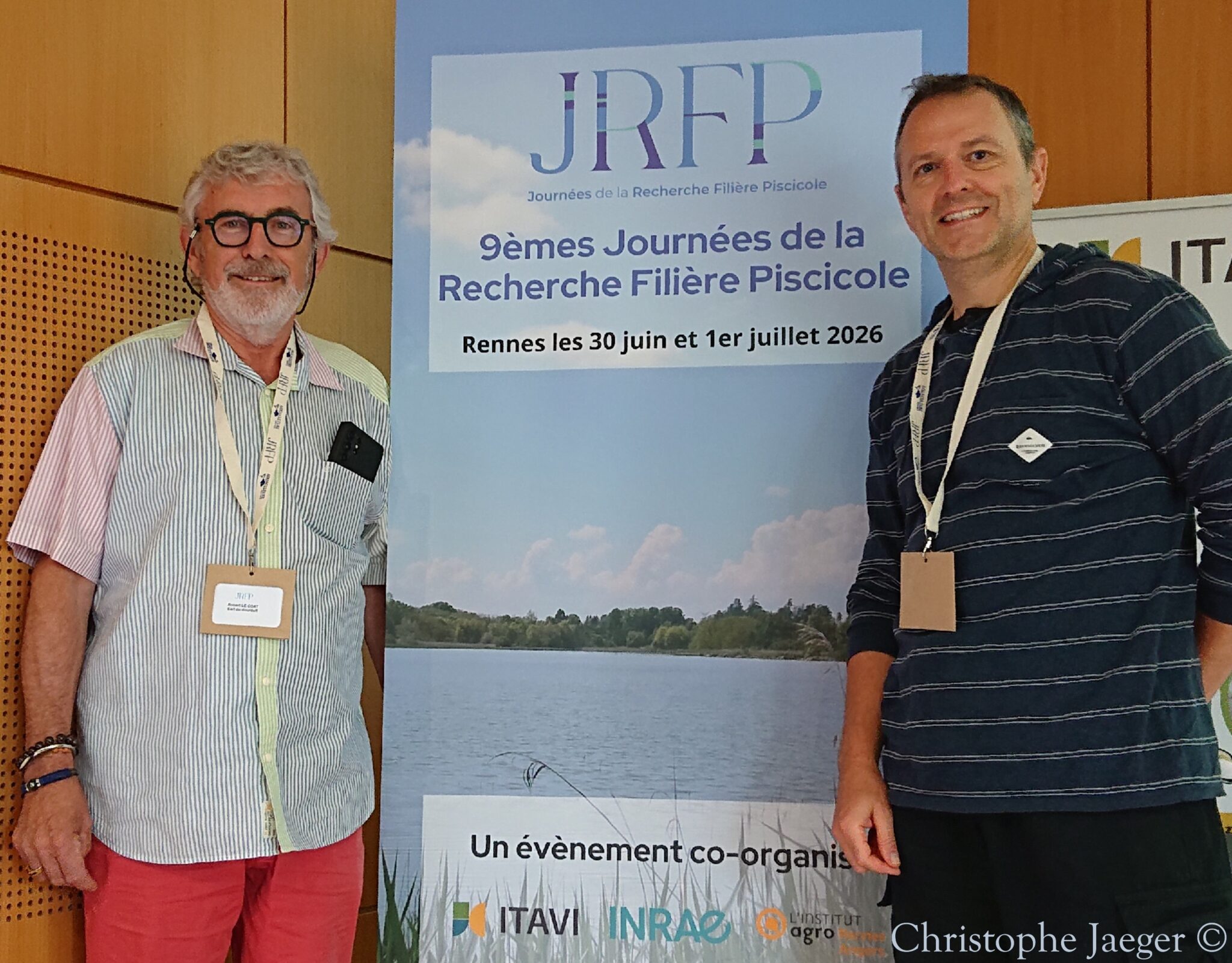 Robert Le Coat (left, r.lecoat@wanadoo.fr) is the fish farmer at the Dourduff fish farm (Plougoulm, France). He designed and developed the strategies and practices against proliferative kidney disease. Christophe Jaeger (right, christophe.jaeger@inrae.fr) is a scientist at INRAE, in charge of designing agroecological aquaculture systems and environmental assessment.