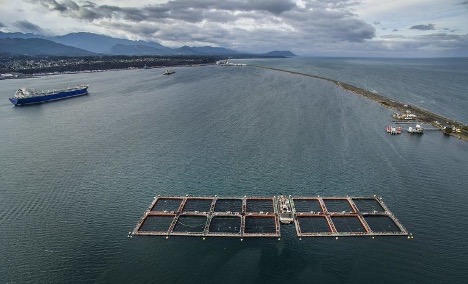
Northwest Aquaculture Alliance provides an update on the Washington State ban on net-pen aquaculture
In January, a sweeping and controversial regulatory decision by the Washington State Board of Natural Resources stunned a unique and diverse coalition of pro-science advocates working to preserve native-species, net-pen aquaculture in Washington state.
The coalition opposing the ban included local aquaculture companies and members of the Northwest Aquaculture Alliance (NWAA), current fisheries scientists from institutions like the University of Washington, Washington State University, and the University of Idaho, as well as former NOAA and state agency scientists, local Tribes, and dozens of regional farmers and aquaculture workers. Together, they urged the Washington Department of Natural Resources (DNR) to pursue a science-based, transparent approach in addressing concerns regarding net-pen aquaculture.
Instead, the Washington DNR Board voted to adopt a rule permanently banning all net-pen farming of native fish species on state-managed aquatic lands. In response, NWAA has filed a legal challenge seeking to overturn the rule, asserting that DNR exceeded its statutory authority and conducted a procedurally flawed process lacking in scientific integrity and public accountability.
This article explores what happened, the litigation underway, and why it matters in the legal and policy battle over one of the Pacific Northwest’s most promising tools for sustainable seafood production—while examining the broader implications of DNR’s decision for the future of aquaculture in the region.
How we got here in Washington
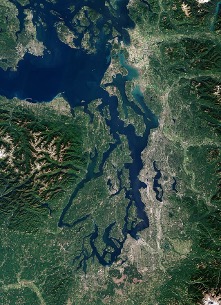
The natural geography of Puget Sound, the Salish Sea, provides ideal conditions for farming native salmon species. Its vast network of deep, cold marine waters offers excellent water quality and temperature stability, while the region’s strong tidal currents ensure continuous flushing and oxygenation. These natural advantages make Puget Sound one of the most well-suited environments in the world for sustainable salmon aquaculture.
In 2017, the collapse of an Atlantic salmon net-pen near Cypress Island got dramatic media attention. Despite initial alarm, the incident resulted in no lasting environmental harm to habitat or other aquatic species, but quickly became a potent political tool for then-Commissioner of Public Lands Hilary Franz, who at the time was Washington’s newly elected head of DNR.
Following the Cypress collapse, the Washington State Legislature responded swiftly and decisively, passing House Bill 2957 which banned farming of non-native fish species, while reinforcing the state’s commitment to native-species aquaculture on public aquatic lands. The new law also mandated the creation of a comprehensive Net Pen Guidance Document to standardize and strengthen best regulatory practices across state and federal agencies.
Franz continued to invoke the incident as a rallying cry in efforts to strengthen her political base with Washington’s environmentally focused voters. Throughout her time at DNR, Franz leveraged activist bias against net-pens in unsuccessful bids for higher office, first running for Governor and later for Congress. She teamed up with animal-rights activists and turbo-charged the anti-net pen narrative to align with her political ambitions, despite the Legislature’s clear directive: native species aquaculture could and should continue under improved oversight. In November of 2022, Franz announced she was unilaterally and permanently banning all net-pen farms on state aquatic lands. She then sent a fundraising email within hours of announcing her ban.
In 2023, the Jamestown S’Klallam Tribe filed suit against DNR, arguing that the announced ban was unlawful in authority and application, but that litigation failed to resolve the issue when the court ruled the announced net-pen ban must first undergo an agency rulemaking process to be valid state policy, and actionable within litigation.
The resulting rulemaking process undertaken by the DNR, under Franz’s direction, was inadequate, opaque, and rushed. Despite initial assurances that the process would involve meaningful consultation with other regulatory agencies — including the Washington Department of Fish and Wildlife and the Department of Ecology — no such coordination materialized.
Equally troubling, DNR refused to create space within Tribal outreach for a transparent, science-based review of the research supporting native-species net pen aquaculture. Experts, including university scientists and former agency officials, were shut out of the conversation, and the agency refused to host public forums or technical workshops to examine the scientific record. The result was a truncated process, entirely managed and determined by Franz, who sidelined both subject-matter expertise and Tribal engagement, reinforcing concerns that the outcome was preordained and politically driven rather than informed by sound science or collaborative policymaking.
On Jan. 25 of this year, the DNR Board voted to implement Franz’s sweeping net-pen ban. For many, it was the culmination of a calculated strategy: announce the ban, control the narrative, ignore the science, run out the clock, and close the door on dissent.
The legal battle ahead
NWAA’s lawsuit, filed April 30 in Thurston County Superior Court, argues that DNR not only acted beyond its legal authority, but failed to follow the State Environmental Policy Act (SEPA), failed to engage in meaningful tribal consultation, and ignored expert testimony throughout the rulemaking process.
“This rule is not only unlawful, but also irresponsible,” said NWAA President Jim Parsons. “Washington has one of the strongest aquaculture regulatory systems in the world. DNR’s ban ignores the science, violates the law, and threatens jobs, food security, and tribal economic development.”
The implications extend well beyond industry. The ban has already cast a chilling effect on future tribal aquaculture projects and created legal uncertainty for science-driven, environmentally responsible farmers. Although the ban applies only to DNR-managed lands, the sweeping tone and ambiguity of the rule have led many to worry about its deterrent effect on broader innovation in sustainable aquaculture.
Why it matters
This decision comes at a moment of urgency for regional food resilience. With wild fish stocks declining due to climate change, habitat degradation, and overfishing, native-species aquaculture provides a critical alternative—supporting local protein production, reducing reliance on imports, and preserving working waterfronts in economically challenged rural coastal communities. Net-pen farming holds the promise of restoring abundant supplies of salmon to Northwest Tribes who’ve watched native stocks disappear due to habitat destruction and climate change.
NR’s rulemaking process was not just procedurally flawed—it was an outright insult to the role of science in public policy. By excluding and dismissing input from respected scientists, and refusing to create space for technical dialogue, DNR undermined the most up-to-date research that supports the ecological safety and sustainability of well-regulated, native-species net pen aquaculture. The agency’s unwillingness to engage with the scientific community or consider established findings from NOAA, state environmental reviews, and academic institutions revealed a willful disregard for science-based understanding. In doing so, DNR sent a troubling message: that political expediency, not empirical evidence, would guide decisions on Washington’s natural resources—setting a dangerous precedent for how environmental policy is made in the state.
What’s next
With litigation now underway, the legal and political stakes are high. Observers see the NWAA case as a pivotal test of whether Washington will remain committed to science-based policymaking—or whether agency heads can override legislative intent through politics and pressure.
NWAA’s legal challenge to DNR’s net pen ban is expected to unfold over the course of 2025 and into early 2026, with stakeholders across industry, science, and Tribal communities watching closely. The outcome of this case will determine the very existence of native-species net-pen aquaculture in Washington, and also the broader legal boundaries of agency power and science-based policymaking in the state.
The broad coalition fighting to preserve native-species net-pen aquaculture in Washington state deeply appreciates the American Fisheries Society for its public support and thoughtful comments opposing DNR’s ban during the rulemaking process. AFS’s science-based advocacy has been a powerful affirmation of our shared commitment to responsible aquaculture and the integrity of science-based environmental policy. As the legal challenge moves forward, we now urgently need your help to continue this fight.
“This fight is bigger than just one rule or one agency,” said Parsons. “It’s about defending science, protecting lawful industry, and preserving the right of Tribes and communities to pursue sustainable solutions to feed people and care for our waters.”
In the end, this is more than a debate about fish. It’s a fight over the future of how we govern our shared natural resources — whether by science, law, and collaboration, or by political calculation.
To get involved, learn more, or support NWAA’s legal challenge, visit www.nwaquaculturealliance.org.
This article was originally published in the American Fisheries Society’s Spring/Summer 2025 newsletter.