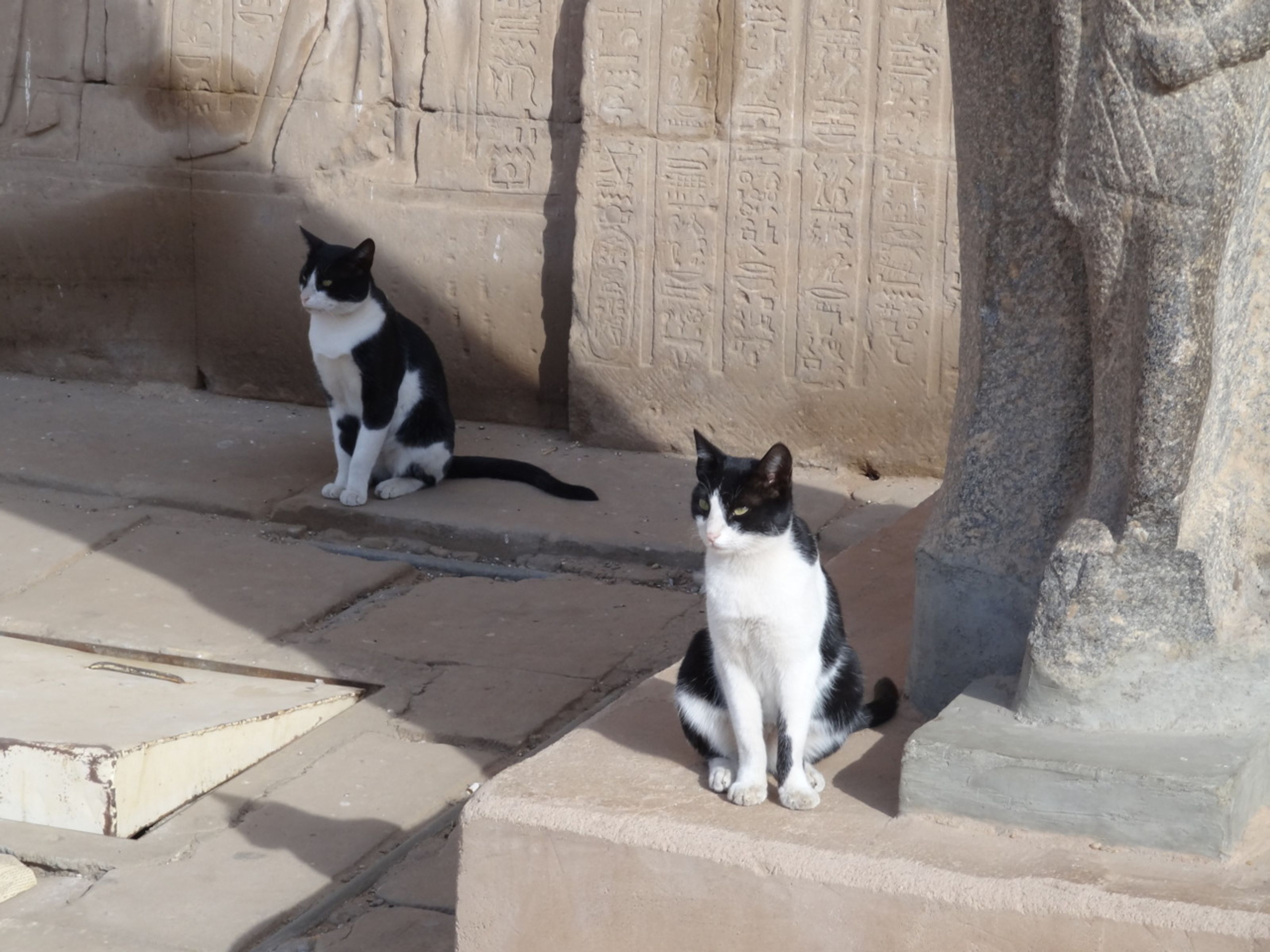
The culture of Ancient Egypt was filled with magic and superstition, from a pantheon of warring gods to the funerary spells of The Book of the Dead. Part of this mythology included animals as representations of deities: Cows symbolized Hathor, crocodiles embodied Sobek, etc. But these creatures weren't actually magical or divine. Cats were a different story.
Cats were especially valued in Egypt. The civilization's economy was built on grain, which was constantly under attack by rodents, insects, and even snakes. Wild cats of North Africa were drawn to Egypt's cities by the easy pickings of prey around granaries. Egyptians began leaving out food, such as milk and fish, to further attract and keep the cats. Not long after, cats became common in Egypt and kept as pets.
Cat Magic

Egyptians were in awe of cats' ability to see in near-total darkness. They believed cats captured the light of the setting sun, keeping it safe until morning. It's possible this legend came from the cat's third eyelid, which glows when lit from the correct angle. The fact that cats could kill snakes and cobras, which were deadly threats to humans, gave them a supernatural quality. Seeing a cat in your dreams was a good omen, usually indicative of a bountiful harvest.
Because cats were considered good mothers, and because of their association with fertility (see below), a woman who wanted to conceive would wear an amulet depicting a cat with a litter. The number of kittens on the amulet signified how many children the woman wanted to bear.
Wealthy families bred cats, changing their colors and markings. However, some records show that private ownership was forbidden; the cat was near divine, so only the Pharaoh could possess one. This is echoed in the modern-day joke, "Dogs have owners. Cats have staff."
Cat Goddess
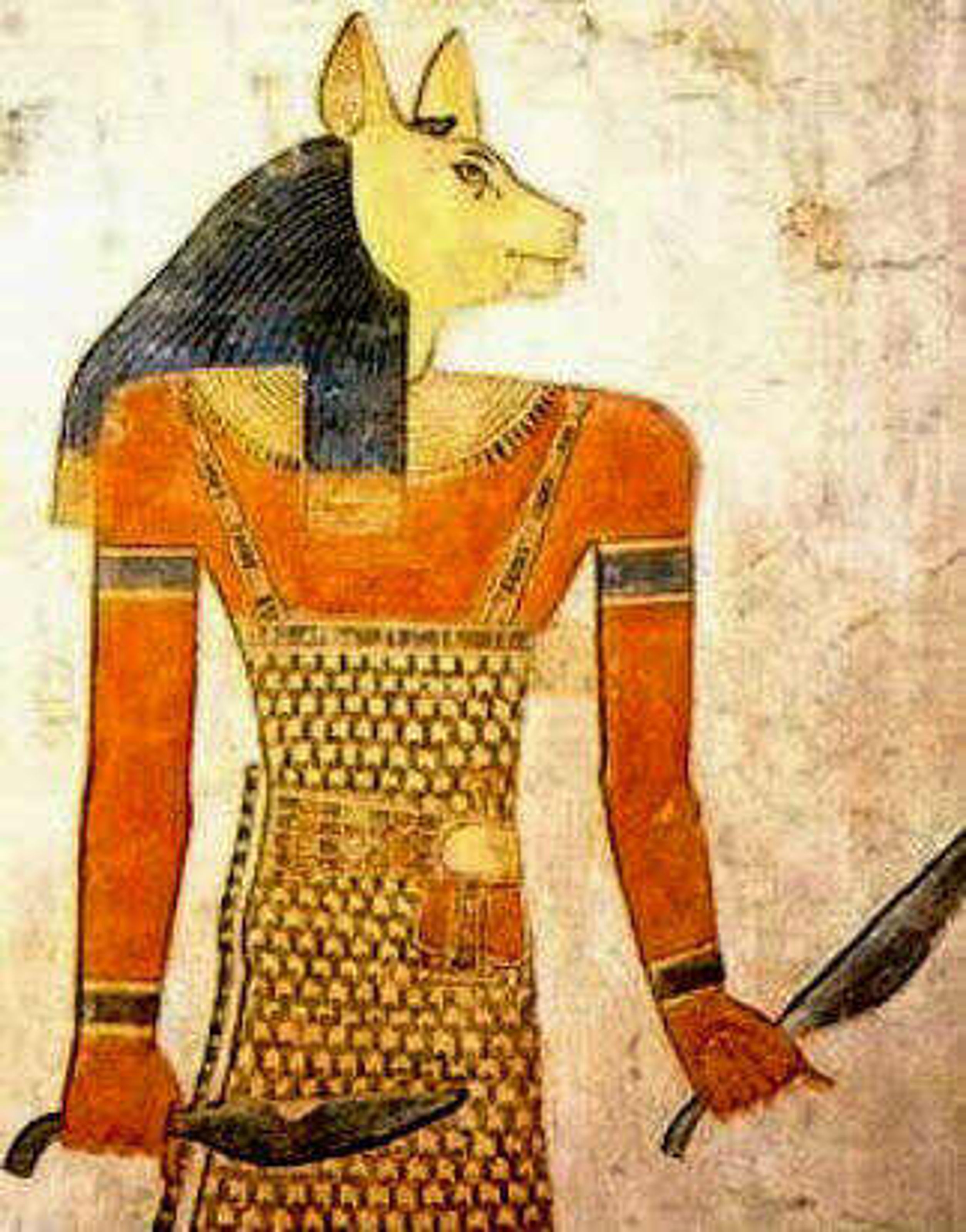
Bastet was the Egyptians' cat-headed deity. Wikipedia describes her as the goddess of "cats, protection, joy, dance, music, family, and love," which pretty much sums up their qualities in the modern world as well. At first she was a war-like lioness, but over the centuries her image softened to that of sexuality, fertility, and motherhood, perhaps reflecting the feminine grace and agility of cats. Wealthy women were often depicted with a cat beneath their seat or at their feet, symbolizing fertility. Roman historian Herodotus notes an entire city devoted to the goddess, Bubastis, with a massive Bastet temple. It's even mentioned in the Bible -- though as an example of a wicked, pagan city.
Cats were so popular that they couldn't have just one god, however. Sekhmet, a goddess of healing, has the head of a lion. Mut, the mother-goddess of Thebes, featured cats as one of her sacred symbols. Neith, a goddess of war and weaving (an interesting combination), sometimes transformed into a cat. In The Book of the Dead, the sun-god Ra takes the form of a cat to kill a serpent.
Cat Law
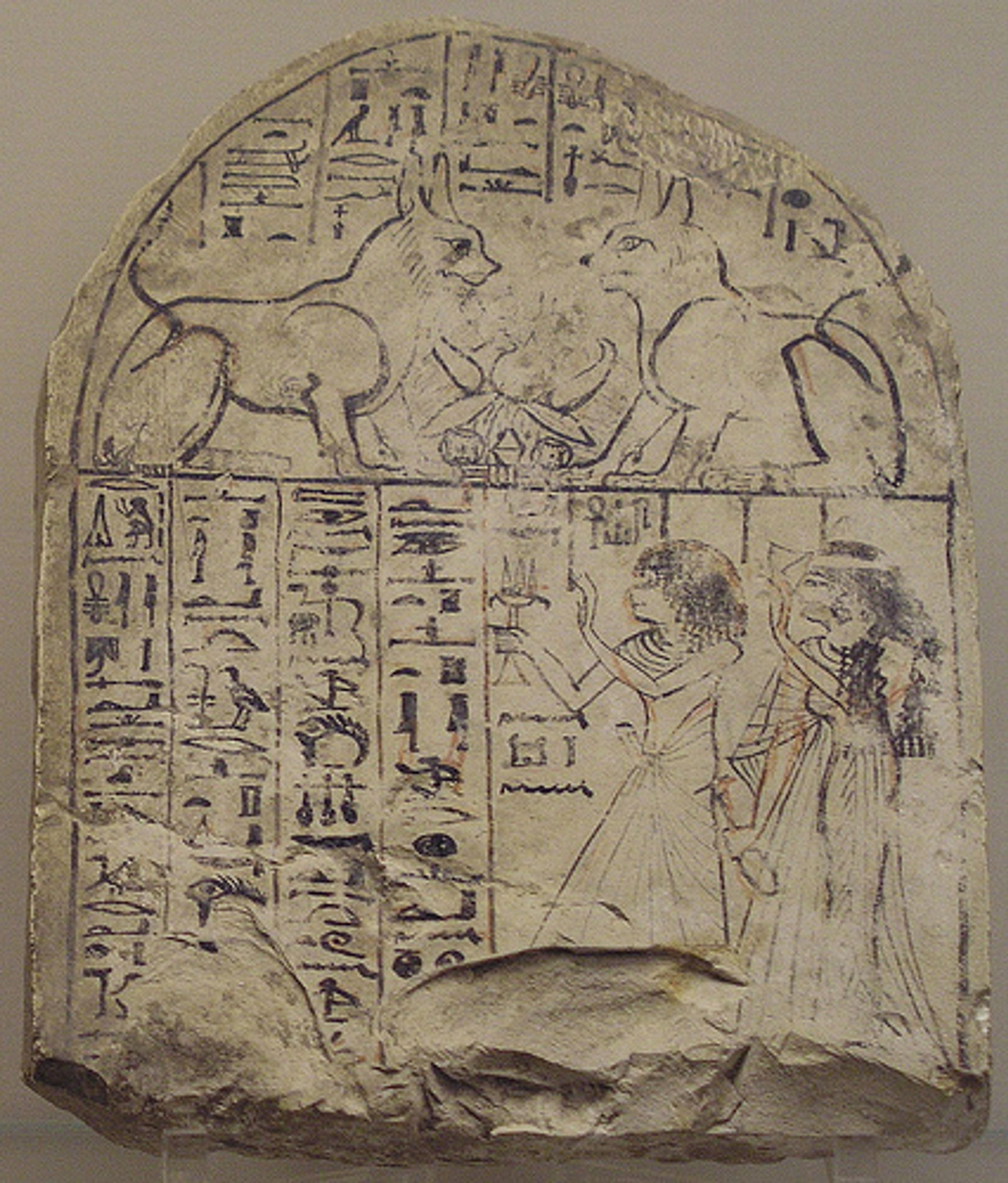
Because of cats' usefulness and semi-divine nature, killing a cat -- even a scavenging alley cat -- was usually punishable by death. Diodorus Siculus, a Greek historian, recorded one such incident:
"Whoever kills a cat in Egypt is condemned to death, whether he committed this crime deliberately or not. The people gather and kill him. An unfortunate Roman, who accidentally killed a cat, could not be saved, either by King Ptolemy of Egypt or by the fear which Rome inspired."
Cat Mummies
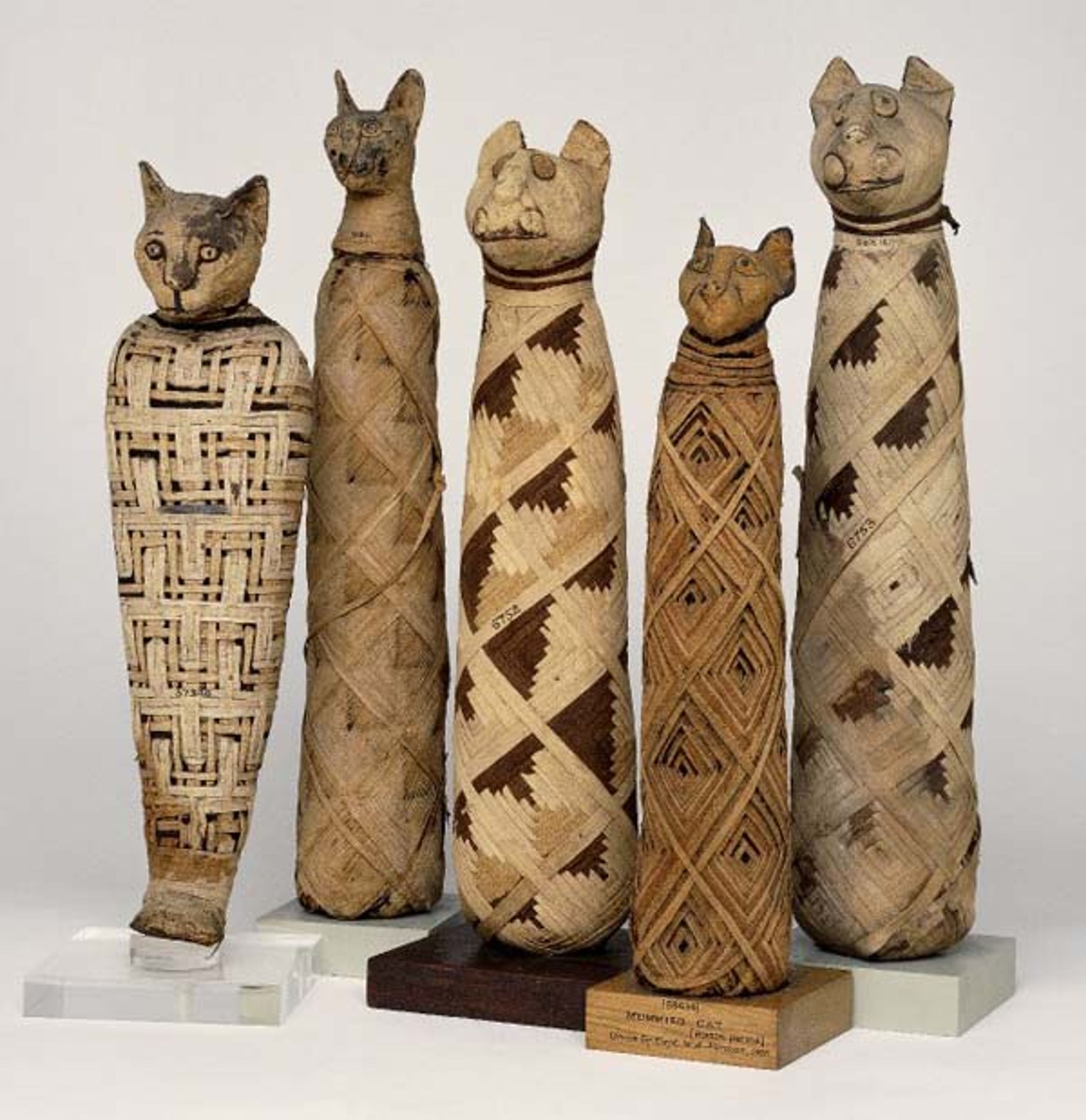
Cats that died were deeply mourned by their owners, who shaved their eyebrows as a show of grief (mourning would end when the eyebrows grew back). Many gave their cats full funerary honors, including mummification and burial, sometimes with milk and mice. Some were taken, as if on a pilgrimage, all the way to Bubastis to be buried. Other tombs have been found all over Egypt, including Giza, site of the most famous pyramids. A tomb in Beni Hassan, discovered in 1888, had an estimated 80,000 feline remains.
Cats Altering the Course of History
When the Persians invaded Egypt in 525 BCE, they used Egyptians' love of cats against them. They released cats onto the battlefield, painted cats on their shields, and even carried cats with them on horseback. The Egyptian soldiers feared harming the creatures (either due to the punishment or to the bad luck that would ensue), and hardly fought back. The Persians easily won and captured Egypt.
Herodotus disputes this account, but it makes a great story.
Jason Ginsburg is a member of the Archaeological Institute of America. He manages adventure, science, and nature content for Discovery+. He also owns a cat.