As the amazing San Francisco Valkyries fight in the Women’s National Basketball Association finals, our thoughts turn to the near future of SF Opera.
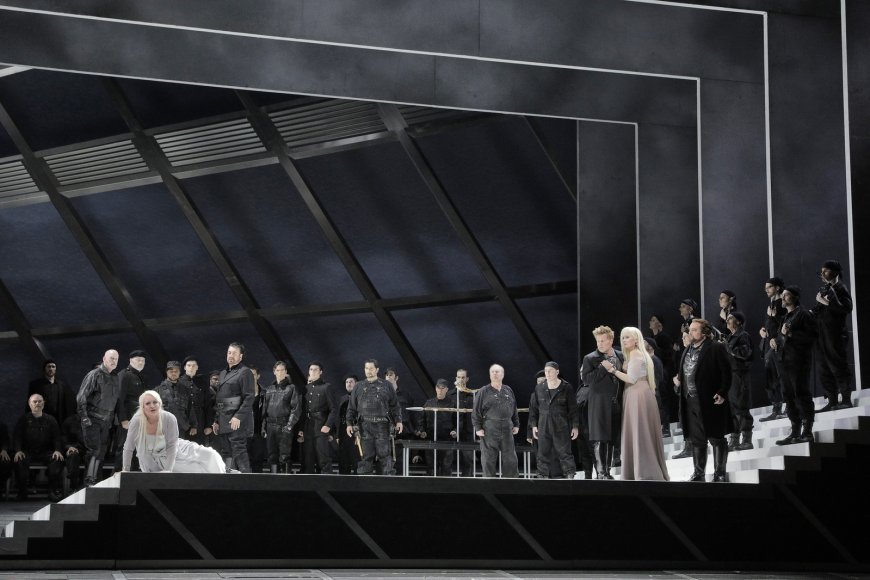
At the War Memorial Opera House, we’ll find the warrior daughters of Wotan in Die Walküre (The Valkyrie), wearing khaki and olive-drab aviator flight suits rather than the violet uniform of their WNBA sisters.
Even today’s sports headlines show the breadth, significance, and influence of Richard Wagner’s Der Ring des Nibelungen (The Ring of the Nibelung), which is returning in-full to SF Opera for the 2027–2028 season.
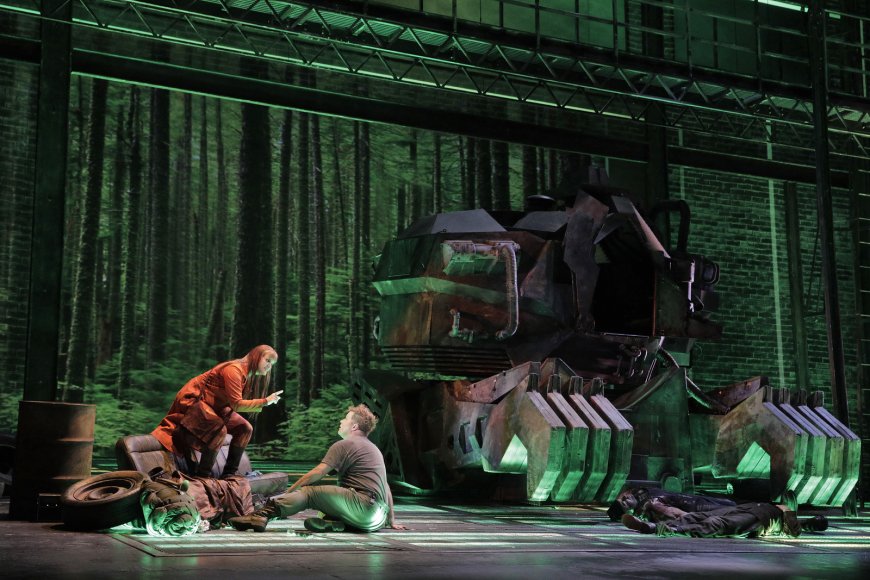
The stories in the Ring Cycle might sound familiar even to opera newbies: from ancient Nordic mythology to Tolkien’s The Lord of the Rings, there are recurring stories of an all-powerful ring and what befalls the mortals and gods who covet them.
“All of the great themes of the Ring — the destruction of nature, the quest for power, corruption, the plight of the powerless — resound through the four operas,” said stage director Francesca Zambello.
For audiences, it’s a week of being held in the thrall of a complex story and magnificent music. The Ring is not a vacation. To experience it, one must enter a different dimension. Before Friedrich Nietzsche turned against Wagner, he called the Cycle “a modern revival of ancient Greek tragic art, uniting Dionysian and Apollonian spirit.”
SF Opera General Director Matthew Shilvock has called the Ring “the Mount Everest of human creativity,” joining such prominent Ring fans as the late Stephen Hawking, who said “Wagner manages to convey emotion with music better than anyone, before or since.”
The upcoming revival of the 2011 production of the Ring, for which Shilvock and his predecessor at SF Opera, David Gockley, were responsible, will once again capture the attention of music lovers around the world.
Gockley, who initiated the project well aware of its challenges, said: “It is the most monumental piece of music theater ever conceived by the mind of man. Every rational force in our society mitigates against it being done. Yet it is done because there is an urge within us to see the truth and the fate of ourselves as humans played out on a vast, multilayered canvas.”
So large is that challenge that 2011 was only the sixth time in the company’s then 88-year history that the Ring was presented. The first Ring came to San Francisco in 1900, when New York’s Metropolitan Opera performed it on tour in the Grand Opera House, long before the War Memorial opened in 1932. SF Opera produced its own Ring Cycles in 1935, 1972, 1985, 1990 and 1999.
The size and musical-logistical-theatrical demands of the Ring can appear overwhelming — as are the statistics about it.
Requirements include an orchestra of almost 100 world-famous and hard-to-find soloists with high salary demands, a chorus of 80, hundreds of singers in smaller roles, extras, stagehands, costumers, makeup artists, security personnel, and 4,000 individual color-changing lightbulbs in addition to 144 LED lighting strips.
In 2011, the production cost totaled approximately $23 million. The 2018 revival’s cost was about half of that because sets, costumes, and other initial expenses were already covered. The direct and indirect cost of the 2028 Ring may not be known until long after the final curtain. An example of indirect cost is the current labor contract with the orchestra, without which no Ring would be possible.
Even with the War Memorial’s more than 3,000-person capacity fully occupied for every performance, ticket income will not cover the cost to the Opera, which relies on individual and corporate donations. At the same time, the Ring will offer financial, public relations, and visitor attraction benefits to San Francisco and represent value in the millions.
“For San Francisco, having the full Ring Cycle here is like hosting a Super Bowl or World Cup soccer for the arts,” said Kary Schulman, former director of Grants for the Arts.
“We gain not just additional hotel stays, restaurant meals and shopping, but, because these are culture-goers, our other arts and visitor attractions are likely to benefit as well.”
Shilvock said: “San Francisco is a city with an extraordinary Wagnerian tradition. Since 1935, San Francisco Opera has brought to life Wagner’s epic journey of the Ring with the most exciting artists in the world.
“The Ring is the story of humanity, and this set of cycles comes at a time when collective storytelling is so achingly needed in the world. These cycles will be moments for us to come together as a community, on both sides of the proscenium, and find shared meaning in one of the most awe-inspiring works ever created.”
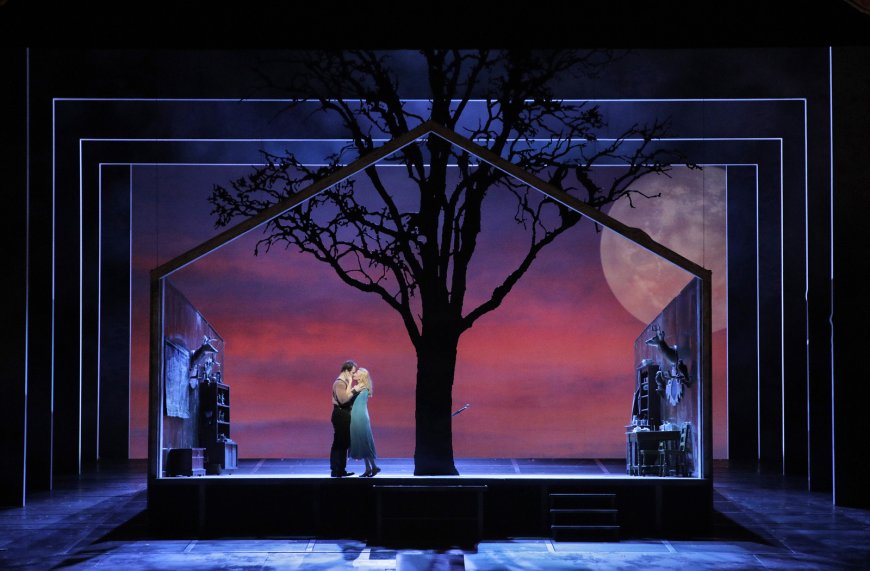
The 2027–2028 Ring is a revival of an extraordinary production dubbed the “American Ring" in which Zambello reimagined the tetralogy in terms of American history — receiving a wide range of responses.
Zambello’s Das Rheingold is framed around the California Gold Rush, while her Die Walküre is set in the industrial revolution and her Siegfried shows the destruction of nature... but with a glimpse of redemption at the end, which will not be spoiled here.
The production was revised in 2018, when popularity and success exceeded the previous presentation. Further changes are expected in the upcoming presentation, but Zambello gives no hints of specifics.
Zambello said that Wagner’s vision of the world “demands a setting in which gods, goddesses, creatures, heroes, and mere humans are all equally at home. Many set out on journeys that will take them through terrifying landscapes demanding courage, heart, understanding, and sacrifice. As they are transformed, so are we who watch, and sense their stories are also ours.”
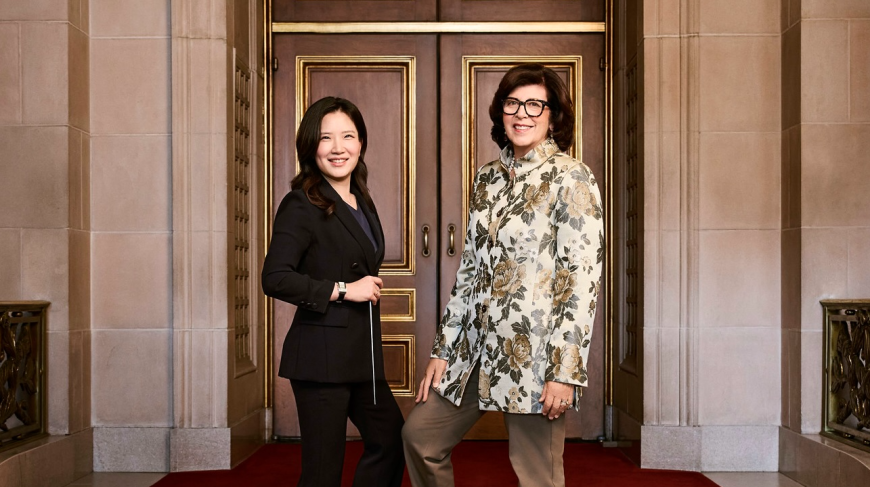
The 2027-2028 Ring Cycle will be SF Opera Music Director Eun Sun Kim’s first time conducting the work. Already acclaimed for her Lohengrin, Tristan und Isolde, and Parsifal, Kim’s Ring debut is awaited with high expectations.
The summer of 2027 will bring with it seven performances of Das Rheingold, which Wagner coined the “Vorabend” — a preliminary evening to the Cycle. Kim will lead the orchestra and cast, featuring Brian Mulligan as Wotan, Falk Struckmann as Alberich, Brenton Ryan as Loge, and Judit Kutasi as Fricka.
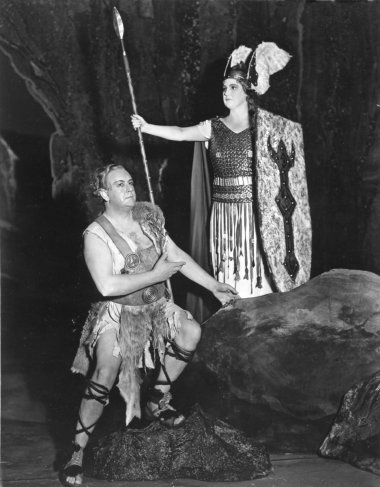
For the full Cycle, SF Opera has announced “an international cast of the world’s leading Wagnerians,” headed by American soprano Tamara Wilson as Brünnhilde, Brian Mulligan as Wotan, Falk Struckmann as Alberich, New Zealand tenor Simon O’Neill as Siegfried, and American soprano and former Adler Fellow Julie Adams as Sieglinde.
After Das Rheingold next summer, single performances of Die Walküre will be offered next fall with single performances of Siegfried and Götterdämmerung set to be offered in the weeks before the full cycles begin on June 13, 2028, and run through July 2.
Tickets for the complete cycles went on sale today, Oct. 13, at 10 a.m. for Ring Circle members, season subscribers, and donors of $150 or more. Cycle tickets go on sale to the general public in July, 2027. Tickets for the non-Cycle performances of Das Rheingold in May and June 2027 are available now.
The 2028 Ring Cycle schedule:
CYCLE 1: June 13 (7:30 p.m.); June 14 (6 p.m.); June 16 (6 p.m.); June 18 (1 p.m.)
CYCLE 2: June 20 (7:30 p.m.); June 21 (6 p.m.); June 23 (6 p.m.); June 25 (1 p.m.)
CYCLE 3: June 27 (7:30 p.m.); June 28 (6 p.m.); June 30 (6 p.m.); July 2 (1 p.m.)
Production credits in addition to Kim and Zambello:
Set Designer: Michael Yeargan
Costume Designer: Catherine Zuber
Original Lighting Designer: Mark McCullough
Revival Lighting Designer: A.J. Guban
Original Projections: Jan Hartley
New Projections: Remounted by S. Katy Tucker
Choreographer: Denni Sayers
Associate Director: Denni Sayers (Das Rheingold, Siegfried) and Christian Rath (Die Walküre, Götterdämmerung)
Chorus Director: John Keene