A mysterious object uncovered on a remote island in the South Pacific could hold the key to solving what really happened to the world’s most famous female pilot - Amelia Earhart. The seventeen-person team from the Archaeological Legacy Institute and Purdue University have travelled to Nikumaroro Island - an uninhabited atoll halfway between Hawaii and Australia. They're investigating if the plane wreckage is in fact there.
Blurry satellite photos. Deserted islands. Mysterious radio signals. A missing celebrity.
All are ingredients of legend, myth and scandal.
Almost 90 years after pioneering aviator Amelia Earhart vanished over the Pacific, her story continues to fascinate. Not to mention sell books and documentaries, and drive enthusiastic donations.
Now, a new team of ambitious researchers has arrived at remote Nikumaroro Island in the Pacific state of Kiribati, convinced they know where her famous silver Lockheed Model 10-E Electra aircraft went down on July 2, 1937.
Ms Earhart and her co-pilot, Frederick Noonan, were six weeks and 30,000km into their 45,000km journey when they failed to make a scheduled fuel stop at Howard Island, some 2700km south of Hawaii.
An extensive US investigation at the time determined the pilots had lost their way and couldn’t locate the 6.5 square kilometre island in the vast ocean.
Enthusiasts have been striving to discover her fate ever since.
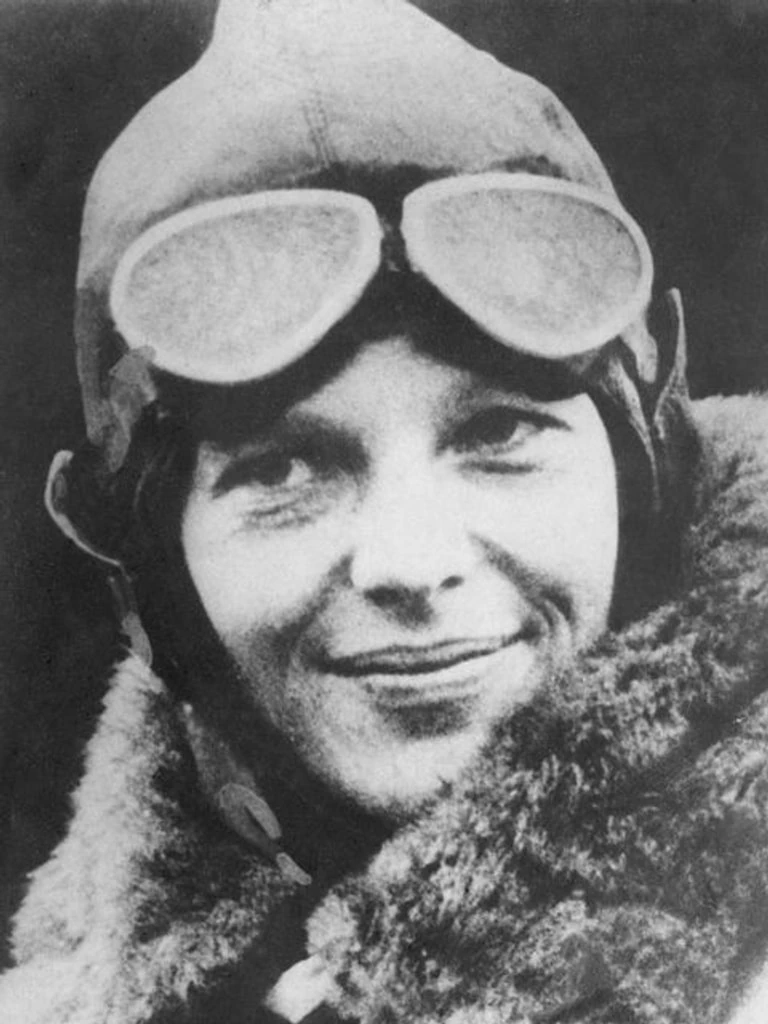
“At the time of her death, Earhart was among the most famous women in the world,” says University of Southern Queensland aviation archaeologist Natasha Heap.
“She was a record-breaking pilot, best-selling author, feminist hero and friend of the first lady Eleanor Roosevelt. She disappeared at the peak of her career, and towards the end of the golden age of aerial exploration.”
Reports of desperate radio calls. Mathematical and atmospheric analysis of radio waves. Calculations of wind patterns, fuel consumption and navigation techniques.
All have been visited and revisited for new angles and interpretations.
Could Ms Earhart, lost and low on fuel, have spotted another island for an emergency landing?
Dozens of searches have been launched.
None have found verifiable evidence of the flight’s fate.
“This case has taken a long time,” says expedition leader Richard Pettigrew.
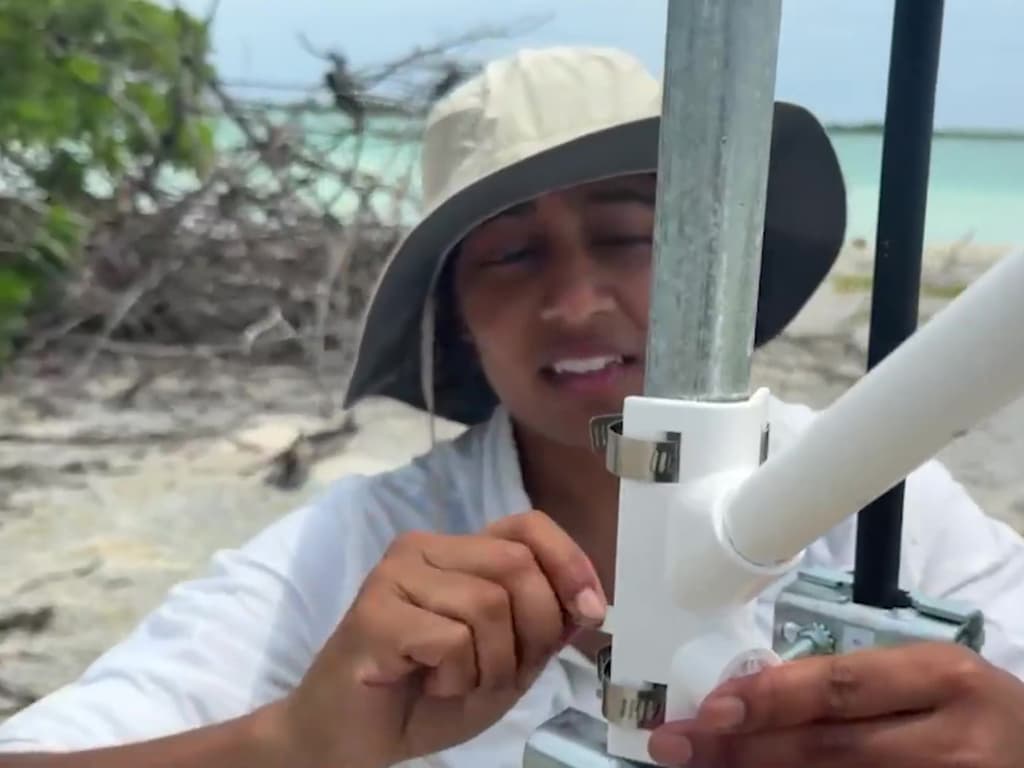
A 17-person crew from Purdue University and his privately owned Archaeological Legacy Institute (ALI) are now at the potential crash site.
“But we have some new evidence. There’s an object visible in the Nikumaroro lagoon. Everything that we see indicates it’s very possible, perhaps even likely, that this is what remains of Amelia Earhart’s aircraft.”
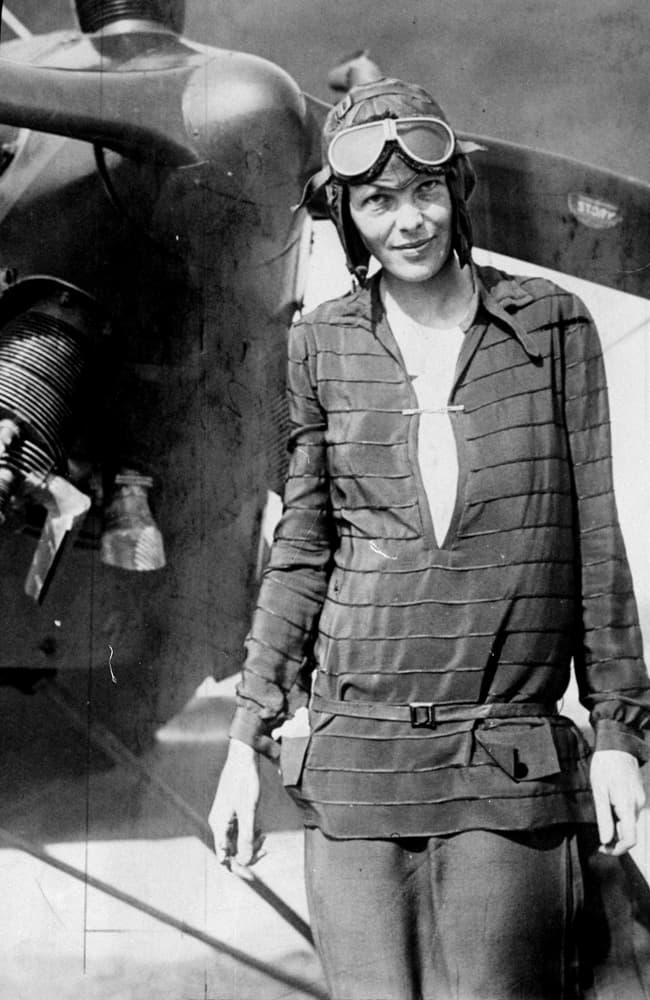
Makings of a hero
Ms Earhart was pioneering a new way of life for women in the early 20th Century.
She had an unusual job: An aviation “adviser” and “women’s counsellor” at Purdue University.
She was a thrillseeker: She’d flown her bright yellow biplane, The Canary, to the edge of its limits after becoming the first woman to earn a pilot’s licence in 1923.
She was an adventurer: She’d been the first woman to be flown across the Atlantic in 1928. She was the first woman to fly the 15-hour flight herself in 1932.
She was at the height of her fame when she vanished while attempting to fly around the world.
Along the way, she had become a celebrity. A beacon of female capability and ambition.
She also had her own fashion line.
It all began after she’d been forced to borrow a men’s flight suit to stay warm while being flown across the Atlantic in 1928.
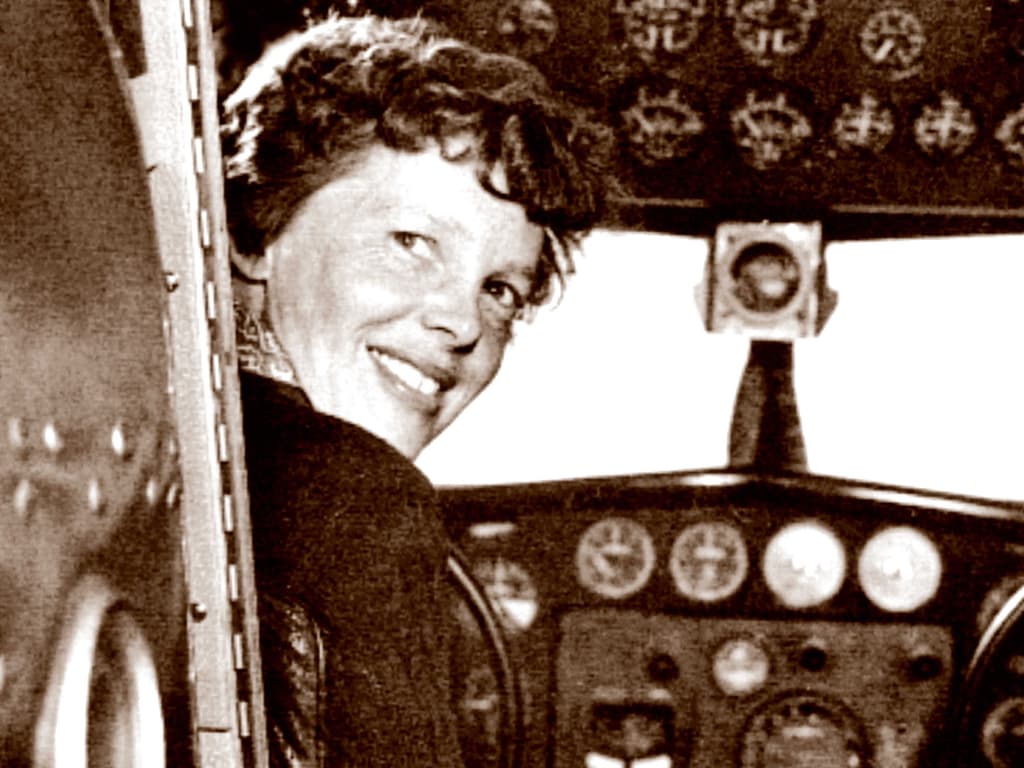
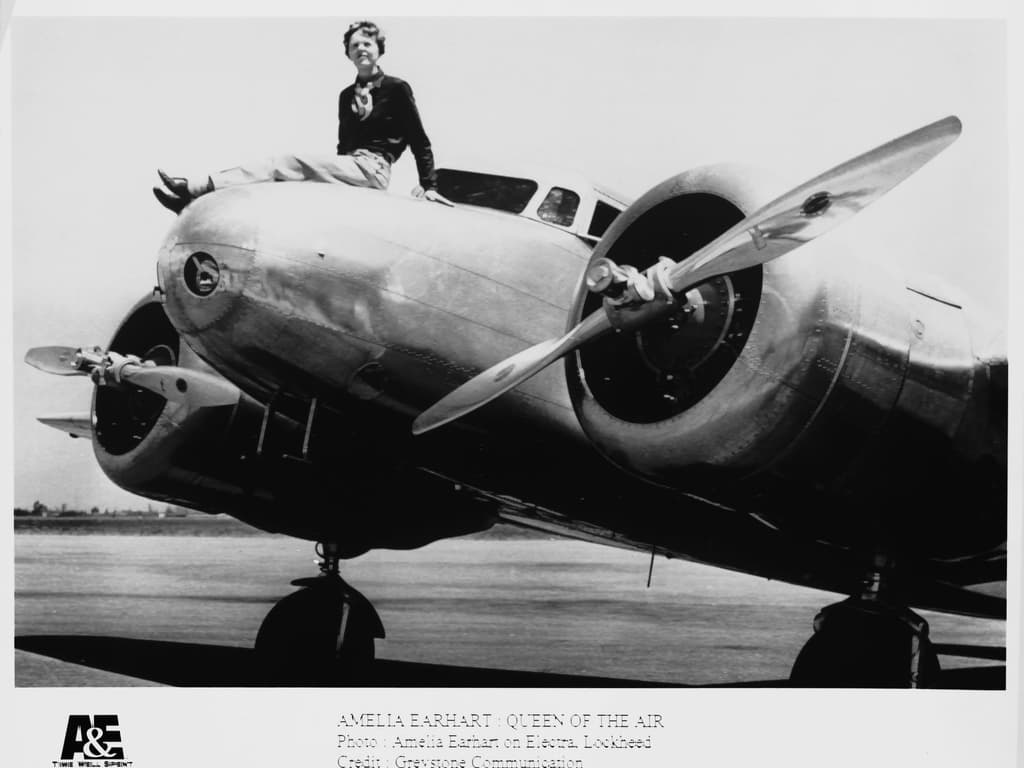
Her plight was immediately seized upon. By the time she landed in the United Kingdom, fashion chains and stores were in a bidding war for the right to dress her.
Smithsonian National Postal Museum assistant curator Alison Bazylinski says New York’s famous department store Arnold Constable gave her a custom-made leather jumpsuit, lined with wool.
“There’s a record of it from about two weeks later, saying that three people had purchased it for $US175 ($250) per suit,” Ms Bazylinski says. That’s about $US3400 ($5000) in today’s money.
Ms Earhart went on to design a line of travel luggage and practical women’s wear. And she became Cosmopolitan magazine’s aviation editor.
“She is sort of part of this American style aesthetic and ethos that is really coming into its own in this interwar period,” Ms Bazylinski concludes.
She vanished at the height of her fame.
“The disappearance, which is often labelled as ‘mysterious’, continues to captivate the world,” argues the University of Queensland’s Ms Heap.
“With no confirmed wreckage found, millions of dollars have been spent on repeated, fruitless searches. And sensational claims of a possible discovery make splashy headlines with alarming regularity.”

From legend to myth
“The global media loves a sensational story: if it bleeds, it leads,” Ms Heap states.
“But while there’s no fresh blood in the Earhart story, the legacy and modern media have contributed to the proliferation of reports from dubious organisations.”
An official US government inquiry determined the Lockheed Electra simply ran out of fuel and ditched in the ocean near its destination, Howland Island.
It’s the simplest explanation.
It fits the known facts.
But it’s a somewhat dull demise for such a glamorous celebrity.
And the few scattered clues, real or imagined, offer many different combinations of dots to connect as answers.
Several different directional bearings were made from her last radio calls. Many attempts have tried to triangulate and reinterpret these over the decades. And Nikumaroro Island, the closest alternative landing site candidate, has been searched repeatedly.

The idea is the aircraft could have set down on a beach or lagoon. And that the castaway Earhart and Noonan were later eaten by the island’s giant crabs.
A photograph of Nikumaroro Island taken a few months after her disappearance by British naval officer Eric Bevington shows a strange blob on the beach next to the wreck of the cargo ship SS Norwich City.
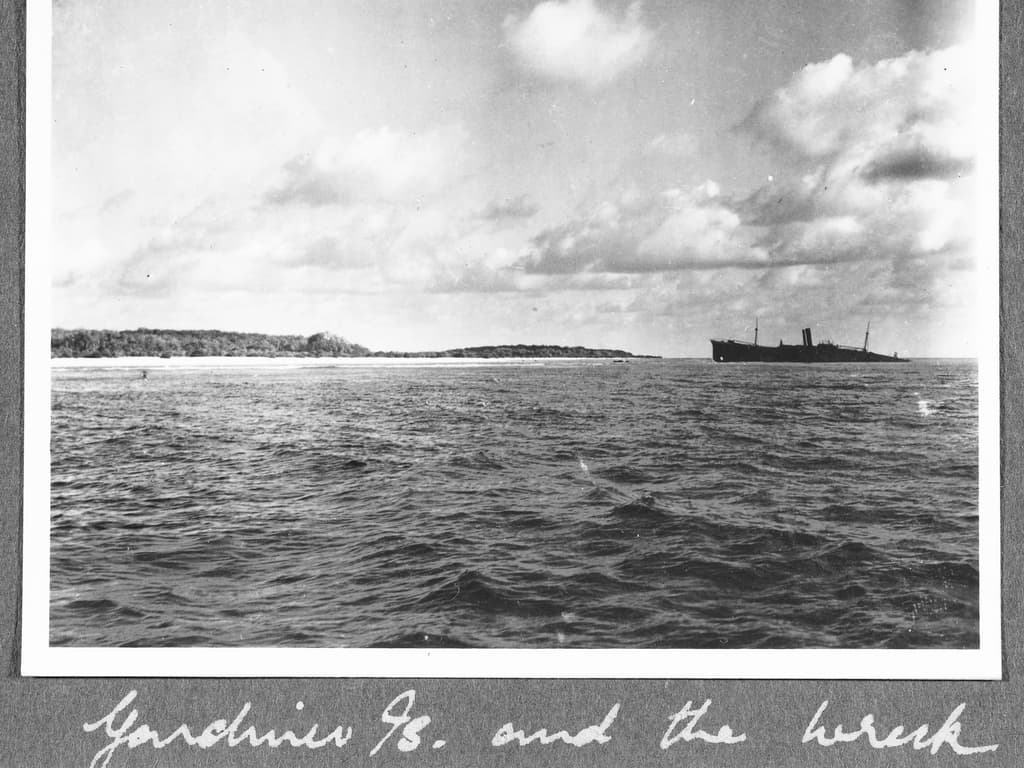
Human bones were discovered there in 1940. Amid speculation that some were about Ms Earhart’s size, at least one has since been revealed via DNA testing as Polynesian.
Artefacts dating from the 1930s have been found. These include a woman’s shoe, a compact case, a medical vial and a freckle cream jar. None have been linked to Ms Earhart.
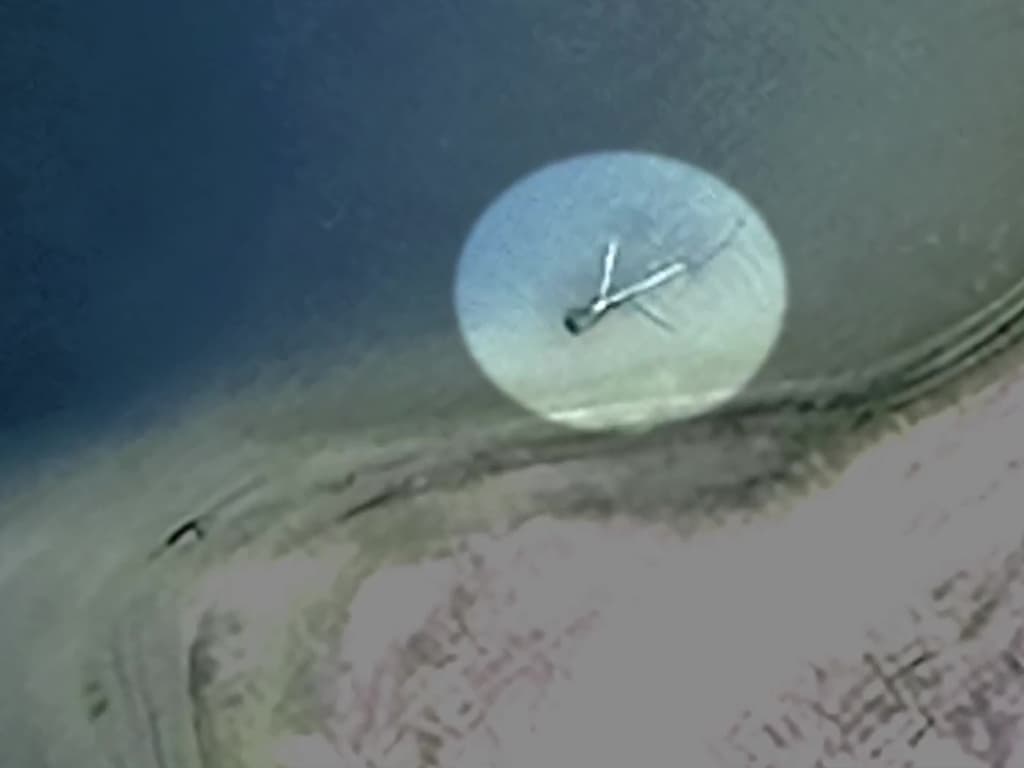
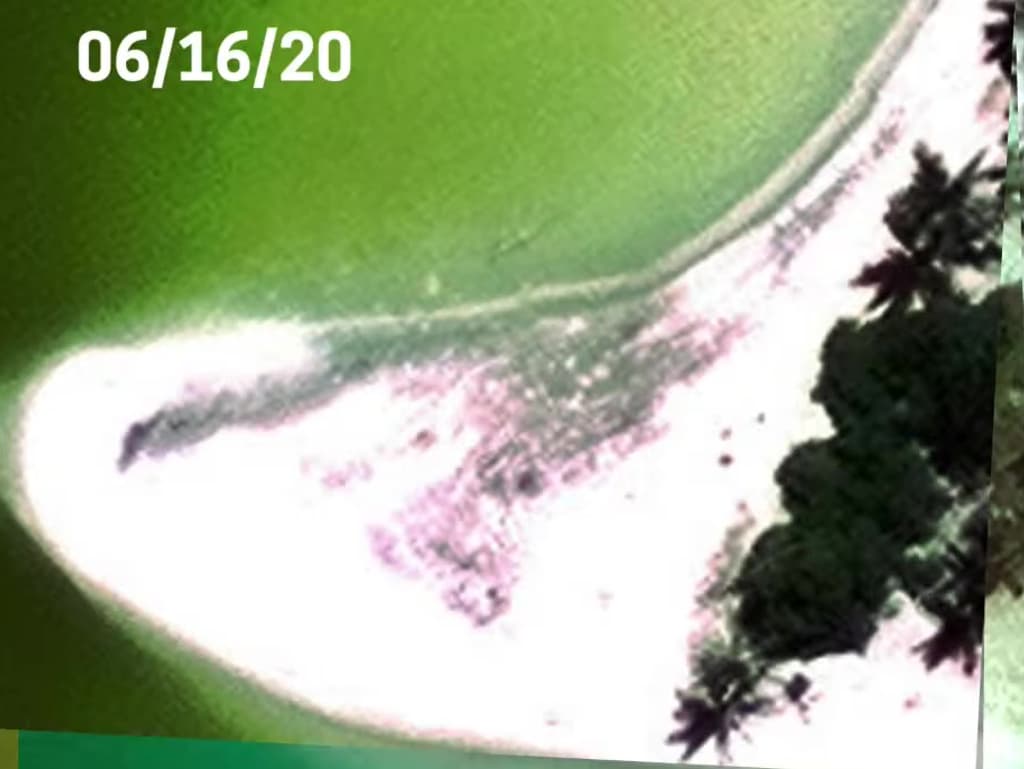
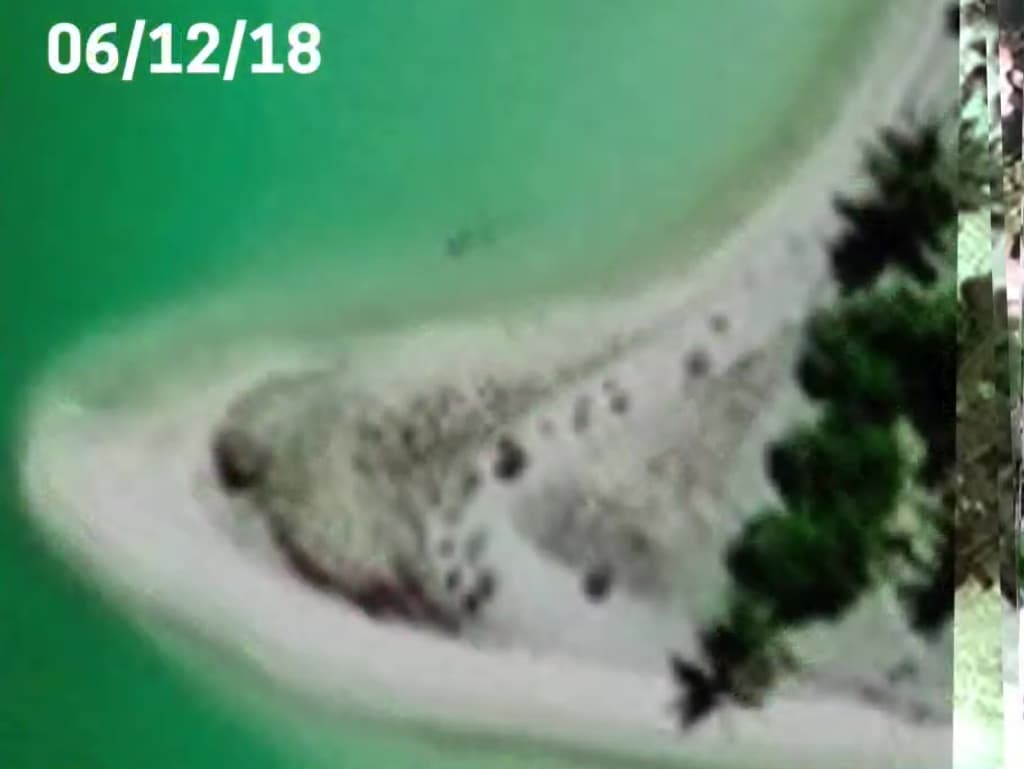
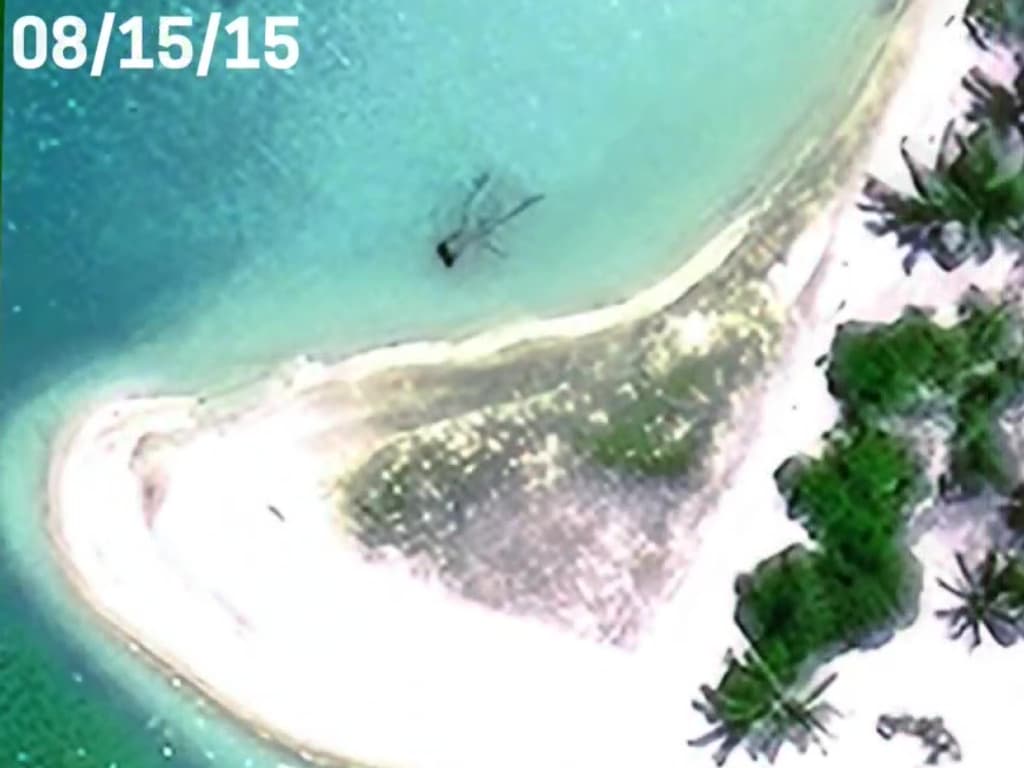
Then, in 2020, a fuzzy object in an Apple Maps satellite image revived interest in the search. Contrast and colour enhancement make it look metallic and symmetrical. Satellite photos from the previous five years also contained the object.
“There’s something in the lagoon that shouldn’t be there,” Mr Pettigrew says in a Purdue University YouTube address.
“It seems to be pretty big; it seems to be a shiny metal thing, and it is hundreds of miles from the nearest inhabited place.”
The idea is that Cyclone Pam, which struck the island in 2015, shifted enough sediment to expose a wreck.
Moonlight shadow
The expedition arrived at Nikumaroo earlier this week. They haven’t found anything of substance. Yet.
Just like dozens of other searches in recent decades.
“We’ve looked there in that spot, and there’s nothing there,” says wreck hunter Ric Gillespie, executive director of the International Group for Historic Aircraft Recovery (TIGHAR).
“I understand the desire to find a piece of Amelia Earhart’s aeroplane. God knows we’ve tried. But the data, the facts, do not support the hypothesis. It’s as simple as that.”
Famous Titanic and Bismarck wreck discoverer Rob Ballard has also tried.
He led a National Geographic expedition to the island in 2019. This involved a comprehensive survey of the island and surrounding reefs.
It came up with nothing.
But that has not deterred the ALU’s Mr Pettigrew.
His first attempt to examine the satellite photo site in 2025 fell afoul of Kiribati authorities. He hadn’t obtained the necessary permissions for an archaeological search.
A year later, the paperwork is complete. He raised $US900,000 ($1.3 million). And his survey ship arrived on October 13.

“It’s important for us to go there and look at it,” he told a press conference last year.
“We have to identify it. We have to confirm the hypothesis.”
Many remain sceptical.
We’ve been here before. Often.
“In January 2024, much media hype was generated by a sonar image – taken by exploration company Deep Sea Vision – of what some claimed was Earhart’s aircraft,” says Ms Heap.
“It was revealed to be a natural rock formation, with far less publicity. Many people will have seen the ‘discovery’, but not the correction.”
But the dream lives on.
And it will likely continue to do so.
“There are few Americans who embody the bold ambition of our nation more than Amelia Earhart,” reads a White House statement issued for the 250th celebration of the United States in July.
“Earhart’s legacy will forever endure as a reminder that the American spirit has never been content to stand still – it is restless, it is fearless, and it is forever fixed on the horizons of tomorrow.”