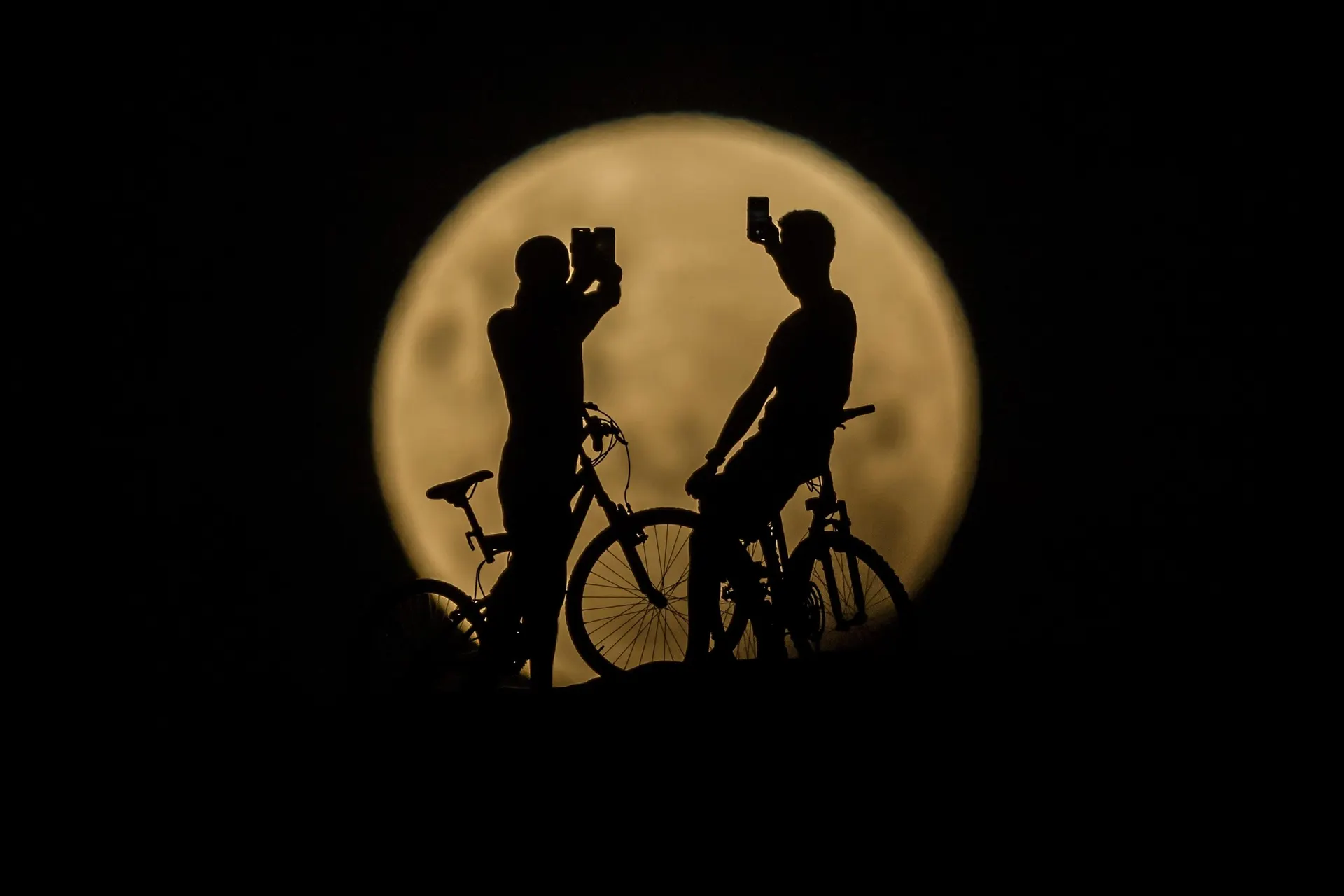
If it seems like “supermoons” have disappeared from the night sky, there’s a good reason. After one on Jan. 3, 2026, there hasn’t been another all year. That drought is about to end — spectacularly.
Starting with November’s full Beaver Moon, four consecutive full moons will occur unusually close to Earth, culminating in February 2027 with a “Super Snow Moon” that will also pass through Earth’s outer shadow during a slight lunar eclipse. Before that comes the closest and brightest full moon of 2026 — on Christmas Eve.
So what happened to “supermoons,” and why are they suddenly coming back?
What Is A Supermoon?
“Supermoon” isn’t an astronomical term. In fact, there is no official definition, so different sources produce slightly different lists of which full moons qualify.
Astrologer Richard Nolle coined the term and defined a supermoon as a new or full moon occurring when the moon is at or near — within 90% of — its closest approach to Earth. He even produced a table of supermoons for the 21st century. Definitions differ —Timeanddate.com defines a full moon as a supermoon only when it occurs within 360,000 km of Earth, with Sky & Telescope magazine defining it as within 223,000 miles (358,884 km).Either way, astronomers generally prefer the decidedly less catchy phrase “perigean full moon.”
What Supermoons Occur
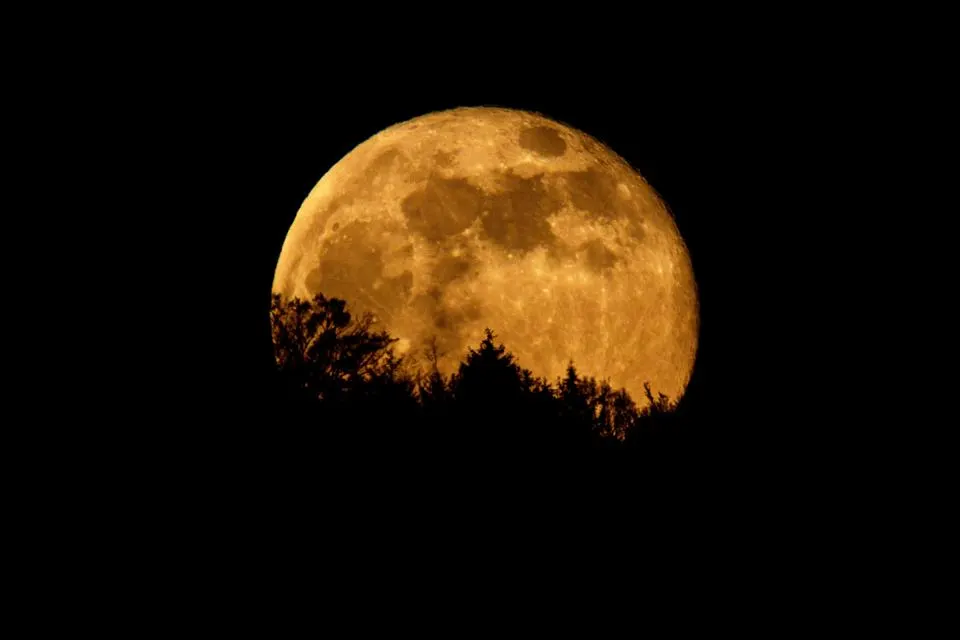
They happen because the moon’s orbit around Earth isn’t a perfect circle. It’s slightly elliptical, so during every orbit it reaches a closest point to Earth, called perigee, and a farthest point, called apogee. If a full moon occurs near perigee, we get what’s popularly known as a supermoon.
The effect is real, though subtle. A supermoon can appear up to about 14% larger and 30% brighter than a full moon close to apogee. However, the difference is almost impossible to detect without a side-by-side comparison. If anything, you’ll notice the extra brightness.
When Is The Next Supermoon?
On Tuesday, Nov. 24, the full Beaver Moon will occur at 14:53 UTC (9:53 a.m. EST), when the moon will be about 224,170 miles (360,768 kilometers) from Earth. It will be the first of four consecutive full moons commonly classed as supermoons under the broad definition.
Then things get more interesting. On Thursday, Dec. 24, the full Cold Moon will occur at 01:28 UTC — 8:28 p.m. EST on Wednesday, Dec. 23 — at about 221,667 miles (356,740 kilometers) from Earth. It will be the closest full moon of 2026, with perigee occurring only a few hours later. In other words, Christmas Eve 2026 comes with an unusually large and bright full moon.
Two More Supermoons In 2027
The sequence will continue on Friday, Jan. 22, 2027, when the full Wolf Moon occurs at 12:17 UTC. At about 222,200 miles (357,600 kilometers) from Earth, it will be almost as close as December’s full moon.
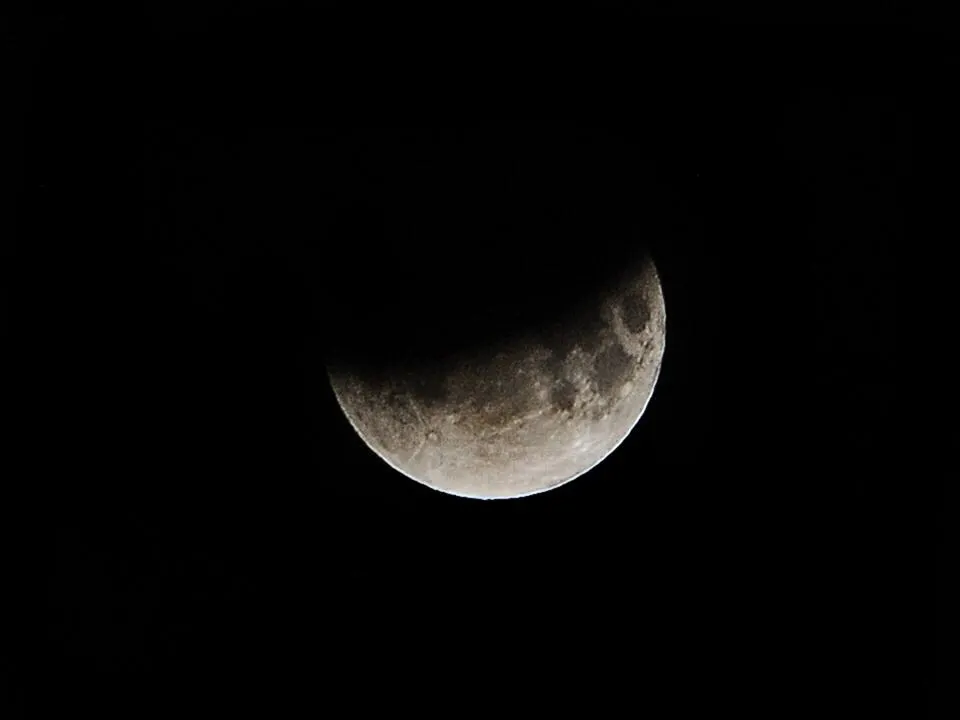
The fourth and final supermoon in the sequence comes on Saturday, Feb. 20, when the full Snow Moon occurs at 23:23 UTC at a distance of about 225,700 miles (363,300 kilometers). This one comes with something extra. The moon will pass through Earth’s faint outer shadow, its penumbra, causing a penumbral lunar eclipse visible from Europe, Africa, Asia, Australia and much of North and South America. Unlike a dramatic “blood moon” total lunar eclipse, the effect will be subtle — a slight shading across the lunar surface around the time of maximum eclipse — but moon gazers will still watch it closely.
The Coming Supermoon Sequence
So, depending on the definition used, the coming sequence looks like this:
- Nov. 24, 2026: Super Beaver Moon — the first supermoon since January.
- Dec. 24, 2026: Super Cold Moon — the closest and brightest full moon of 2026.
- Jan. 22, 2027: Super Wolf Moon — almost as close and bright as December’s supermoon.
- Feb. 20, 2027: Super Snow Moon — the final supermoon in the sequence, also a penumbral lunar eclipse.
How To See A Supermoon
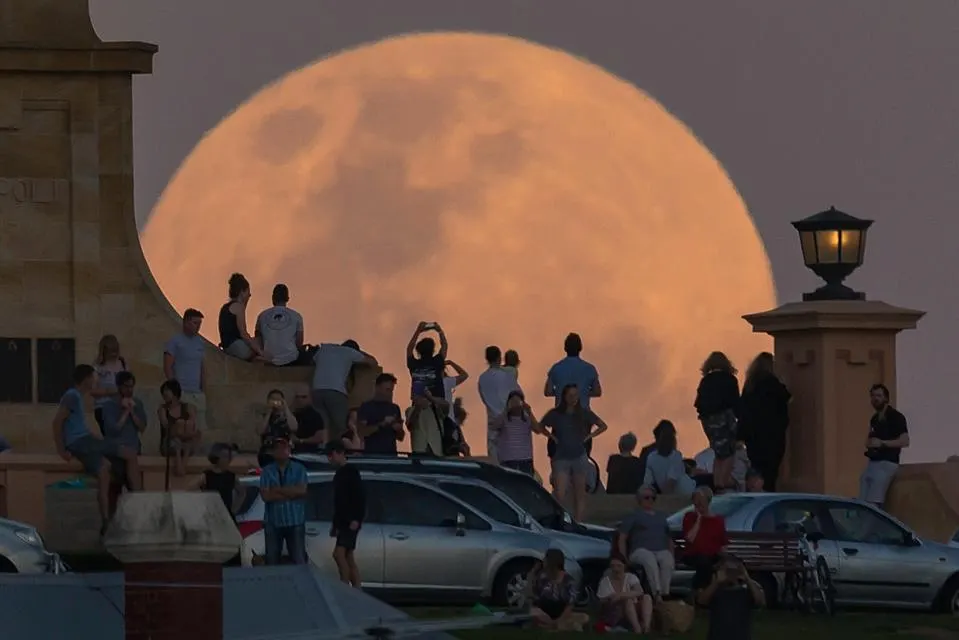
Don’t worry too much about whether a particular full moon passes someone’s mathematical threshold for being “super.” There’s a much more important rule for seeing one at its best — watch it rise.
A full moon always rises in the eastern sky around sunset, and that’s when it looks most impressive. Seen close to the horizon, the familiar “moon illusion” makes it appear enormous against trees, buildings and distant hills, according to NASA. Its light also has to travel through more of Earth’s atmosphere, giving the moon a beautiful orange hue — just like a sunrise or sunset.
That effect has nothing to do with the moon being “super.” In fact, where the moon is seen in the sky will make vastly more difference to your experience than the relatively small change in the moon’s apparent size caused by its distance from Earth.
That has always been the irony of supermoons. The name may be over-hyped and scientifically imprecise, but if it persuades people to go outside at moonrise and watch one of nature’s most beautiful monthly sights, it’s arguably done its job.
After a quiet few months, “supermoon” season is almost back — and we are all moongazers again.
Wishing you clear skies and wide eyes.