Topline
This week’s standout sky sight comes on Tuesday, when November’s full moon — a supermoon appearing slightly larger and brighter than average — shines beside the Pleiades star cluster in Taurus. The moon passes just 0.9 degrees from the famous “Seven Sisters,” but that’s not all that’s happening in the night sky. Before dawn on Wednesday, Mars passes just close to the bright star Regulus, while Uranus reaches opposition that same evening. On Friday, Venus — reborn as the “Morning Star” this month — reaches greatest brightness in the predawn sky. Here’s everything you need to know about stargazing and the night sky from Monday, Nov. 23 through Sunday, Nov. 29.
Timeline
Monday, Nov. 23: Moon closes in on the Pleiades
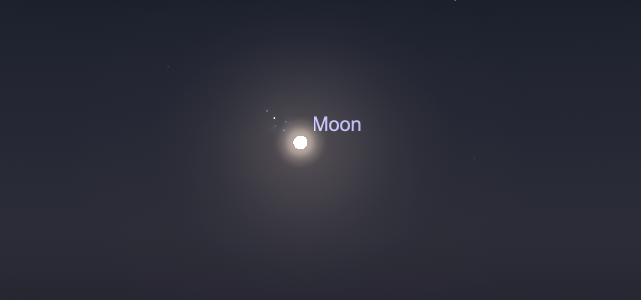
Look east after dark for an almost full moon approaching the Pleiades, the famous “Seven Sisters” star cluster in Taurus. The brilliant moon will overwhelm many of the cluster’s fainter members, but its brightest stars should still be visible close by.
Tuesday, Nov. 24: Full ‘Beaver Supermoon’ rises
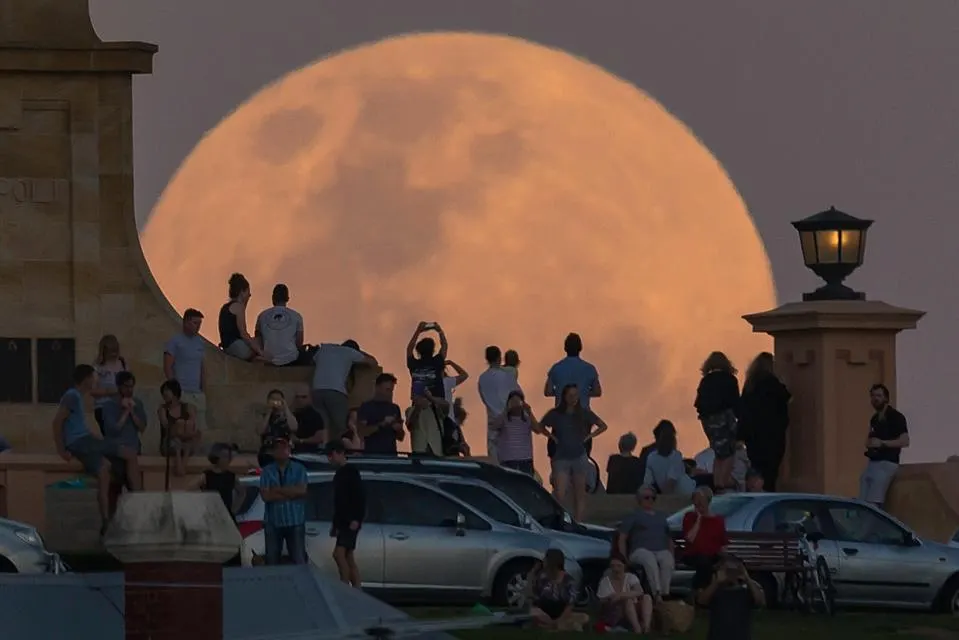
Look east at the time of moonrise where you are for November’s full moon. It’s also a supermoon, occurring close to tomorrow’s lunar perigee, so it will appear slightly larger and brighter than an average full moon — though the difference will be subtle to the naked eye. The full moon will pass just 0.9 degrees north of the famous Pleiades star cluster.
Wednesday, Nov. 25: Mars meets Regulus
About an hour before sunrise, look east for reddish Mars passing close to bluish Regulus, the brightest star in Leo, creating an attractive color contrast. Brilliant Jupiter will be nearby and considerably brighter than either. Uranus reaches opposition tonight, though only big binoculars or a telescope can find the gas giant.
Friday, Nov. 27: Venus at greatest brightness
About 45 minutes before sunrise, face east-southeast for Venus at its dazzling best. The planet reaches greatest brightness around this point in its current morning apparition, easily earning its traditional nickname, the “Morning Star.” Venus’ extraordinary brightness comes from its relative proximity to Earth and its highly reflective, permanently cloud-covered atmosphere.
WHAT A SUPERMOON REALLY MEANS
The term “supermoon” often comes with exaggerated expectations, but the reality is more subtle — and more interesting. A supermoon occurs when the full moon is near perigee, the point in its orbit where it is closest to Earth. Visually, this translates to a moon that appears roughly 7–10% larger and about 15% brighter than a typical full moon. The difference is noticeable, but only if you’re paying attention or comparing it to other full moons. The real effect is psychological. A bright full moon rising at sunset, especially near the horizon, appears enormous. This isn’t due to distance but to the “moon illusion,” where objects near the horizon seem larger because our brains interpret foreground cues.
THE WINTER NIGHT SKY IS TAKING SHAPE
By late November, the winter sky is fully in place. Orion stands high in the southeast during the evening, with Taurus above it and Gemini rising to the left. Below Orion, Sirius is now unmistakable, flashing brilliantly as it climbs through the thicker layers of atmosphere near the horizon. This region forms one of the most recognizable patterns in the sky — the Winter Hexagon — a large loop of bright stars that can be traced from Orion outward through Taurus, Auriga, Gemini and Canis Major.
Constellation Of The Week: Perseus
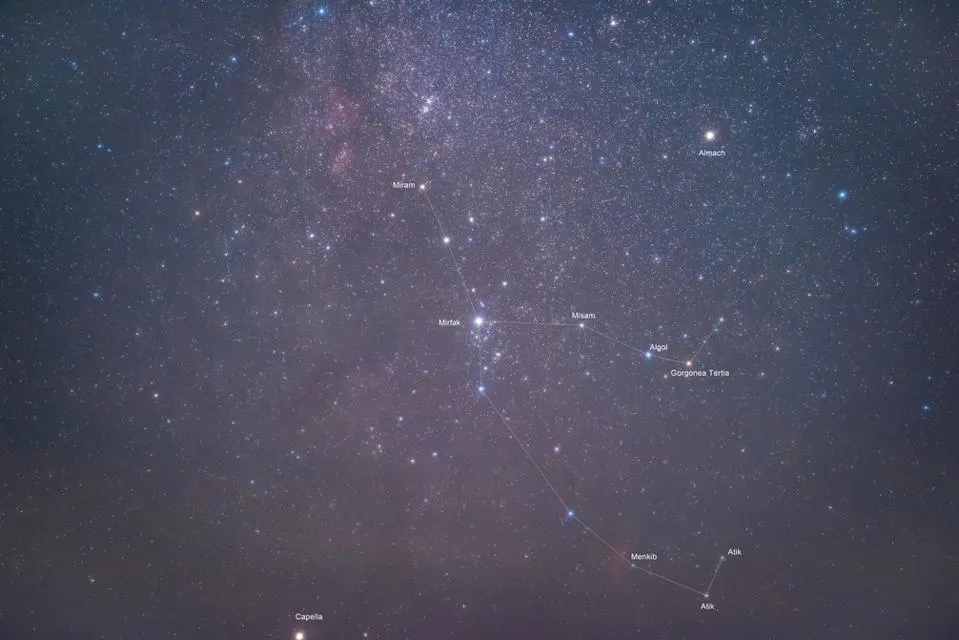
Between Cassiopeia and Taurus lies Perseus, a constellation that is often overlooked but deeply rewarding once found. Look high in the northeast during the evening. Starting from the W-shape of Cassiopeia, trace a line downward toward Taurus. Along that path, you’ll encounter a loose chain of stars forming Perseus. It looks less like a character and more like a river of stars. That’s not surprising because Perseus sits along the plane of the Milky Way.
What’s Next In The Night Sky
As the supermoon begins to wane after Nov. 24, it rises later each night, gradually restoring darker evening skies as the month draws to a close. It sets up the first week of December as the next great period for stargazing. Attention then turns to the annual Geminid meteor shower, which peaks on the night of Dec. 14-15 and is widely regarded as the year’s most reliable meteor display. Shortly after, the winter solstice on Dec. 21 brings the longest night in the northern hemisphere, marking the peak of the observing season for stargazers.
The times and dates given apply to mid-northern latitudes. For the most accurate location-specific information, consult online planetariums like Stellarium. Check my main feed for more in-depth articles on stargazing, astronomy, eclipses and more.