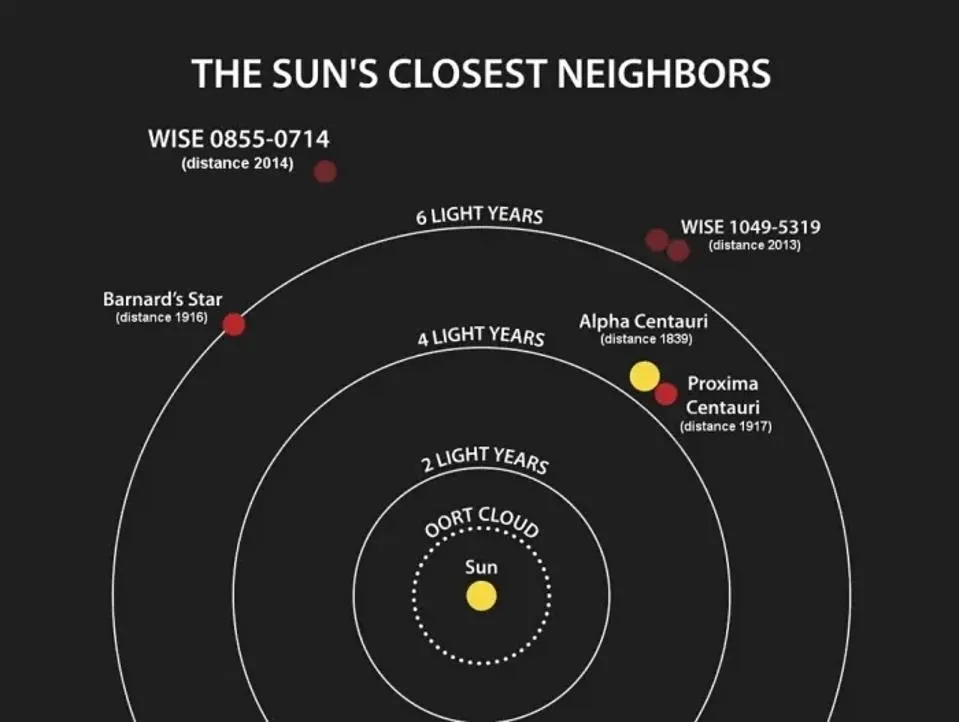
Everyone has heard of Alpha Centauri, the closest star system to the sun at just 4.7 light-years. This odd triple star system contains tiny Proxima Centauri, which happens to be the closest star to the sun. It’s a small red dwarf star, as is the next-closest, Barnard’s Star, at 5.94 light-years. Next come two similarly small brown dwarfs — WISE 1049−5319 and WISE 0855−0714 — just 6.5 and 7.5 light-years distant, respectively.
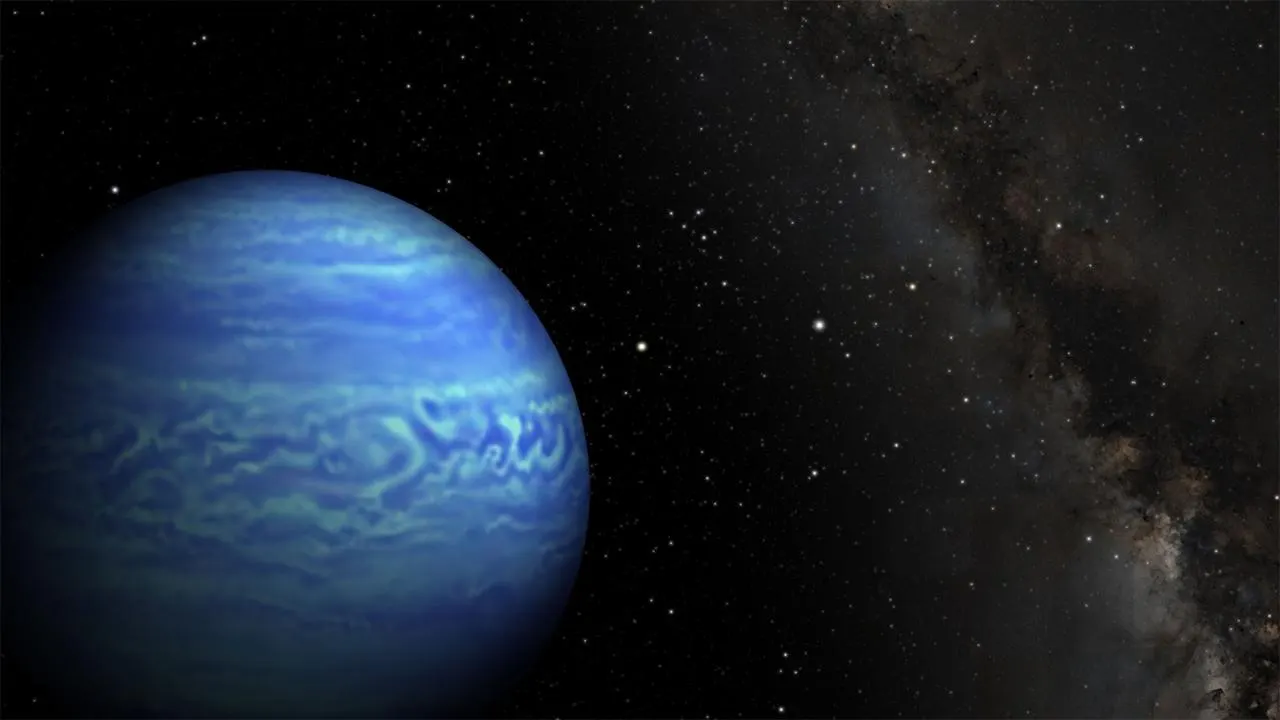
It’s that final star, WISE 0855-0714, that the James Webb Space Telescope has been staring at — and it’s found something rather wonderful. Here, in the constellation of Hydra, JWST has found evidence of water clouds on a world beyond our solar system. What’s more, it’s seen them change in thickness over time.
A failed star about five times the size of Jupiter, WISE 0855-0714 may be more like Earth than anyone expected, according to NASA. The study, published in The Astrophysical Journal, reveals a complex atmosphere where shifting water clouds and rising chemical gases create dynamic weather patterns similar to those observed on Jupiter.
James Webb Telescope Reveals Changing Water Clouds
Using JWST, researchers observed WISE 0855 continuously for 11 hours, collecting detailed light measurements every 15 minutes. The observations revealed that water clouds in the brown dwarf’s upper atmosphere thicken and thin as the object rotates.
“This is the first time we’ve been able to confirm that water clouds are becoming thinner and thicker on a nearby world,” said Brittany Miles, assistant astronomer at the University of Arizona’s Steward Observatory. “Before JWST, we only had photometry, which mixed up the effects of clouds, chemistry, and temperature all together. Now we can actually distinguish them.”
Previous observations could not reliably distinguish changes caused by clouds, atmospheric temperatures and chemical composition. JWST’s advanced instruments allowed scientists to separate these processes, providing an unprecedented view of atmospheric activity beyond our solar system.
What Is WISE 0855−0714?
WISE 0855 is a brown dwarf, an astronomical object that occupies the boundary between giant planets and stars. Unlike stars, brown dwarfs lack enough mass to sustain hydrogen fusion in their cores — they’re nearly stars: too massive to be planets, too small to ignite as stars.
With about twice Jupiter’s mass and a similar diameter, WISE 0855 resembles a giant planet despite its classification. Its atmospheric temperature is approximately 265 Kelvin, or minus 8 degrees Celsius, making it the coldest known brown dwarf. Its extreme conditions make WISE 0855 particularly valuable for investigating the atmospheres of cold, Jupiter-like worlds.
Scientists Detect Complex Atmospheric Chemistry
Beyond changing water clouds, JWST detected variations in carbon monoxide and phosphine within WISE 0855’s atmosphere. Scientists believe these chemical changes result from convection, a process that transports heat and gases from deeper atmospheric layers toward the surface. Similar atmospheric mixing occurs on Jupiter, suggesting that comparable physical processes operate across different types of celestial objects.
“We’re seeing water clouds getting thicker and thinner, and deep gases rising and falling, and we can actually watch them change in real time,” said Miles.
Discovery Could Transform Exoplanet Research
Researchers believe the findings could improve scientists’ understanding of giant exoplanets orbiting distant stars. “Even though brown dwarfs are not true planets, they exhibit planet-like behavior,” said Miles. Jupiter and WISE 0855−0714 are not alike, but there is no hard line that separates brown dwarfs from planets. “There are basic physics and chemistry that can be applied across all of these worlds,” said Miles.
The research team hopes to conduct more JWST observations to investigate WISE 0855’s rotation and atmospheric circulation. Weather, it seems, happens everywhere.
Wishing you clear skies and wide eyes.