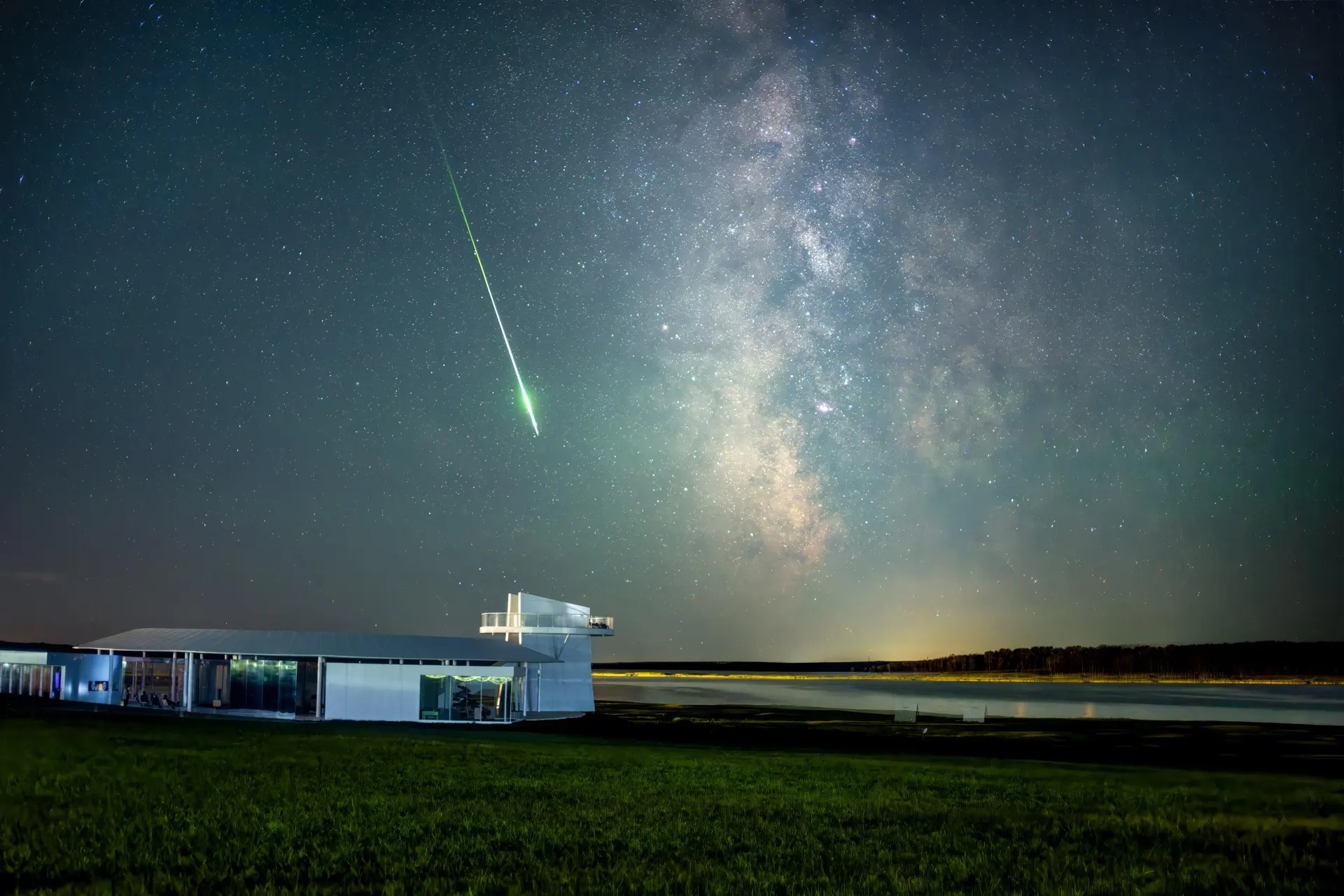
The Southern Taurid meteor shower, known for producing unusually bright “shooting stars” peaks overnight on Wednesday, Nov. 4 and Thursday, Nov. 5, with November’s darkest skies creating excellent conditions for spotting a bright “fireball” — if the sky is clear.
The fireball-associated component of the annual Southern Taurid meteor shower is peaking. Although only about five Taurids per hour are expected under ideal conditions, an individual meteor can be spectacular. As usual, catching one comes down to patience and luck. Here’s when and how to watch.
Taurid Meteor Shower: When To See Southern Taurids And Fireballs Tonight
The Southern Taurids are active from Sept. 20 through Nov. 20, according to the American Meteor Society, with an annual peak in mid-October and a second component of fireballs peaking Nov. 4-5.
Moonlight shouldn’t be a problem, since a 17%-illuminated waning crescent won’t rise until a couple of hours before dawn, leaving most of the night naturally dark.
There’s no need to stay outside expecting a constant stream of meteors. The Southern Taurids produce only around five per hour at maximum under perfect conditions, and most observers will see fewer — this is more an opportunity to go stargazing for an hour or so, as late at night as possible, and see what happens.
Taurids enter Earth’s atmosphere at a relatively leisurely 17 miles (27 kilometers) per second, with their slower apparent movement making any bright fireballs particularly striking.
Taurid Meteor Shower: How To See Taurid Fireballs: Tips For Meteor Shower Watching
Taurid meteors appear to originate in the constellation Taurus, relatively close to the famous Pleiades star cluster (also known as the “Seven Sisters” and M45), but you don’t need to locate either.
Instead, choose an observing location with minimal light pollution and an unobstructed view of as much sky as possible. Spend about 20 minutes outside to let your eyes adjust to the dark, then just watch. Don’t look with binoculars or telescopes—they will reduce your chances of seeing meteors.
Since Taurus is visible to everyone on Earth at this time of year, you can see the Taurids worldwide. The constellation rises during the evening and becomes better positioned as the night progresses. Meteors, however, can flash into view anywhere overhead.
Taurid Meteor Shower: Why The Southern Taurids Produce ‘Halloween Fireballs’
The Southern Taurid meteor shower overlaps with the Northern Taurids during fall. The latter are active from Oct. 20 through Dec. 10 and peak on Nov. 11-12, when the moon will be similarly unobtrusive.
Together, the two showers are sometimes nicknamed the “Halloween fireballs” because their lengthy periods of activity overlap around late October and early November and both can produce exceptionally bright meteors.
Their source is linked to Comet 2P/Encke, a roughly 3-mile (4.8-kilometer) object that completes an orbit of the sun every 3.25 years. Earth crosses Encke debris annually, allowing fragments to collide with the atmosphere and become meteors. Occasionally, Taurid swarms produce huge displays of fireballs. That was last seen in 2022 and is next expected in 2032, but individual fireballs are always possible.
Wishing you clear skies and wide eyes.