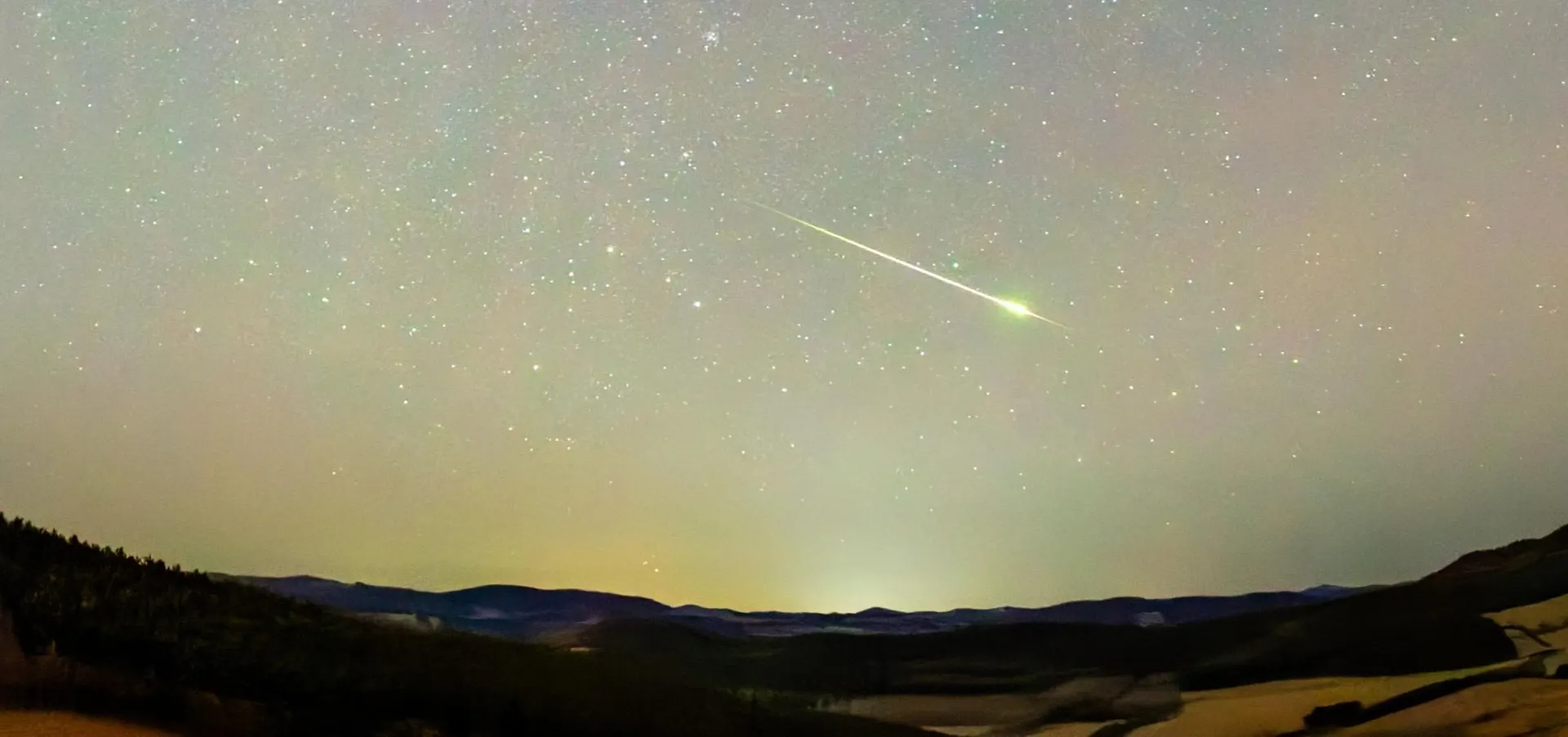
What time is the meteor shower tonight? Skywatchers across North America could see “shooting stars” this week as the annual Leonid meteor shower peaks, sending bright meteors streaking across the night sky.
The Leonids are expected to peak overnight on Tuesday, Nov. 17, into the early hours of Wednesday, Nov. 18, offering patient observers a chance to spot around 15 meteors per hour close to the peak. Actual numbers will depend on weather conditions, light pollution and location.
According to NASA, the Leonids are among the fastest meteors visible from Earth, traveling at about 44 miles (71 kilometers) per second. The shower is also known for producing bright, colorful meteors and occasional fireballs that can leave glowing trails across the sky.
When Is the Leonid Meteor Shower 2026?
According to Timeanddate.com, the Leonid meteor shower takes place throughout November but peaks on the night of Nov. 17-18. The best viewing opportunities are generally expected between midnight and dawn, when the constellation Leo — from where the meteors appear to originate — climbs higher above the horizon.
Observers in rural areas with dark skies will have a better chance of seeing the display than those watching from light-polluted cities, though clear weather will be essential.
What Causes the Leonid Meteor Shower?
Meteor showers occur when Earth passes through streams of dust and debris left behind by comets as they orbit the sun. As these particles enter Earth’s atmosphere, they heat up and produce the glowing streaks of light commonly known as shooting stars.
The Leonids come from Comet 55P/Tempel-Tuttle, which orbits the sun every 33 years. As the comet approaches the sun, its icy surface releases gas and dust, leaving behind trails of debris that Earth encounters each November.
Leonid meteors sometimes produce long trails tinged with blue or green. Despite their impressive appearance, the particles responsible are usually no larger than grains of dust or small pebbles.
How to Watch the Leonid Meteor Shower in North America
The best time to watch the Leonids is from around midnight local time until dawn. Stargazers should find a dark location away from city lights and streetlights — preferably somewhere with an unobstructed view of the night sky — and avoid using telescopes or binoculars.
NASA recommends lying flat on your back with your feet pointing east and looking upward to take in as much of the sky as possible. Allowing around 30 minutes for your eyes to adjust to the darkness will also improve your chances of spotting shooting stars.
Could the Leonids Produce a Meteor Storm?
The Leonids have a history of producing meteor storms, during which thousands of shooting stars can illuminate the night sky. These extraordinary events have occurred roughly every 33 years, although their timing and intensity are difficult to predict. One of the most spectacular Leonid storms occurred in 1833, when tens of thousands of meteors were observed over North America. NASA also highlights the extraordinary storm of 1966, when observers witnessed thousands of meteors per minute during a brief 15-minute period. The most recent Leonid meteor storm occurred in 2002.
While a major meteor storm is not expected in 2026, the annual display still offers North American skywatchers a chance to see one of the year’s fastest meteor showers.
Top 10 Meteor Showers Of The Year (Northern Hemisphere)
| Meteor shower | Peak dates | Meteors per hour |
|---|---|---|
| Geminids | Dec. 13–14 | 150 |
| Perseids | Aug. 12–13 | 100 |
| Quadrantids | Jan. 3–4 | 80 |
| Eta Aquariids | May 5–6 | 50 |
| Orionids | Oct. 21–22 | 20 |
| Lyrids | April 21–22 | 18 |
| Leonids | Nov. 17–18 | 15 |
| Ursids | Dec. 21–22 | 10 |
Wishing you clear skies and wide eyes.