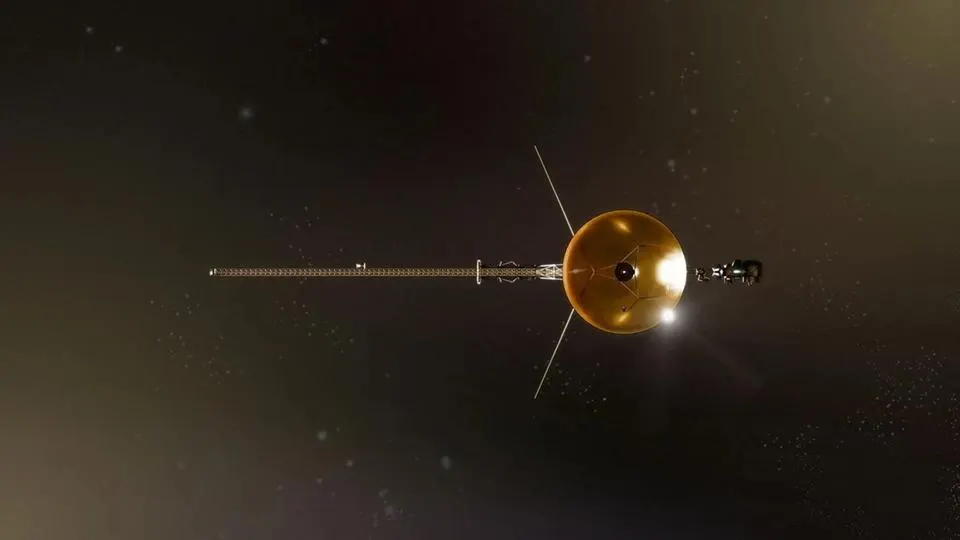
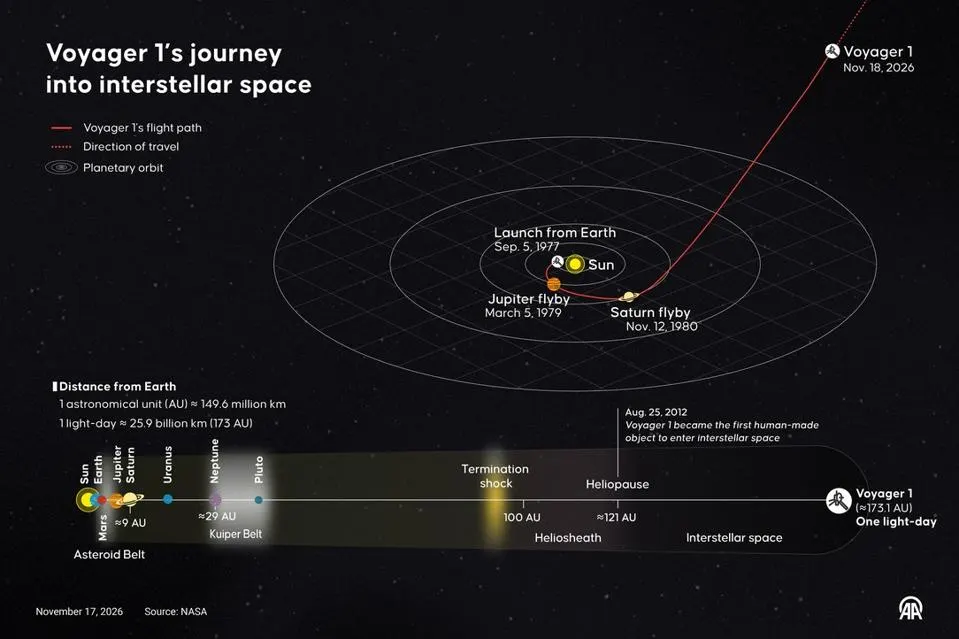
Nearly 50 years after leaving Earth, NASA’s Voyager 1 spacecraft has reached a remarkable milestone, becoming the first human-made object to travel one light-day from our planet. At 5:16:07 a.m. EST on Wednesday, Nov. 18, Voyager 1 reached approximately 16.1 billion miles (25.9 billion kilometers) from Earth. At that distance, a radio signal traveling at the speed of light takes 24 hours to reach the spacecraft. Even if Voyager 1 responds immediately, its reply requires another 24 hours to return, making communication a two-day round trip.
Key Facts
- Launched on September 5, 1977, Voyager 1 began its mission by exploring the outer planets. It encountered Jupiter in 1979 and Saturn in 1980, before heading out of the plane of the solar system.
- A light-day is the distance light travels through a vacuum in 24 hours. Moving at approximately 186,282 miles (299,792 kilometers) per second, light covers around 16.1 billion miles in a single day.
- For comparison, sunlight takes approximately eight minutes and 20 seconds to reach Earth, while light takes around 4.3 hours to reach Neptune at its average distance from the sun.
- Voyager 1 is now so distant that the same light-speed journey takes an entire day. Despite this enormous separation, NASA continues communicating with the spacecraft through its Deep Space Network. It carries the famous Golden Record, containing sounds, music and images representing life on Earth.
Voyager 1’s Incredible Journey Into Interstellar Space
When Voyager 1 reached Saturn in November 1980, NASA deliberately directed it onto a trajectory that would bring it within approximately 4,000 miles (6,500 kilometers) of Titan. The close encounter came with a major trade-off. Titan’s position and the trajectory required to observe it sent Voyager 1 sharply out of the plane in which most planets orbit the sun. This effectively ruled out further encounters with Uranus and Neptune. So it headed away from the planetary plane and toward interstellar space. On August 25, 2012, it crossed the heliopause, the boundary marking the outer edge of the sun’s protective heliosphere. It became the first spacecraft to enter interstellar space, where it has continued collecting valuable scientific information. Its twin, Voyager 2 — which did reach Uranus and Neptune — followed in 2018.
Why Did Voyager 1 Overtake Voyager 2?
Interestingly, Voyager 1 launched on September 5, 1977, more than two weeks after Voyager 2, but its faster trajectory allowed it to overtake its twin before reaching Jupiter. According to Space.com, the spacecraft followed different routes through the outer solar system, using planetary gravity assists to increase their speeds. As Voyager 2 continued to Uranus and Neptune, it lost speed. As a result, Voyager 1 is now traveling outward at approximately 3.5 astronomical units (AU) per year, compared with Voyager 2’s 3.1 AU. That difference means Voyager 2 is not expected to reach the one-light-day milestone until around 2035, nearly nine years after its twin.
Voyager 1 Overcomes Power And Communication Challenges
Keeping Voyager 1 operational almost five decades after launch has required increasingly creative engineering solutions, particularly as its power supply continues to weaken. In September 2026, NASA engineers completed a major energy-saving operation nicknamed the “Big Bang,” replacing three power-hungry devices with lower-power alternatives. The spacecraft’s radioisotope thermoelectric generators, which convert heat from decaying plutonium into electricity, lose approximately four watts of power annually. The spacecraft also experienced a brief communications interruption in October. NASA’s Deep Space Network failed to detect its signal during scheduled attempts on Oct. 18 and 19, but contact was restored on Oct. 20 without intervention. Engineers discovered that one group of thrusters had switched off and backup thrusters had activated automatically. Communications have remained stable since the signal returned.
What Happens Next For Voyager 1?
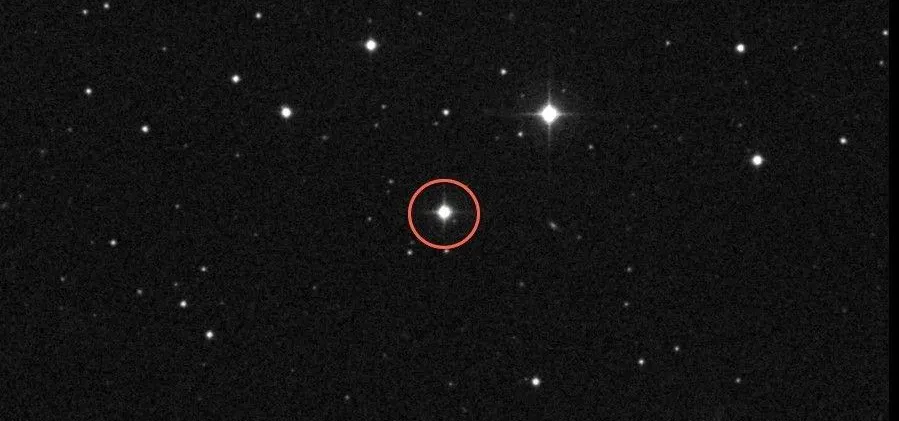
Voyager 1’s power supply will continue declining, eventually forcing NASA to shut down its remaining instruments. However, even after the spacecraft falls silent, its journey through interstellar space will continue. In approximately 40,000 years, Voyager 1 will pass within roughly 1.6 light-years of the star AC +79 3888 in the northern circumpolar constellation of Camelopardalis.