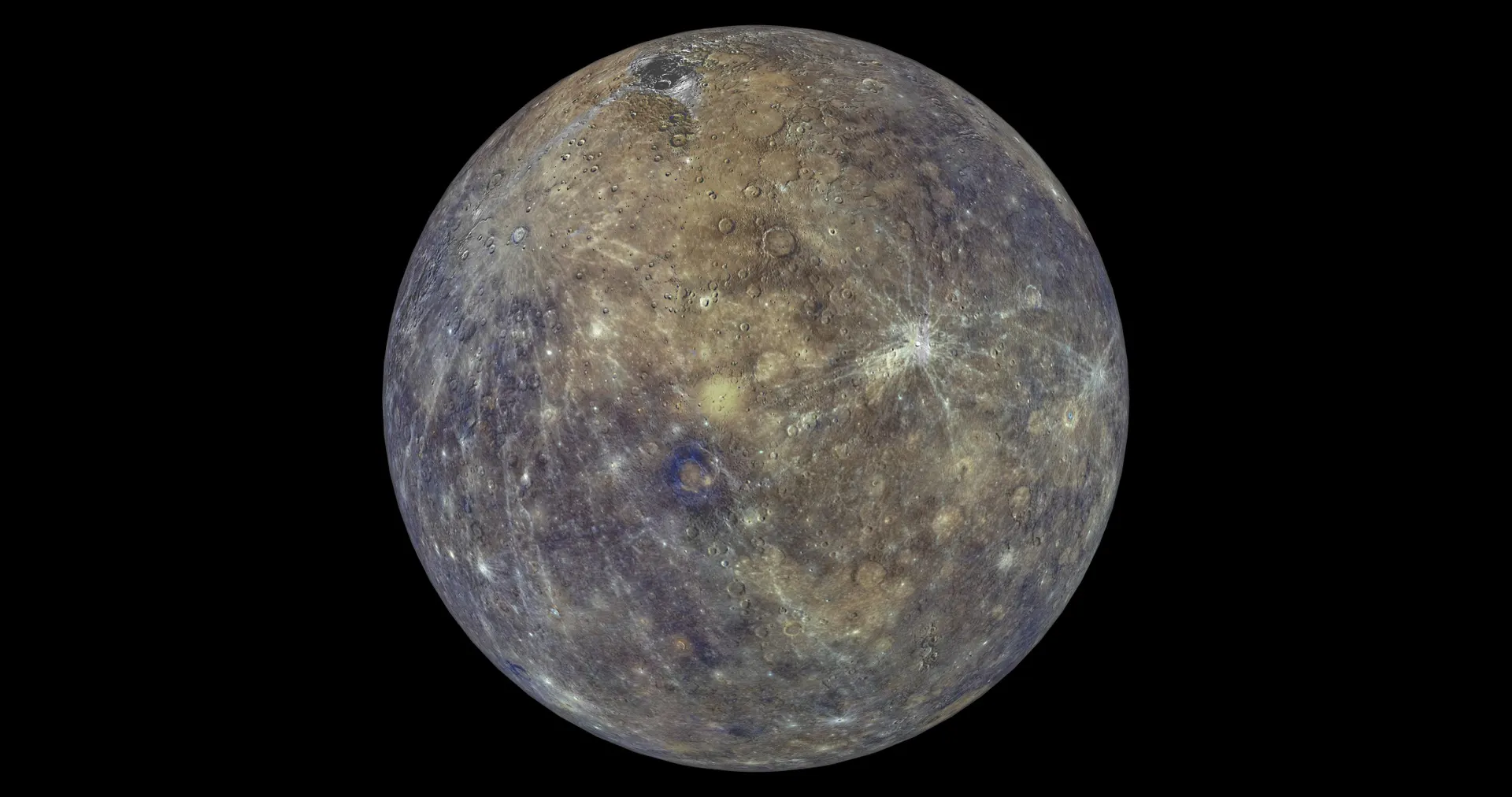
After eight years, billions of miles and six flybys of Mercury to slow it down, a spacecraft will finally do something on Saturday that it has never managed before — stay there.
On Saturday, Nov. 21, the European Space Agency’s (ESA) and Japan Aerospace Exploration Agency’s (JAXA) BepiColombo mission will enter orbit around Mercury, the closest planet to the sun and one of the least explored and least known worlds in the solar system.
Launched on Oct. 20, 2018, from Europe’s Spaceport in South America, BepiColombo has taken an extraordinarily roundabout route to its destination, flying past Earth once, Venus twice and Mercury six times. It becomes the third spacecraft to visit the “Swift Planet.”
Why Is It So Difficult To Reach Mercury?
Getting to Mercury isn’t difficult — but stopping when you get there certainly is. A spacecraft leaving Earth starts with Earth’s enormous velocity around the sun — roughly 67,000 mph (108,000 km/h). As it travels inward toward the sun — as BepiColombo had to to reach Mercury — the sun’s gravity accelerates it. Engineers therefore had to design a route to Mercury that would slow it down enough to eventually match Mercury’s motion closely enough to be captured into orbit. So BepiColombo spent eight years ricocheting around the inner solar system, using nine planetary gravity assists — one at Earth, two at Venus and six at Mercury itself — along with its propulsion system to progressively reshape and slow its orbit around the sun.
What Happens This Weekend
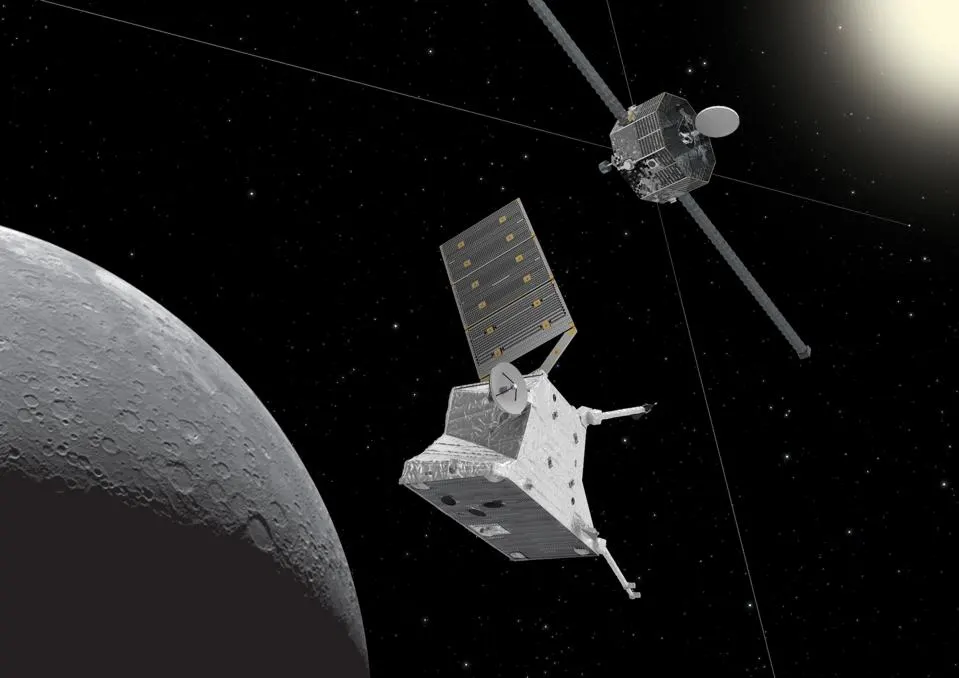
Getting BepiColombo into orbit around Mercury began on Sept. 3, when its Mercury Transfer Module — which propelled the spacecraft during most of its journey — separated from the mission. ESA’s Mercury Planetary Orbiter has since taken control of the final approach while still carrying JAXA’s Mio spacecraft.
On Nov. 21, the combined spacecraft will enter orbit around Mercury. Then, on Dec. 9-10, MPO and Mio will separate and ultimately operate in different orbits. It will be the first time two spacecraft have simultaneously orbited Mercury.
What Will BepiColombo Discover?
Scientists have already begun waking up BepiColombo’s instruments, but the full science phase is scheduled to begin in April 2027.
Working together, MPO and Mio will investigate Mercury’s surface, interior, composition, magnetic field and extraordinarily thin exosphere. Scientists also want to understand how the planet interacts with the solar wind and investigate mysterious deposits inside permanently shadowed craters near its poles.
Before BepiColombo, only two spacecraft had visited Mercury:
- NASA’s Mariner 10 — which made three flybys in 1974–1975
- NASA’s MESSENGER — which became the first spacecraft to orbit the planet in 2011 and spent four years studying its surface, interior and magnetic field.
However, BepiColombo promises something different — two sophisticated spacecraft studying the planet and its surrounding environment simultaneously.
The mission is named after Italian mathematician Giuseppe “Bepi” Colombo, whose work helped NASA use gravity assists to send Mariner 10 past Mercury. Eight years and nine gravity assists after leaving Earth, the mission bearing his name is finally about to enter orbit of this mysterious planet.
Wishing you clear skies and wide eyes.