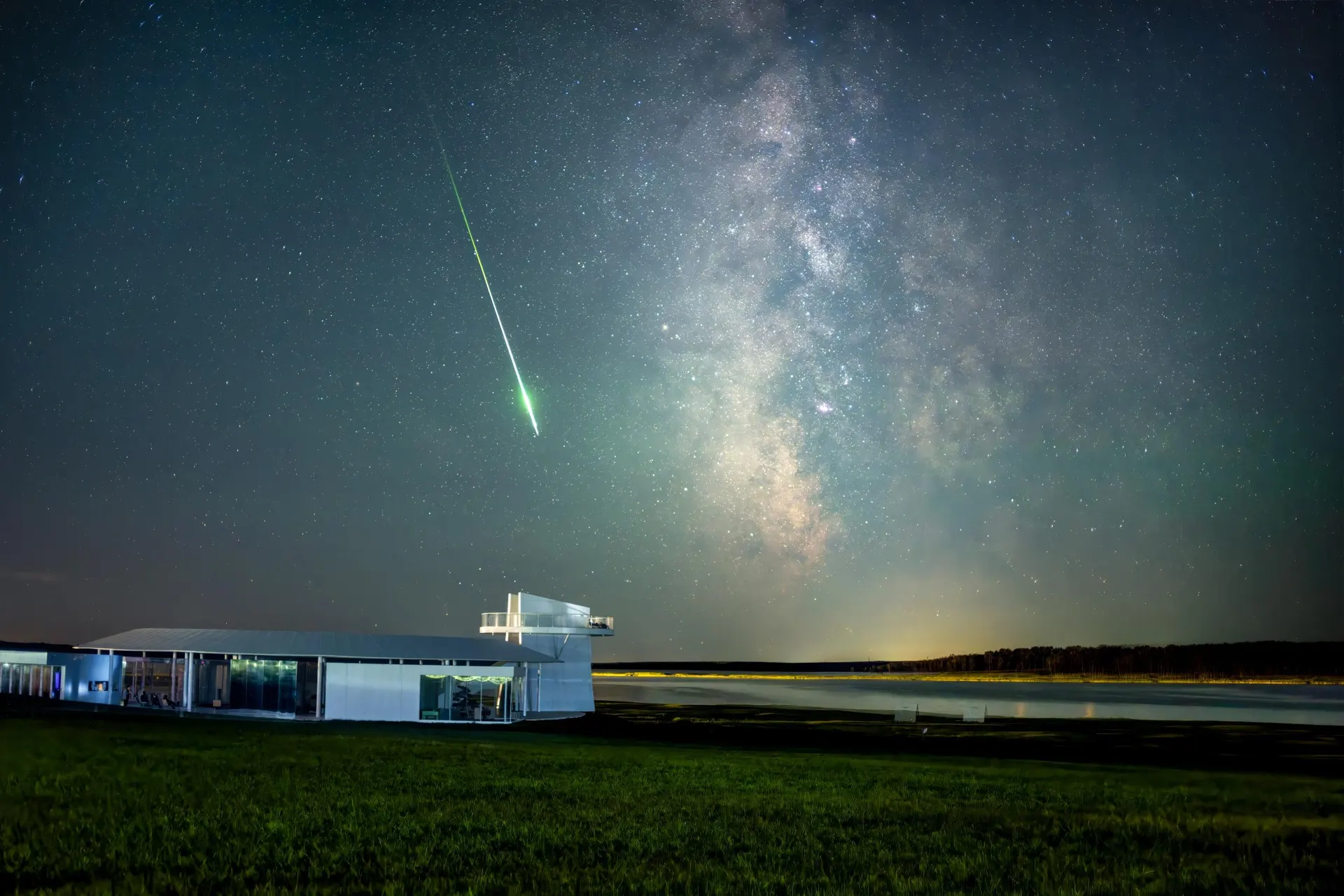
Halloween is almost here, and with it comes a chance of some natural fireworks in the night sky. Earth is now passing through a broad stream of dust and rocks in the inner solar system responsible for the Taurid meteor showers, which are famous not for producing huge numbers of “shooting stars,” but for occasionally delivering exceptionally bright fireballs.
Will you get a sky full of “shooting stars?” No, probably not. However, late October is particularly interesting because the Southern and Northern Taurids — two branches of the same stream — are active at the same time. Their overlapping activity continues into November, creating several weeks when a bright, relatively slow-moving meteor could suddenly appear. There’s no guarantee of seeing one on any particular night, but two approaching peaks make the next couple of weeks the best time to see them.
Why The Taurids Are Called The ‘Halloween Fireballs’
The Taurids are actually two closely related meteor showers. The Southern Taurids are active from Sept. 20 through Nov. 20, while the Northern Taurids run from Oct. 20 through Dec. 10. Since both are active around Halloween and can produce brilliant meteors, skywatchers have given them the seasonal “Halloween fireballs” nickname.
Unlike major annual showers such as the Perseids, the Taurids don’t produce many meteors. Each branch typically has a zenithal hourly rate of about five meteors per hour, meaning even under ideal conditions this isn’t a continuous display. With both streams currently active, however, combined Taurid activity can potentially reach around 10 meteors per hour under clear, dark skies. That’s a guide, not a schedule — there could be more or fewer.
When To Watch For Taurid Fireballs
The first important date is almost here. A component of the Southern Taurids that’s particularly associated with fireballs is expected to peak overnight Wednesday-Thursday, Nov. 4-5. Conditions should be good because a 17%-illuminated waning crescent moon won’t rise until a couple of hours before dawn, leaving most of the night dark.
The Northern Taurids then peak overnight a week later, on Wednesday-Thursday, Nov. 11-12, when observing conditions should be even darker. A slender 5%-illuminated waxing crescent moon will effectively be absent during the night. There’s no unusually intense Taurid swarm predicted in 2026, as there was in 2008, 2015 and 2022, and could be in 2032 — but individual fireballs are possible.
What Causes The Taurid Meteor Showers?
Both showers are associated with material left in the inner solar system by Comet 2P/Encke, a roughly 3-mile (4.8-kilometer) comet that completes an orbit of the sun every 3.25 years. Earth encounters debris associated with Encke each fall, with fragments striking the atmosphere and becoming visible as meteors.
Taurids enter the atmosphere relatively slowly for meteors — about 17 miles (27 kilometers) per second. That comparatively low speed can help make a bright Taurid especially memorable as it travels across a substantial stretch of sky.
How To See The ‘Halloween Fireballs’
Although the Taurids appear to originate in the constellation Taurus, you don’t need to find their radiant. Meteors can appear anywhere overhead, and looking across a large area of sky gives you a better chance of noticing one.
Find somewhere away from bright artificial lights with an unobstructed view, allow your eyes about 20 minutes to adjust to the darkness and watch with the naked eye. Binoculars and telescopes restrict your field of view and are therefore unsuitable for meteor watching. Above all, patience matters — the Taurids are sparse, so treat this as an opportunity to spend time stargazing, with the possibility that a spectacular fireball might be a very welcome highlight.
Wishing you clear skies and wide eyes.