Topline
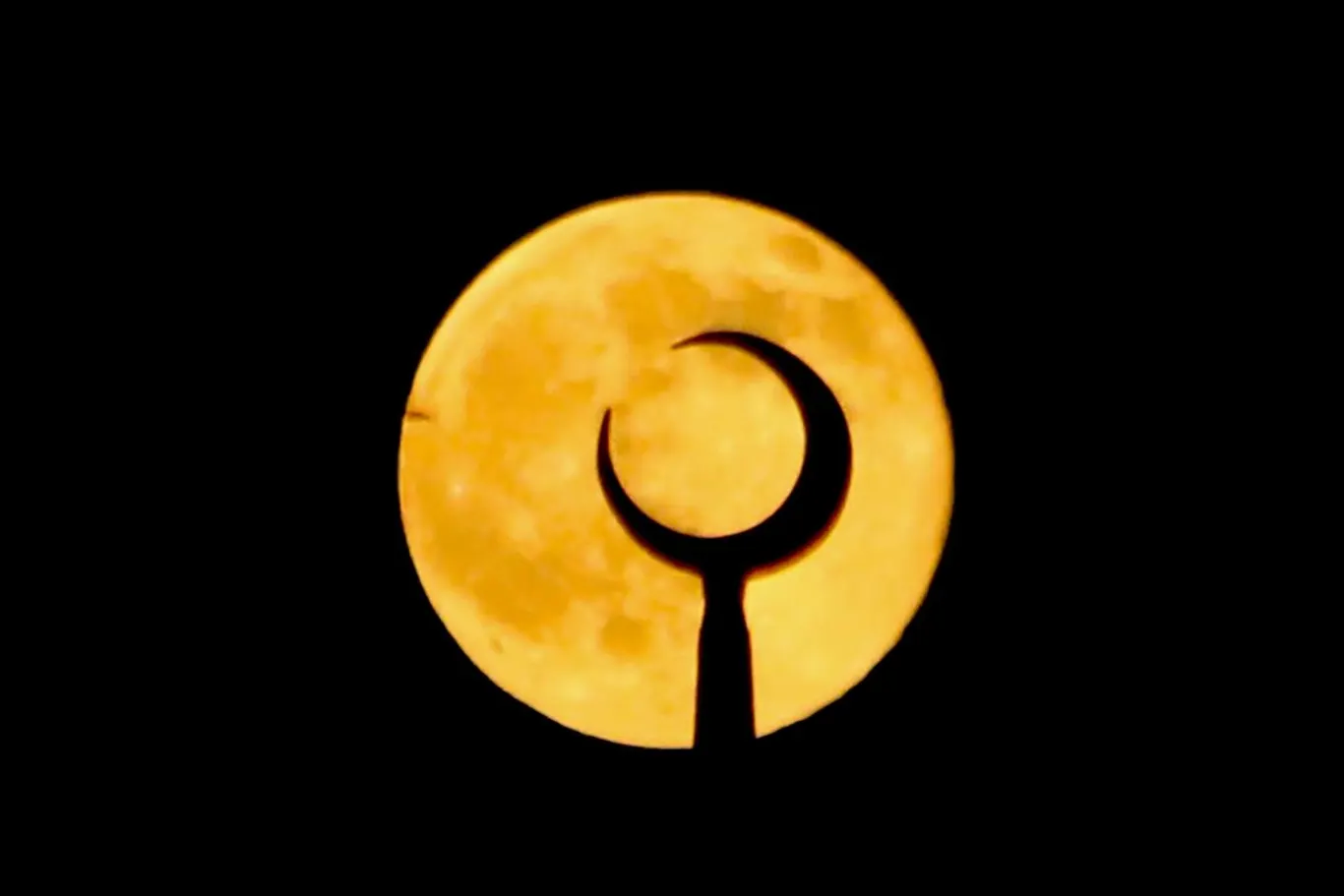
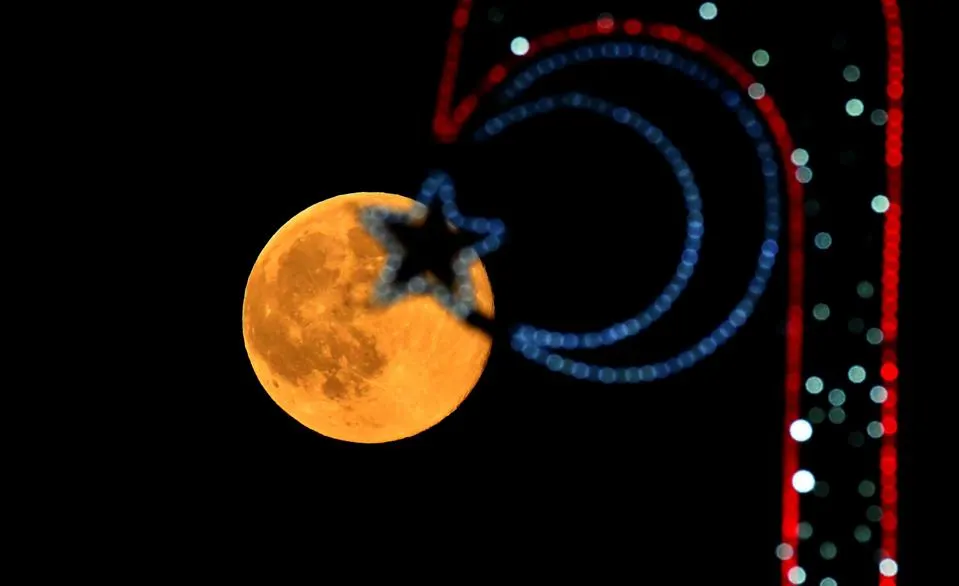
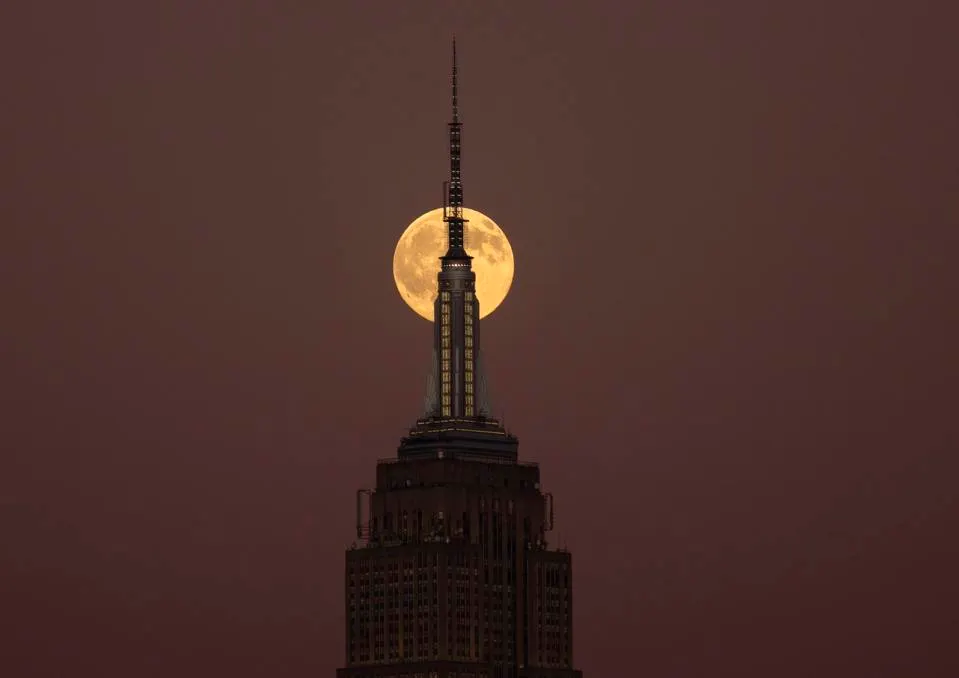
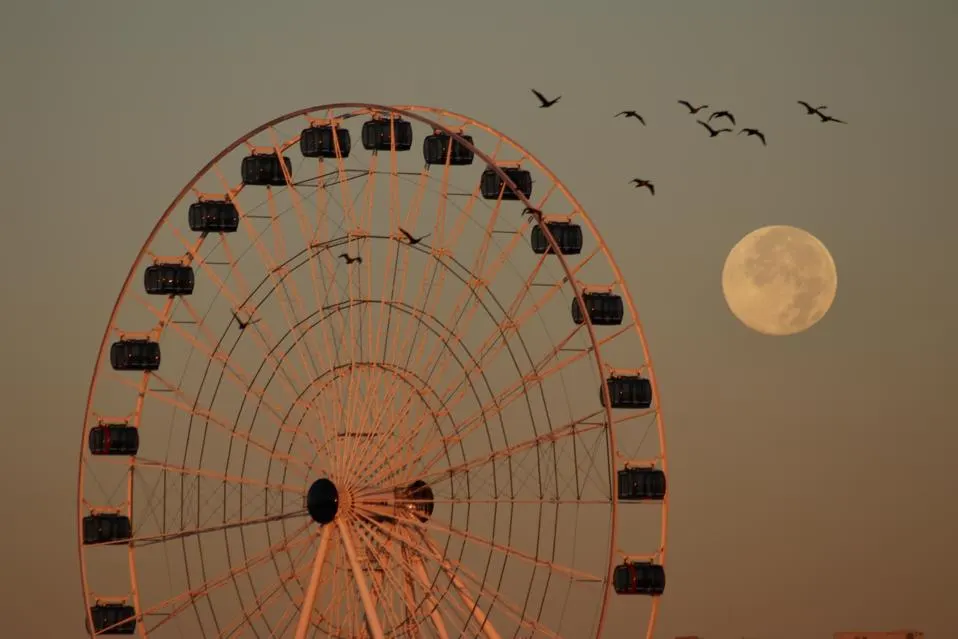
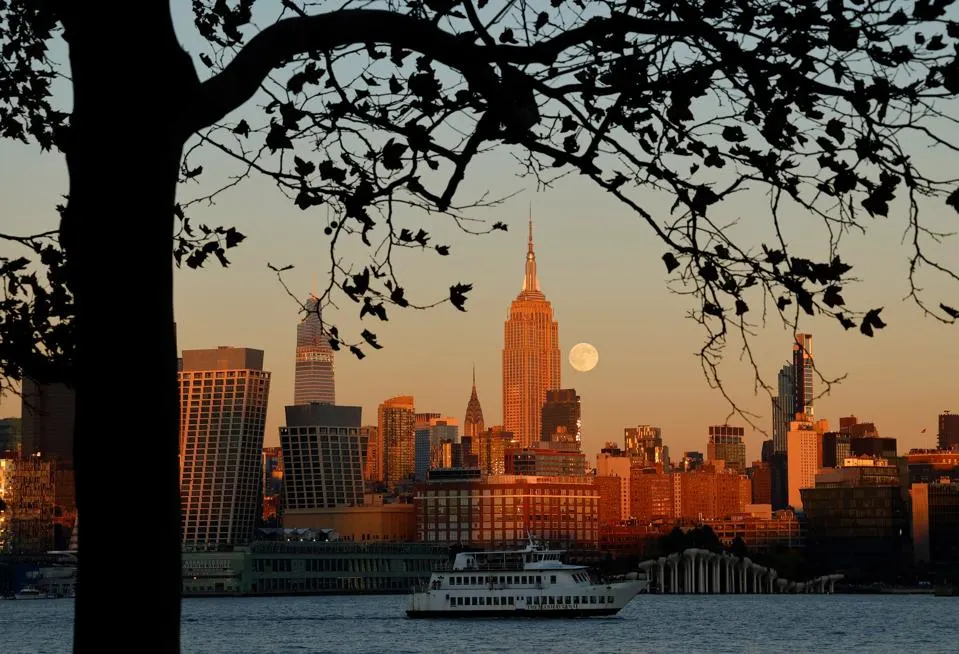
Did you see the full moon on Monday night? October’s Hunter’s Moon rose around the world at dusk on Monday, Oct. 26, producing dramatic views as a huge-looking orange moon appeared above eastern horizons as the sun set. The timing was particularly good across much of the U.S., where moonrise and sunset occurred within just a few minutes of each other. Here are some of the best images of October’s Hunter’s Supermoon from around the world.
Key Facts
- October’s Hunter’s Moon became officially full at 12:11 a.m. EDT on Monday, Oct. 26.
- The Hunter’s Moon is traditionally the full moon immediately following the Harvest Moon, the next full moon after the September equinox.
- The next full moons is a supermoon, with November’s Beaver Moon beginning a run of four larger-than-average full moons. It will be closer to Earth — so larger in the night sky — than the Hunter’s Moon.
WHY DID THE HUNTER’S MOON LOOK ORANGE?
Many photographs of Monday’s Hunter’s Moon show it glowing orange as it appeared above the horizon. That color has nothing specifically to do with it being a Hunter’s Moon. When the moon is close to the horizon, its reflected sunlight travels through more of Earth’s atmosphere before reaching an observer. Shorter blue wavelengths are scattered more efficiently, leaving proportionally more orange and red light to reach the eye.
The same physics produces colorful sunrises and sunsets. As the moon climbs higher into the sky and its light passes through less atmosphere, it gradually loses its warm color and appears brighter and whiter.
WHY DID THE HUNTER’S MOON LOOK SO BIG?
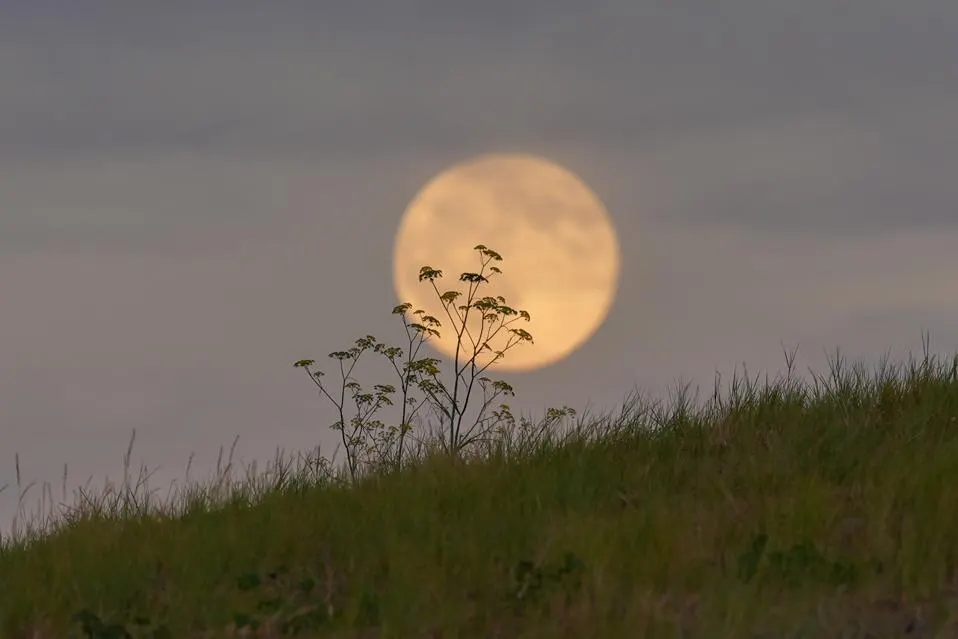
Images of the Hunter’s Moon beside buildings, mountains and trees may make it look enormous. Much of the dramatic apparent size seen at moonrise is caused by the “moon illusion,” a perceptual effect in which the human brain interprets the moon as larger when it appears alongside familiar objects on the horizon.
WHY IS IT CALLED THE HUNTER’S MOON?
The Hunter’s Moon is the traditional Anglo-Saxon name given to the full moon following the Harvest Moon. The name is associated with the season after the harvest, when people prepared for the coming winter by hunting, slaughtering, and preserving meats, according to Timeanddate.com. It’s also called the Drying Rice Moon, Falling Leaves Moon, Freezing Moon, Pagan Blood Moon and Sanguine Moon.
SUPERMOONS TO COME
The final full moons of 2026 are both supermoons. Next comes Nov. 24’s Beaver Supermoon, followed by Dec. 24’s Cold Supermoon. Both will offer another chance to see a slightly larger, brighter-than-average full moon rise into twilight. However, the most important thing for getting a great view isn’t simply whether a full moon qualifies as a supermoon — it’s being in the right place, at the right time, to witness it rising above a clear eastern horizon and with enough twilight remaining to illuminate the landscape. When it comes together, it’s an unforgettable sight — as the Hunter’s Moon proved.