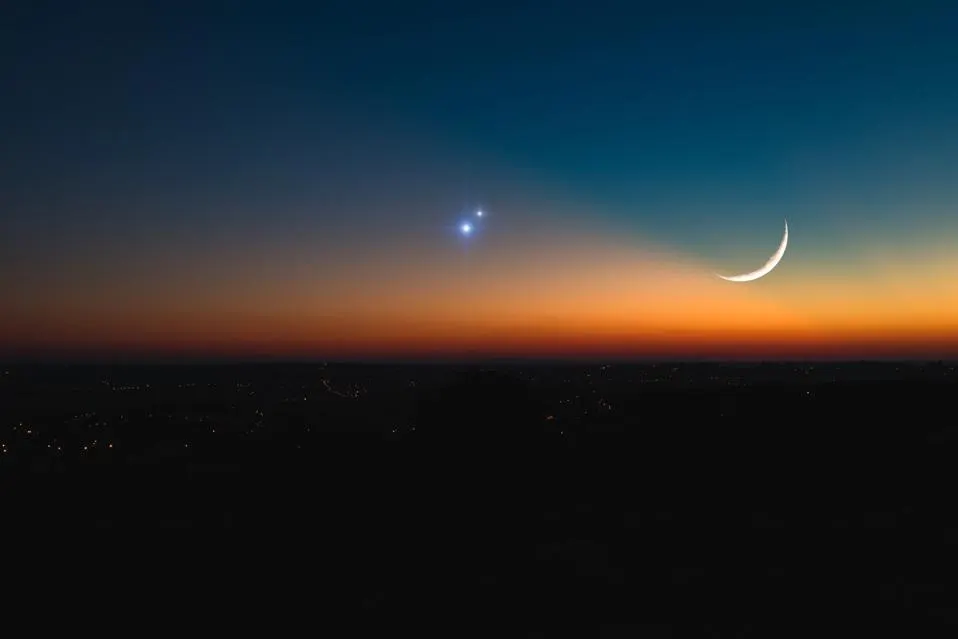
From a spectacular conjunction of the moon, two planets and a bright star to the Leonid meteor shower and a dramatic supermoon, there will be plenty going on in the night sky in November 2026. As a bonus, Mercury makes its best morning appearance until late 2027, with Uranus reaching opposition, a spectacular gathering of the moon, Jupiter, Mars and Regulus to end the month. Here’s everything you need to know about skywatching in November 2026.
Key Facts
- Get up an hour before sunrise on Monday, Nov. 2, to see four objects in a line. At the top will be a 43%-lit waning crescent moon, then Mars, brilliant Jupiter and bright star Regulus. Together, the four objects will form a ragged line spanning roughly 13 degrees in the eastern sky.
- On Saturday, Nov. 7, a slender 3%-lit crescent moon will appear close to Venus before sunrise, with Spica nearby. The closest nighttime conjunction of Venus and the moon in 2026 is sure to be a spectacular sight.
- An hour before dawn on Monday, Nov. 16, Mars and Jupiter will appear just 1.2 degrees apart. Jupiter, shining at magnitude -2.0, will dramatically outshine magnitude +0.9 Mars, though the red planet’s distinctive color will make the pair easy to tell apart.
- Overnight on Monday-Tuesday, Nov. 16-17, the Leonid meteor shower will peak. A nearly first-quarter moon may interfere with viewing, but there’s still a good chance of seeing the shower’s fast-moving “shooting stars.”
- On Friday, Nov. 20, Mercury reaches greatest elongation, about as far from the sun as it ever gets. Look east 45 minutes before sunrise for a chance to see it, just beneath Venus and Spica.
- On Tuesday, Nov. 24, November’s full moon will dominate the night sky. It will also be a supermoon, occurring while the moon is relatively close to Earth and consequently appearing slightly larger and brighter than an average full moon. It will shine close to the Pleiades star cluster.
- The four-way conjunction from Nov. 2 repeats 45 minutes before sunrise on Nov. 30, with a 61%-lit waxing gibbous moon, Jupiter, Regulus and Mars forming a ragged line in just over five degrees of sky.
A Big Month For Planets
November is dominated by the planets, particularly in the morning sky. Venus begins the month as a brilliant predawn “Morning Star” and passes close to Spica, with Mercury joining later in November. The headline pairing comes on Nov. 16, when Mars and Jupiter pass just 1.2 degrees apart. Mars then moves close to Regulus on Nov. 26. On Wednesday, Nov. 25, Uranus reaches opposition, when Earth passes between it and the sun. The distant planet will be at its brightest and visible throughout the night, though only binoculars or a telescope will bring it into view.
The Winter Night Sky Returns
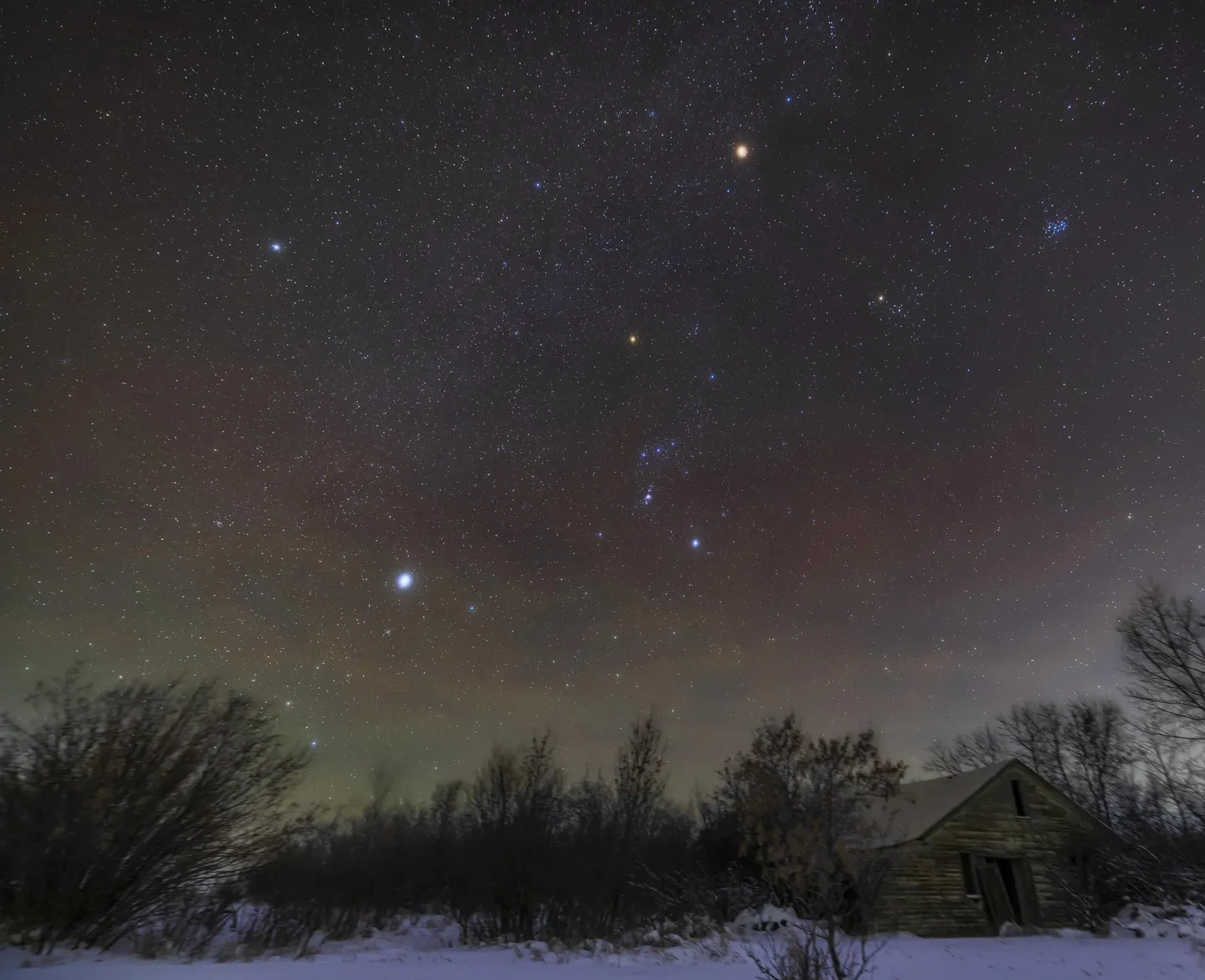
November’s longer nights bring some of the Northern Hemisphere’s most recognizable constellations back into prime evening view. Look east after dark to see Taurus, Auriga and Orion climbing into the sky, bringing bright stars, star clusters and nebulae with them. Around the Nov. 9 new moon, dark skies will make this an excellent time to explore these rich winter star fields. Orion’s Belt provides an easy starting point, with the Orion Nebula beneath it visible to the naked eye from dark locations and particularly impressive through binoculars. As November ends, these winter constellations will be rising earlier each evening.
Voyager 1 Reaches One Light-Day From Earth
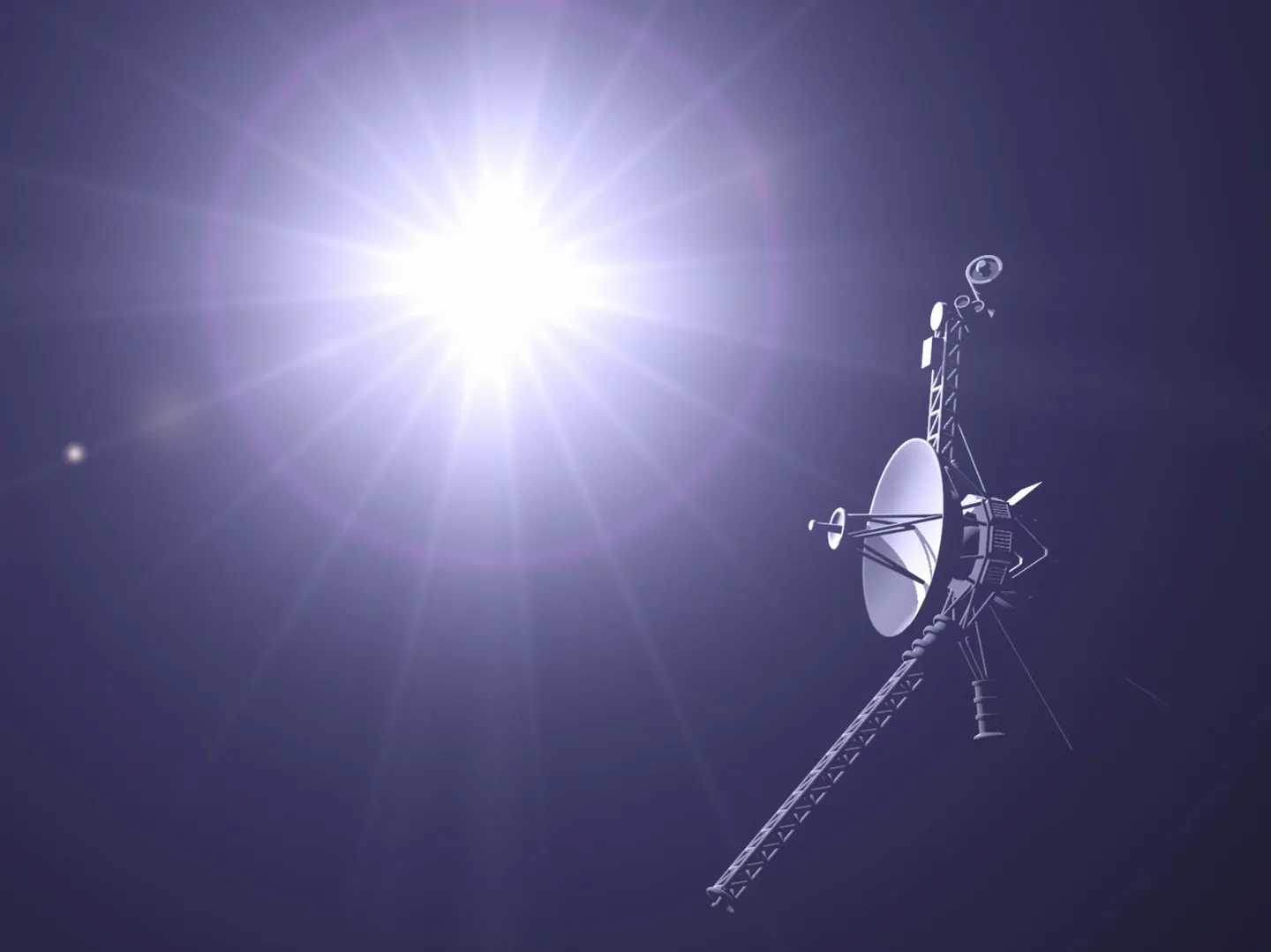
Sometime in November, NASA’s Voyager 1 — which entered interstellar space in 2012 — will reach another extraordinary milestone when it travels one light-day from Earth. This means a radio signal traveling at the speed of light will take a full 24 hours to reach the spacecraft and another 24 hours for a response to return to Earth. Launched in 1977 and still operating almost half a century later, Voyager 1 is the most distant human-made object from Earth, about 16.1 billion miles (25.9 billion kilometers) away.