Online gamers are used to fighting a lot of savage creatures, hacking and back-flipping their way through danger, often to the accompaniment of hard rock music. But the gaming industry is now taking on its most formidable foe—its own players.
Online game communities—particularly those where players remain anonymous—can be teeming with sexism, bigotry, and harassment, especially toward the women who are increasingly part of gaming culture. At the Game Developers Conference in San Francisco earlier this year, industry veterans described an online world where regular and persistent abuse, including death and rape threats, have become a sickening element of a female gamer’s life.
It’s something the gaming world has struggled with for years. “There’s no question that when people are hiding behind the screen of anonymity they can be quite brutal to each other,” says Mark Pincus, founder and CEO of Zynga, best known for hits like FarmVille and CityVille.
Understanding Why
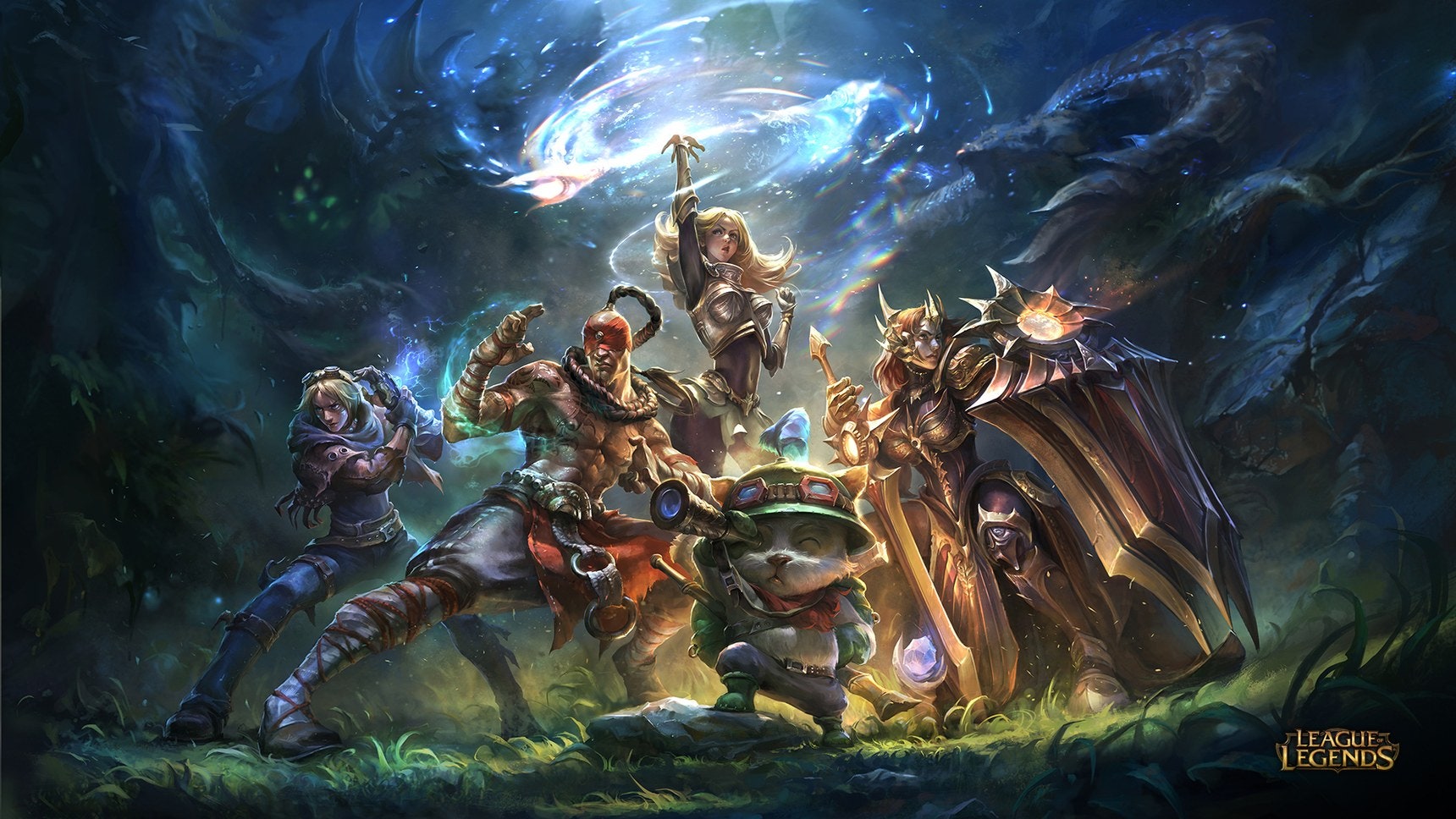
Now some of the biggest players in the industry are rallying. “We need to understand why people abuse each other online,” says Jeffrey Lin, a lead designer for Riot Games, which produces the popular League of Legends online game.
Lin—who has a PhD in cognitive neuroscience and worked previously as an experimental psychologist at Valve Software—came to Riot to temper the toxicity of gamers, and was given a huge sample set with League of Legends. The game has 67 million monthly global players and is the most-played PC game in Europe and North America. More than 27 million people play at least one League game per day.
Lin came in to investigate and understand, rather than seek out and punish. Counterintuitively, his early research revealed that the majority of abuse doesn’t come from a core group of trolls and psychos. “The majority of toxicity comes from positive players who are having a bad day and they take it out online,” Lin says.
When toxic players are identified, they are first asked to tone it down. They receive a note, saying that their recent behavior seems to go against their history of good online citizenship. If they continue to go off the rails, chat restrictions are imposed. “If you shut people off they can get angry,” Lin says, “but if you reduce their message allotment they might just communicate with their team rather than be a jerk to others. Instead of removing a player, we were trying to reform them.”
Machine-Learning the Wisdom of the Crowd
The company also turned to artificial intelligence and machine learning, which observes patterns in massive data sets to predict reactions. Riot Game engineers built a system called the Tribunal, where players could review reported instances of racism, sexism, and homophobia, and then determine whether the remarks warranted action. Players could also be “honored” for a positive act. More than 100 million votes were cast. The data was then turned over to a machine-learning algorithm to help it learn how to spot bad behavior. The results were impressive—verbal abuse has dropped by 40 percent since the program began.
The implications go beyond gaming. The Riot Game research into how large and diverse online global communities can self-regulate, for instance, has been shared with the Massachusetts Institute of Technology, Harvard’s Berkman Center for Internet and Society, and the University of York, a research university in the U.K. At MIT, it is used in collaborative team building research. At Harvard and York, it’s part of an effort to better understand how our online identities reflect our real-world selves. Something as simple as your chosen online user name—be it cheerful, threatening, or anonymous—can reveal a lot about your psychological makeup, Lin says.
In addition, the Tribunal’s ratings system helps fine-tune the development of other AI systems. “AI is not really good at understanding sarcasm or passive-aggressive language, but our work can improve that,” Lin says.
The insights gained in understanding what makes some fly off the handle online can be a boon to researchers in many fields. Says Lin: “There’s no question that game research can broaden our understanding of the real world.”