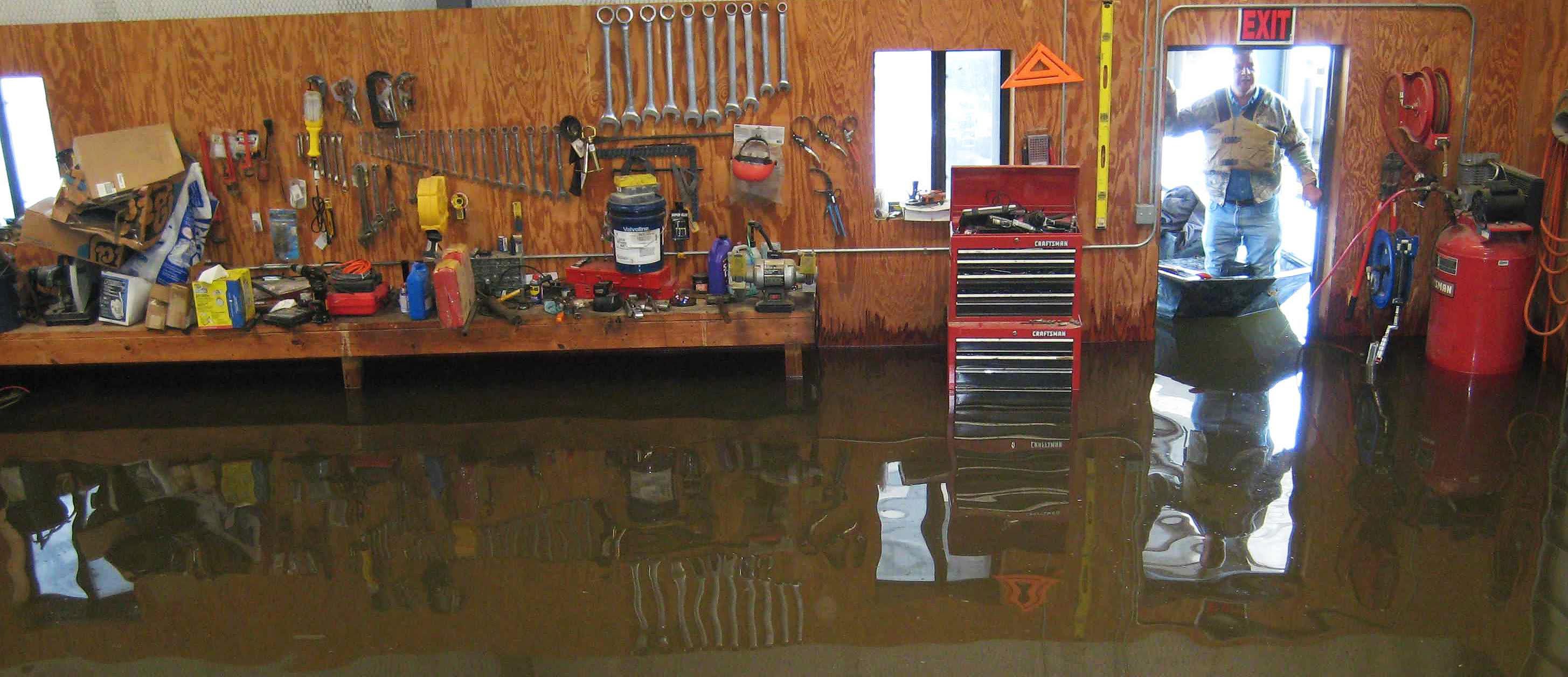
There’s a long-held belief that natural disasters, like wars, are catastrophic for the people affected, but not neccessarily bad for the economy. The ability to rebuild devastated areas can get assembly lines humming and pump billions of dollars into a region. The result? A localized economic stimulus package.
It’s too early to tell if that will be the case after Hurricane Harvey, which devastated towns in southern Texas and Louisiana, and swamped large parts of Houston. Economic losses are being calculated, and tens of thousands of lives are forever changed. Writing in The New York Times, Neil Irwin didn’t sound any great national alarms, noting that any disruption to supply chains was likely to be short-term and localized. “It also appears that the overall economic toll, at least for the United States as a whole, will be modest,” he wrote.
Many sectors of our economy are indeed highly resilient and those that make up Houston’s diverse economic base may be no exception. With a population of over 6 million, America’s fourth-largest city and fifth largest economy is headquarters to 20 Fortune 500 companies as well as a cornerstone of the energy and energy services industries. Many companies boast tens of thousands of Houston employees, including Wal-Mart (37,000), Kroger (16,000)and the Johnson Space Center (10,000 employees).
The area also includes the massive University of Texas MD Anderson Cancer Center, one of the world’s most respected medical institutions. Houston is also a key node in the nation’s transportation infrastructure: George H.W. Bush Intercontinental Airport and William P. Hobby Airport together handle about 55 million passengers annually. Before Harvey made landfall and dumped more than 51 inches of rain, Harris County — which includes Houston and the devastated suburbs around it — was one of the country’s fastest-growing population centers.
People who get paid by the project and work for themselves — the human core at the center of the gig economy — won’t be able to make up the income they’ve lost anytime soon.
While the meta picture for big companies and conglomerates remains cautiously optimistic, the impact for independent workers is far less rosy. Those who get paid by the project and work for themselves — the human core at the center of the gig economy — won’t make up the income they’ve lost anytime soon. Everyone from Uber drivers to Task Rabbit fixers, from contract truckers to part-time refinery workers, may feel the hit to their bank account for months and years to come.
The ripples from the flood will also be wide-ranging, even far from where Harvey made landfall. If you’re a business in any of a half-dozen nearby states, there’s a pretty good chance the goods you’re receiving or shipping pass through the Port of Houston. The port was closed for almost a week, and is just now getting back up to speed.
To make matters worse, few homeowners had flood insurance, so billions of dollars in property (including home-based offices) and an estimated 40,000 houses were destroyed and won’t be immediately replaced. In addition, as many as a million cars may have been destroyed by rising waters in the Houston metro area. In a city this vast and car-centric, it may be difficult or impossible for many people to get to work, or replace vehicles that have been rendered unusable. “You really have to have a car if you’re in Houston,” Andrea French, executive director of Transportation Advocacy Group Houston, told Wired.
Mayor Sylvester Turner tried to find a silver lining to that dark cloud, tweeting a plug for the local public transportation: “Harvey has created new opportunity to see how convenient @METROHouston options can be!” Too soon, Mayor Turner. Too soon.
Jobs, but no workers
In some areas the demand for laborers may spike. Construction and other types of trades often get called in after a disaster. It takes a lot of grunt work and manpower to remove soggy furniture, reinstall Sheetrock and drywall, pull up sodden floors, and fix electrical and plumbing systems. That kind of work requires hardworking people, and is resistant to automation.
But there’s a problem. America’s construction labor force has dwindled in the past decade. When Hoston’s local housing bust came, for instance, hundreds of thousands of roofers and other tradespeople were laid off and went on to find work in different industries. As the housing recovery began, there was a shortfall of workers. As the Wall Street Journal reported, “In Dallas, the King of Texas Roofing Co. says it has turned down $20 million worth of projects in the past two years because it doesn’t have enough workers.”
That’s true in many parts of the country where construction companies have been complaining that they can’t find enough labor to do their job. The National Association of Home Builders reports that 77 percent of builders are facing a shortage of framing crews while 61 percent are grappling with a shortage of drywall installation workers. In June, for instance, there were some 225,000 open construction jobs in the U.S., up 31 percent from June 2016.
The problem is particularly acute in Texas, where the housing industry has been powered by steady population and job growth. The area is also heavily reliant on immigrant labor. Writing in Slate, Daniel Gross noted that: “Many construction workers had come to the United States (legally and illegally) from Mexico and Central America to work in the boom years, and in the bust years some of them went home. Others were deported. And in recent years, the flow of new potential workers has slowed down significantly.”
These undocumented laborers, many of them immigrants and in the US illegally — will be in high demand to clear debris in order to make way for carpenters, electricians and plumbers. They are also seen as the key to getting Houston back on its feet. “If they deport all of us,” said one day laborer, “who will rebuild?”
That’s not an easy question to answer. The rains may have stopped fallen in the Houston area, but the mopping up for the economy and the many gig economy workers it relies on has only just begun.