It’s a fast-moving world, and few places are changing more quickly than the work environment and the platform economy. Each Friday, in this column, we’ll attempt to connect some dots, blending the interviews and conversations we’re doing here at Reinvent with the news that’s breaking around us. We hope the deep-dive conversations conducted at our events, in our studios, and over video online provide some key insights into the larger issues shaping the world, and give you a thoughtful weekend reflection about a world that’s moving briskly into the future.
What do you want to be when you grow up? It’s an earnest query posed by parents everywhere, as well as a nagging question that rolls around the mind of many mid-career professionals stuck in unexciting jobs.
It’s also a perennial favorite at the beginning of each year, the question’s arrival as predictable as a new gym membership and a January without alcohol.
But what if the job you’re preparing for doesn’t exist? Ten years ago, no one dreamed of becoming an SEO Specialist or an Uber driver. If you tried to explain the role of a mobile app developer or social media consultant to someone in 2008, you’d have to first explain what smartphones are and then how pervasive social media would become. At the time she might have had a hard time convincing anyone that one day they’d consider a community-based traffic and navigation app like Waze indispensable to their daily commute.
The job market is changing so far that the World Economic Forum estimates that 65% of children entering primary school today will ultimately hold jobs that don’t yet exist. And that number may be conservative.
What’s the best way to position yourself for such a tectonic shift in the job market? Being open to what’s new — and, better yet, preparing for it—takes work. For those entering the workforce in the next few years, it will require their schools to train kids who can think in a non-linear fashion, work in teams, and are less concerned with memorizing facts than they are with problem solving and critical thinking.
And that means immediately addressing an important disconnect: “We’re training kids for an economy that existed 100 years ago,” said George Anders, a long-time journalist and now editor-at-large at LinkedIn, during a roundtable interview with Reinvent. That world, he notes, is one in which it’s still considered important to teach kids cursive handwriting and how to solve algebraic equations.
Anders noted that K-12 schools need to rethink their role, and emphasize to their students that the formal education they provide is a starting point to a career of “renewable learning” — one that involves more teamwork and an expertise in a multiplicity of fields. “The first thing we need to do is reset expectations,” Anders said. Unless we do, he warns: “ it becomes very jarring (for students) to move into this world of career fluidity and just-in-time learning.”
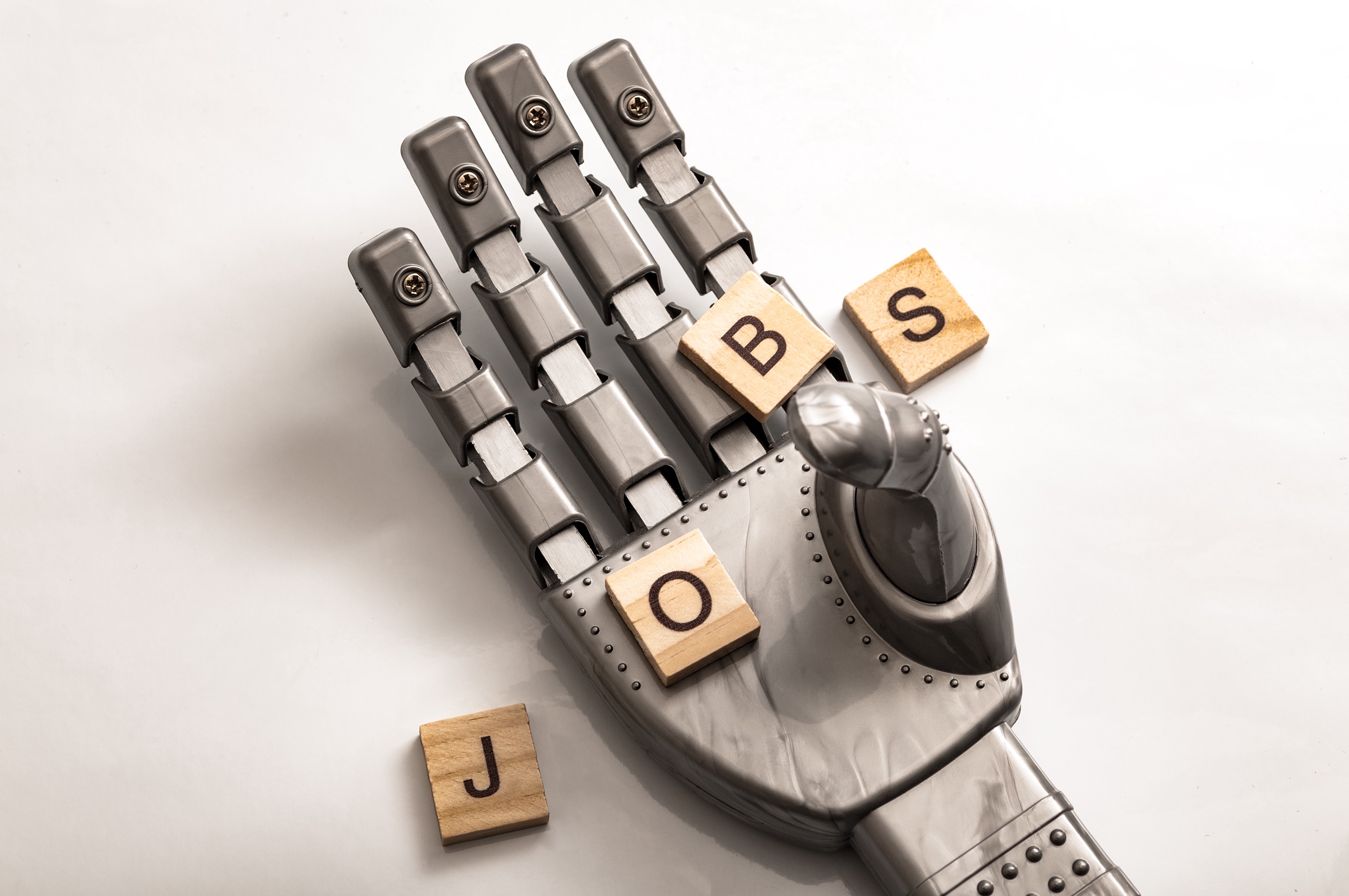
For older workers who are fearful of the impact tech will have on their workplace, a look toward the future is a career insurance policy. Yes, technology destroys jobs, but it also creates new positions. The growing importance of artificial intelligence in the workplace may destroy some jobs, but it will also create others. Imagine working side-by-side with robots doing creative, thoughtful work — the kind only humans can do.
Job Board 2025
What new jobs might emerges? You need to think expansively, and follow emerging threads. Then take an imaginative leap. Cognizant did that in a recent white paper, and came up with 21 jobs they believe will be created in the next decade and might employ larger numbers of people.
The digital services company notes that three dynamics will help shape the future of work: coaching (helping people understand and master new tech); caring (an aging population means a future where health systems are key); and connecting (the workplace will increasingly be shaped by partnership between man and machine; bridging these worlds will be crucial.)
Here are a few specific jobs that Cognizant and the job board site Monster came up with that could very likely exist, based on current trends:
Self-driving car mechanic — Any car is a machine, and machines wear out. These mechanics will combine high-tech understanding and smarts with the skills of an old-school grease monkey’s tinkering ability. Sort of a love child between a software developer and an auto mechanic.
Disease mapper — Growing urban populations and increased air travel all increase the risk of a new disease rapidly spreading, so we need to stay ahead of outbreak scenarios. This position will be at the intersection of data analytics, cloud technology, and advanced medicine. The smart use of data will ultimately help us proactively move from disease response to more accurate disease prediction. Chicago, for example, has already adopted an algorithmic approach to food safety, sending inspectors to locations which are at a high risk to produce foodborne illness.
Cyber city analyst — Urban areas are highly networked and extremely complex. The analyst would need to manage these data flows to ensure that the systems are reliable and safe. They’d need to see the big interconnected data hub picture as well as roll up their sleeves to troubleshoot specific equipment issues.
Augmented reality journey planner — Augmented reality is the process by which computer-generated sounds, videos, graphics, etc. are overlaid on a real-world environment. It typically comes using the camera in your cell phone. In this position, the planner would coordinate the work of engineers and artists to cook up a believable and informative experience.
Genetic counselors — Biohacking is big and getting bigger. These counselors will review the very latest in medical technology with patients to help them find the best and most personalized healthcare, based on their genome. There may even be room for very specialized positions, using gene-editing tools like CRISPR to help craft individualized potions and pills.
Autonomous transport specialist —Autonomous vehicles of all shapes and sizes are coming. Here’s the big question: how are all these new vehicles going to fit into the current transportation system? Computer-driven cars have a different set of needs than human-driven cars, and city managers are puzzling over ways to safely blend the two, using the existing transport infrastructure. A good leaping off point for this career is a background in urban planning.
Man-Machine supervisor—Carbon- and silicon-based lifeforms (that is, men and machines) will need to work together, coordinating their efforts and doing what each does best. Humans are good at creativity and non-linear thinking; machines are very good at repetitive tasks and spotting patterns in data. The manager here would create hybrid teams that bring out the best in both, for profitable business outcomes.
Drone fleet manager — Are drones going to be whizzing through our skies, mosquito-like, delivering objects to our doorsteps? Some business visionaries, like Jeff Bezos, say yes. In that case we’d need someone to manage and enforce standards for maintaining an organization’s fleet of drones. It could be you.
And….that’s just a start. Here’s another exciting opportunity: create your own work niche and job. That’s what the founders of Airbnb and Uber did. Connect some dots of your own. As the inventor Alan Kay once famously said: “the best way to predict the future is to invent it.”