
The partnership rejection email was polite but predictable: ‘Thank you for your interest, but we don’t feel you’re the right fit for our program at this time.’
If you’re a mid-tier publisher, you’ve probably received dozens of these from premium brands. While you’re competing on traffic metrics and conversion rates, companies like Patagonia and Bark are building partnerships using completely different criteria—and they’re actively seeking smaller, authentic publishers over larger ones.
We spoke with Kirk Hausman, who managed partnerships with Walmart’s massive budgets before returning to Bark, and Cricket Treanor, who went from Patagonia’s retail floor to creating her own affiliate role. Here’s the insider intelligence they shared about what these selective brands actually want in publisher partners—and how to position yourself to get accepted.
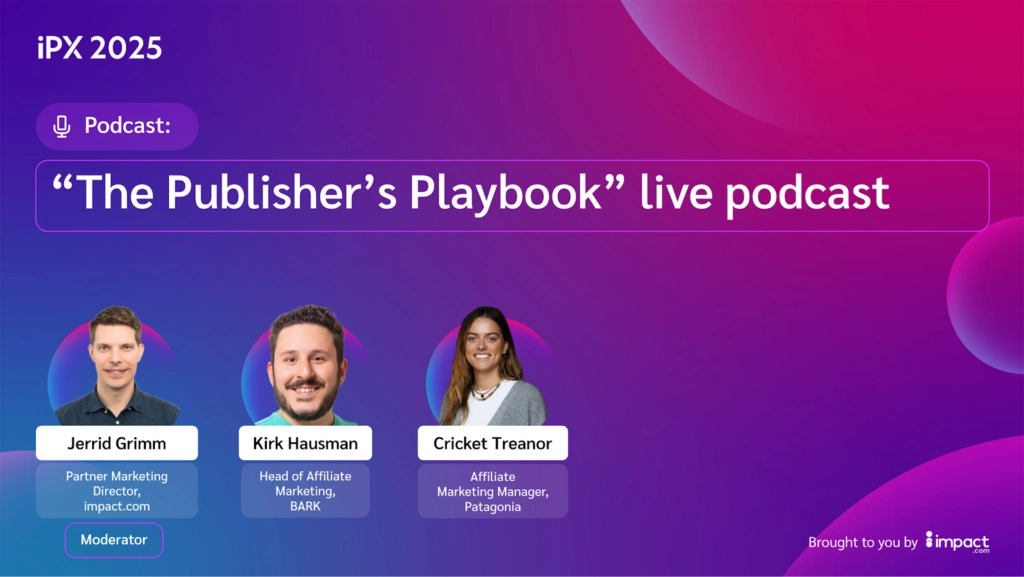
“The Publisher’s Playbook” live podcast, iPX 2025
Go behind the scenes with Patagonia and Bark to discover how successful brands and publishers build authentic partnerships that drive real results.
Listen to the podcastKey takeaways:
- Partner with brands that share your values. Instead of chasing broad reach, focus on finding partners whose mission aligns with yours
- Prioritize authentic storytelling over flashy promotion. Create content that connects emotionally with your audience. For instance, share real stories and connect with communities, rather than relying on overly polished, sales-driven campaigns.
- Align your audience with your content. Seek out brands who naturally resonate with your niche. For example, Stab Mag partnered with Patagonia because of their shared love of sustainability, while creator Collyn teamed up with Bark because of her passion for making dogs happy.
- Invest in long-term partnerships. Start small, like an affiliate collaboration, and nurture those relationships into impactful, brand-defining moments
- Use partnership management tools to find the right brand partners. Use platforms like the impact.com Marketplace to filter, analyze, and connect with brands that align with your niche, values, and audience.
- Let shared purpose drive performance. Ensure your content reflects your core values, as this alignment fosters stronger connections and better results.
Why publishers are shifting from traditional affiliate models to values-based partnerships
The traditional affiliate squeeze: Publishers compete on traffic volume and conversion rates while brands squeeze commissions and demand higher performance with less support. Meanwhile, the most profitable partnerships in the industry are happening between brands and publishers who share genuine values alignment.
What makes a brand “values-driven”?
These companies integrate their core beliefs into their business operations, not just their mission statements:
- Patagonia: Donates 1% of sales to environmental nonprofits and builds products designed to last decades, reducing overconsumption.
- Bark: Made dogs literal co-owners of their company and partners with rescue shelters to provide toys and food to dogs in need.
The insider perspective
Hausman learned this working on both sides of the equation. After managing massive advertising budgets at Walmart and then working publisher-side at Raptive, he returned to Bark with clear insights:
How evaluation criteria differ
Traditional brands focus on: Traffic volume, conversion rates, audience size
Values-driven brands focus on: Authentic alignment with their specific cause—environmental sustainability, animal welfare, community impact
They want partners who already create content around these topics because they genuinely care, not because they see a business opportunity.
The mid-tier publisher advantage
Instead of competing against larger publishers on reach alone, you can differentiate based on:
- Authentic content alignment with specific causes
- Genuine audience engagement around values topics
- Long-term partnership potential over transactional relationships
Treanor talks about the importance of working with like-minded partners:
What gets you on the radar of values-driven brands?
Publishers want to know: what exactly are these selective brands looking for when they review applications? We asked Treanor and Hausman directly. Their insights reveal universal patterns that apply across values-driven partnerships:
The “existing evidence” test
Treanor explains her evaluation process, particularly for content partners:
The universal principle: Values-driven brands look for publishers who are already creating content around their cause, not publishers who promise to start.
How this applies across categories:
- Sustainability brands: Show existing content about environmental issues, ethical consumption, or conscious living
- Health/wellness brands: Demonstrate personal commitment to fitness, mental health, or holistic living
- Community-focused brands: Evidence of supporting local businesses, social causes, or community building
- Innovation brands: Track record of covering emerging tech, supporting startups, or embracing change
The “authentic voice” filter
Hausman shares his approach to finding the right partners:
The universal principle: Values-driven brands prefer authentic, imperfect voices over polished, corporate-sounding content.
How this translates: Show genuine passion for the cause, including personal struggles, learning moments, and real experiences—not just promotional content or surface-level coverage.
The demonstration requirement
Both partnership managers look for the same thing: demonstrated authenticity over promised alignment. These brands want publishers who are already living and creating content around their mission, not publishers who claim they’ll start caring if accepted into the program.
What values-driven brands don’t want to see
Based on Treanor and Hausman’s insights, avoid these application red flags:
- Generic outreach: Mass emails mentioning “brand partnerships” without specific reference to their mission
- Promise-based pitches: “I’d love to start creating content about sustainability” rather than showing existing work
- Metrics-only approach: Leading with follower counts instead of audience alignment
- Overly polished presentation: Hausman specifically seeks publishers willing to “say the weird thing” rather than corporate-safe content
Timeline reality: Start small, grow strategically
Both Patagonia and Bark partnerships mentioned they began modestly. Treanor’s Stab Mag relationship “started really small” but once they got a foot in the door, it grew into major brand moments. Hausman’s most successful partnership started with small Instagram stories before evolving into long-form content.
Publisher takeaway: Apply for affiliate marketing programs as relationship-building opportunities, not just revenue streams.
Proof points to include in your application
- Content samples showing genuine engagement with their cause (not just promotional posts)
- Audience insights demonstrating values alignment (comments, engagement on values-driven content)
- Personal connection to their mission (your story, not just your stats)
- Long-term vision for how you’d authentically integrate their brand into your existing content themes
How two publishers turned these principles into successful partnerships
Demonstrating authentic values alignment: The Collyn approach
Dog Mom creator Collyn had 200K followers—small compared to mega pet influencers. But when she created content driving Bark toys to rescue dogs for National Make a Dog’s Day, she demonstrated exactly what Hausman looks for: genuine care for dogs beyond just promotion.
Bark partnered with creator Collyn for tail-wagging dog rescue stories
One of Bark’s most heartwarming partnerships was with Dog Mom creator Collyn. She created an Instagram post of her driving Bark toys to dogs in various shelters and homes in honour of National Make a Dog’s Day.
The real magic came when Collyn interacted with super excited pups who enjoyed playing with their toys. The dogs are clearly happy and thriving in their new environments.
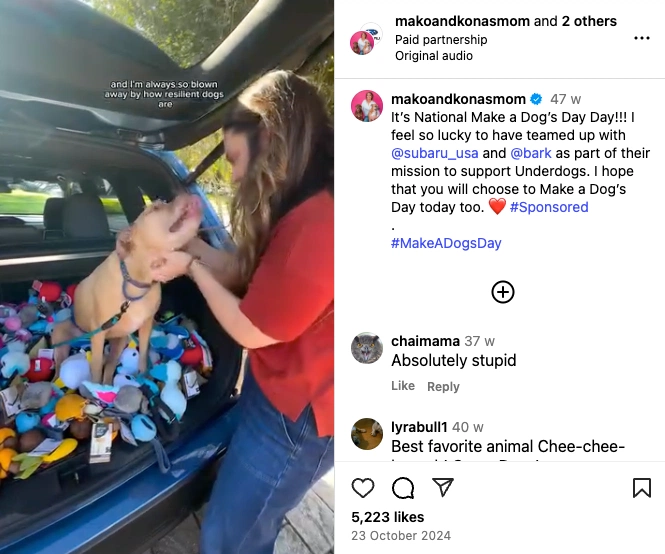
This kind gesture showed Collyn going above and beyond to check-in with dogs, particularly those who had suffered harsh circumstances before being rescued.
Since Collyn has over 200k followers, the post reached a wide audience. Plus, the post prominently showed Bark’s products without it being an overt placement. Both Collyn and Bark got incredible exposure and made an unbelievable impact on dog parents—tugging heartstrings all around.
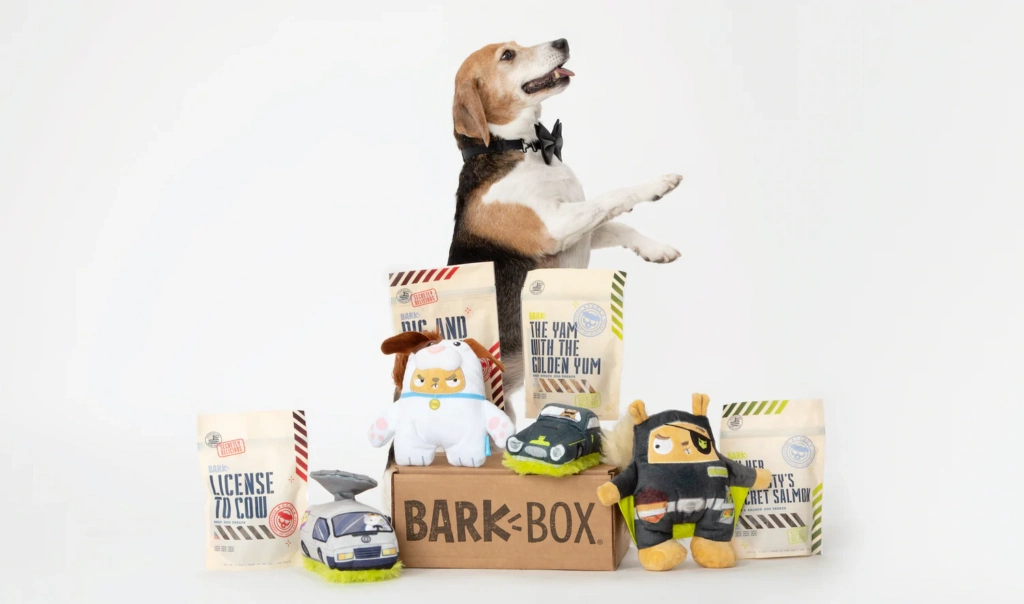
Join Bark’s Creator and Affiliate Program
Are you a publisher/creator who leads with heart, humor, and maybe a dog hair-covered hoodie?
Become a Bark partnerStab Mag rode the wave with affiliate as an entry point
Stab Mag couldn’t get Patagonia’s attention through traditional PR channels. But Treanor’s approach through the affiliate program opened the door:
Treanor approached them about an affiliate program and this opened the door to being able to pay for a partnership which started really small.
What followed was a brand moment Patagonia and its customers still talk about today. Stab invited Patagonia to sponsor an episode of their Electric Acid Surfboard Test, a beloved recurring video series where a pro surfer blind-tests boards from around the world.

Patagonia sponsored the episode and had one of their surf ambassadors as the tester.
For publishers wanting long-term partnerships, this example shows how a small affiliate relationship can make a big impression on audiences. This is especially true if you understand the brand’s audience and goals well.

Join Patagonia’s Affiliate Program
If you share Patagonia’s environmentally conscious vision, this could be the perfect partnership for you.
Become a Patagonia partnerHow to position yourself and find values-driven brand partners
Step 1: Create a values-focused profile that stands out
Your publisher profile needs to immediately communicate authentic values alignment, not just metrics. Key elements:
- Lead with your mission/values in the first line
- Include content samples showing genuine engagement with causes you care about
- Highlight audience values alignment (comments, engagement on values-driven content)
- Show long-term vision rather than a transactional approach
Step 2: Research and discover aligned brand partners
Use these methods to identify values-driven brands actively seeking partners:
- Partnership platforms: Filter by values categories (sustainability, social impact, community focus) on partnership platforms like impact.com Marketplace
- Brand research: Look for companies with authentic CSR integration, not just mission statements
- Industry communities: Values-driven brands often cluster in specific networks and events

Turn shared values into strategic growth
The best partnerships aren’t one-and-done. They’re built on shared values, mutual respect, and a real understanding of each other’s audiences. As we’ve seen from Bark and Patagonia, long-term collaborations often begin with small, meaningful touchpoints and grow into brand-defining moments.
If you’re a publisher looking to work with purpose-driven brands, focus on alignment over scale. Show brands you understand what they stand for and speak directly to their community. Use tools like the impact.com Marketplace to discover opportunities where your voice and mission naturally sync with brands.
The result is high-impact campaigns that feel authentic, perform better, and build lasting value for both sides.
Ready to find your next values-aligned partner? Explore the impact.com Marketplace and start building community-driven partnerships that actually mean something.

Your step-by-step guide to creating a Marketplace listing that brands can’t resist
Want to make brands fall in love at first sight? Create a compelling impact.com Marketplace listing that showcases your unique offerings
Read the blogFAQs
How do brands evaluate potential partners based on core values?
Brands look for partners whose content, audience, and messaging align with their mission. They often scan for signals like past content topics, tone of voice, social values, and audience engagement to assess whether the partnership feels authentic and aligned from the start.
What key benefits do brands expect when considering a long-term partnership?
Brands expect consistent, values-aligned messaging, deeper audience trust, and stronger performance over time. Long-term partnerships also offer efficiency, creative synergy, and the ability to co-create more impactful, brand-building campaigns.
Which brand partnership values should I highlight in my pitch to attract high-quality brands for strategic collaboration?
Highlight values that genuinely align with the brand’s mission—like sustainability, inclusivity, or community impact. Show how your content supports those values, share examples of past aligned partnerships, and emphasize your audience’s trust and engagement.