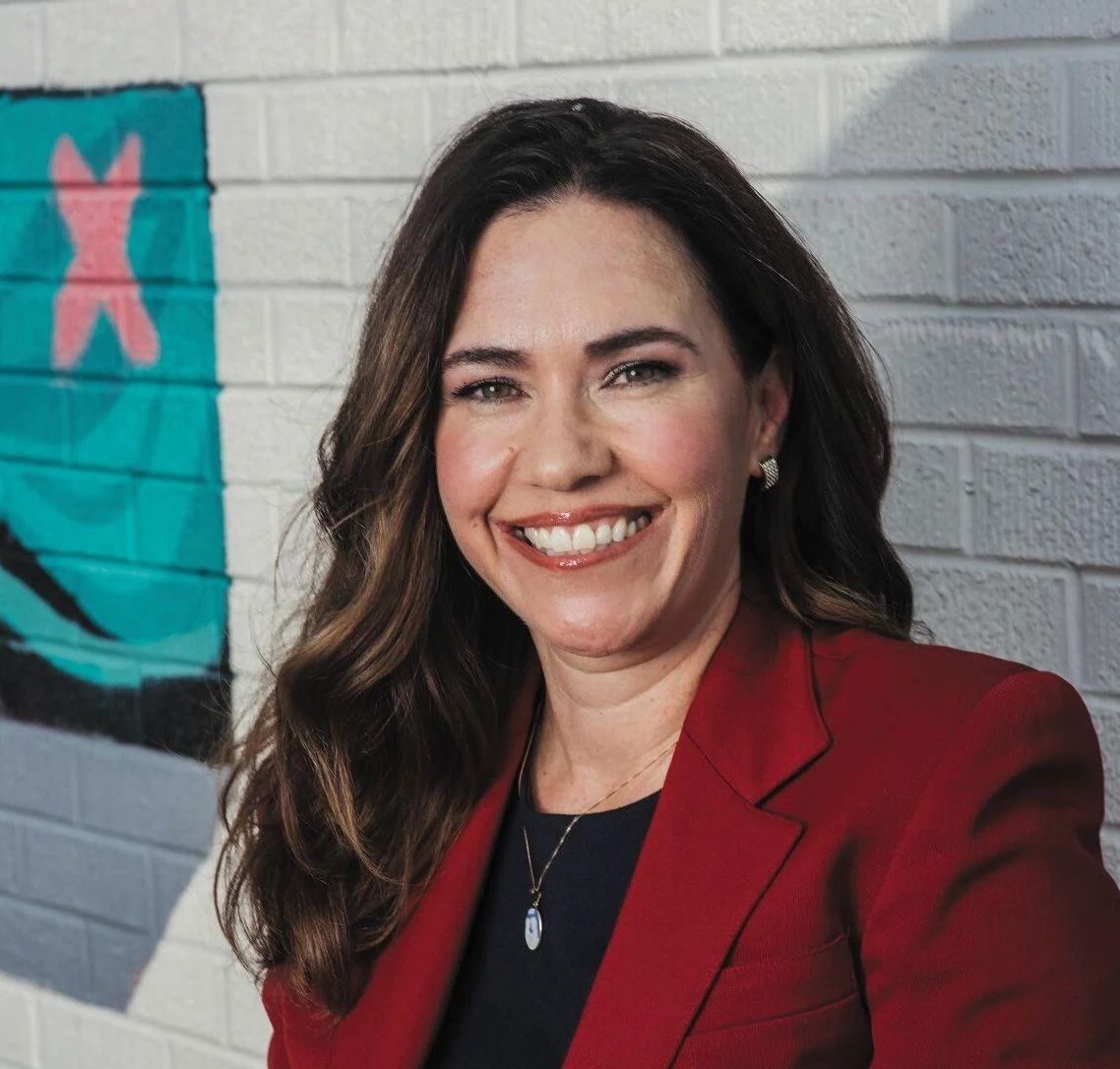
Susan Wheelan’s been with El Paso County Public Health for the long haul — since 1999 in fact. She saw, up close, the drastic budget cuts and layoffs of the Great Recession, and she led the agency through the unprecedented trials of the global COVID pandemic.
Before being appointed director in 2019, she served as environmental health specialist, then communications director, public information officer, administrative hearing officer, program manager, deputy director and interim director. When we asked her, ‘What now?’ she had all the details — so what we can’t fit in these pages you’ll find online at csbj.com.
What do you want the community to understand about the health issues — including mental health issues — the county faces now?
Mental health was a top issue before the pandemic, and the pandemic has exacerbated that. Suicide is one area of tremendous concern. There are also numerous others, because everyone had their own experience — some folks are more traumatized than others with the loss of life, and there were just so many different dynamics. There’s still a lot of concern for well being and mental health, and we are heavily partnering with different organizations, such as the Lyda Hill Institute for Human Resilience, to promote wellbeing. We are encouraging people to reach out if they need help; it’s a strength to reach out if you’re hurting, if you need help. I’ll be the first to say if I’m struggling, if I’m having mental health concerns — I will model the way and reach out for help, and not be shy about it. We all need help at different points in our lives. Mental health and wellbeing is extremely important — and it was extremely important prior to the pandemic. The pandemic has thrust us into an arena where we don’t yet understand the impacts, but we do know that our area has some challenges. But we also have partnerships and people that care, that are doing phenomenal work — and we need to keep up the momentum because I don’t want to come across as saying, ‘We have all these problems, and nothing is being done about it.’ There’s a lot of important work going on.
What I said during the pandemic is just what Mr. Rogers used to say: that when there’s tragedy happening around you and things coming at us like a tidal wave, ‘Look for the helpers. You will always find people who are helping.’ I say, look for the helpers, be a helper. That’s how we work within public health in our community — we organize and we have a lot of collaborations, and that’s important. How can people get connected? What can you do? There is a lot that’s within our control.
As our community grows, we are going to deal with more complex problems — we dealt with complex problems prior to COVID, and they’ve been exacerbated. We have been recognized for different efforts within our county and one of them is care coordination and navigation, and how we get people connected to services they need. How can you be healthy if you don’t have a place to live? Or if you don’t have adequate food? Those are all issues in our community that we’re dealing with, and what we’re trying to do is increase the level of collaboration and the collective impact always for the entire county.
You know, we’ve got eight towns and cities within the county. We don’t have limitless resources to throw here and there, so we are data driven. We look at what the data says, we look at the populations, and then we figure out how we work with others in the community to have an impact, and then we evaluate as we go. We also take in qualitative data to determine how we’re doing. We’re in the process now of doing the assessment plan, our strategic plan, our Community Health Improvement Plan, so we’re really refreshing on all fronts.
We have a number of community collaborations — for example, we have a teen suicide prevention group that I spearheaded with the El Paso County coroner, Dr. Leon Kelly, and we have multidisciplinary groups that are working together.
What’s important is knowing the resources, what’s available — and also communicating what’s not available, so we can figure out how to address those issues in our community to make improvements. It’s not just about bringing up issues, it’s about bringing up solutions, then seeing how can we work together to address those … and truly understanding what the data says, so that our agency can be a resource and work with different organizations on collaborations.
I want the community to know that Public Health is strong. We are a team of very passionate, caring people that have a lot of technical experience. And we are here to work together and to collaborate — we know that we can have a greater impact when we’re working together.
Before the pandemic, your department was already underfunded and short-staffed thanks to severe cuts during the Great Recession. What’s the situation now?
I was here during that, and in 2009 — January — we laid off, I think, almost 40 [full-time equivalent employees]. It was budget cut after budget cut. So in 2018, I went before the Board of County Commissioners to ask for critical needs funding. They gave us some critical needs funding — this was for the 2019 budget — which allowed me to hire an additional public health nurse and staff to develop a data analytics office. The nurse has been critical in expanding our capacity to do mobile vaccinations, especially during COVID — and then for folks that have access barriers, transportation barriers. In terms of data analytics, we gained national recognition for our COVID data dashboards making real-time data easily accessible, and we also received a lot of positive feedback from elected officials, state representatives. So that allowed us to hire epidemiologists for our data analytics office, and it allowed us to hire an additional emergency preparedness and response coordinator for El Paso County, because our grant funding has been to oversee a five-county region — the South Central region within the state of Colorado. That also allowed us to hire an additional retail food establishment inspector, an inspector for environmental health, some support staff, and a wellness planner.
So with that being said, the county commissioners have been supportive. And we have a phenomenal development officer who has been aggressive in trying to seek grant funding from [the Centers for Disease Control and Prevention], and various different sources. And we secured one of the highest dollar amount grants for public health infrastructure at nearly $8 million over the next five years. But I do want to emphasize that there has to be core funding — that is not grant funding — to allow us to meet our statutory responsibilities. Grant funding is specific to certain criteria, and it has limitations. So while we have been successful in seeking grant funding, we still need core funding to meet our statutory responsibilities.
What is the state of that core funding at the moment, and where does it come from?
The core funding comes from El Paso County — it’s usually around a little over 20 percent — and then also there is state funding, which comes through the state legislature through the state health department. And that’s all for core public health.
We need to maintain that for the growing population that we have, paired with complex issues and the need to keep up the momentum providing the level of service with reasonable timeframes. We need that core funding in addition to the grant funding — the majority of our funding comes from grants and contracts. The core funding is essential to delivering core public health — core public health is the work we’re statutorily obligated to do.
In the past few years, people had to be more engaged with El Paso County Public Health because of the pandemic — whether through the dashboard or the guidelines that were issued. Why do you think that people should stay dialed into Public Health now that the emergency has passed?
Well, public health is integrated into every aspect of everyone’s lives, if you think about it — from the air we breathe, to the food we eat, where we live, where we work, where we play, where we worship — there’s so many different aspects of public health. We are like a utility: We’re steady at work while some people might not even be aware that we’re at work. When they’re dropping their kids off to childcare centers, I mean, we’re in there providing education and doing inspections and working with those entities — and our kids are our most precious assets. We’re interwoven into every facet of our county. To have increased quality of life, and to be able to thrive, there has to be a strong public health effort. And I think that is essential not only to a thriving economy — people’s health has to thrive. … And mental health and physical health cannot be separated. Mental health and physical health are symbiotic; they are connected. And I think there’s a lot of things that money can buy, and health is critical to helping us have the happiest and productive and thriving community. I think it’s essential.
How have the past three years changed your personal view of public health agencies in general?
I am passionate about public health, and local public health, and seeing the positive impacts of the tremendous work done by my entire team. We do a lot with what we’re given, and although there were no perfect solutions leading through the COVID pandemic, my view is only strengthened. I have a tremendous amount of respect for so many in my agency, and the fortitude that they have shown, the compassion that they’ve shown.
The recognition that my agency has been given at the national level, the state level, and the local level — that is completely a team effort. We’ve got doctors, we’ve got nurses, we’ve got epidemiologists, we’ve got communication experts, we’ve got so many different areas of discipline and technical knowledge — and seeing my team come together with community partners for the good of the whole, I have a lot of hope.
While I’ll note too, that there was a tremendous amount of turnover in the state of Colorado — I want to say more than 40 percent or 50 percent of the public health directors have either resigned or gotten fired [since the COVID pandemic began in 2020], so it’s been like a tidal wave or a rollercoaster at times — I think the future is bright. I know that with my team, we’re focusing on resetting, refreshing, rebooting, rejuvenating, regenerating.
How did the COVID pandemic change you, personally and professionally?
I feel that being director is a gift. I feel that being able to be of service to my county is a gift. And yes, it was extremely trying; it pressed me to my limits. But I always try to look at the positive side, the solutions. I try to know areas of improvement, and how things could have maybe gone better — and what’s in my control or not in my control. I appreciate all of the experiences that I’m able to have in my professional career and I think that through every experience, it’s growth. To have growth, it’s uncomfortable — and if you’re not uncomfortable, I’m not sure how much growth can happen. But one of my phrases is, ‘Lessons will be given until learned.’ I like to think that I learn lessons pretty quickly. I’m a flexible leader, I’m an adaptable leader, I’m a collaborative leader. This experience has been a gift, and although it’s pressed me to my limits, I’m grateful.
Based on 2021 suicide mortality data by state from the Centers for Disease Control and Prevention, Colorado had the sixth highest suicide rate in the nation. El Paso County Public Health provides this list of resources for prevention and response.
Responding to Behavioral Health Concerns in El Paso County
A comprehensive resource list with both crisis and non-crisis community resources. tinyurl.com/EPCresponse
Protecting youth from suicide: written by local parents for all parents tinyurl.com/EPCprotectingyouth
Mental Health First Aid/Youth Mental Health First Aid A skill-based training course that teaches participants about mental health and substance use issues, covering risk factors, protective factors, warning signs, a 5-step action plan, and where to turn for help in crisis and non-crisis situations. mhfaco.org
Applied Suicide Intervention Skills Training A two-day interactive training on suicide first aid, with a focus on identifying elements of a suicide safety plan, for anyone 16 and older, regardless of prior experience. tinyurl.com/trainingASIST
Question, Persuade, Refer A 90-minute training with instructions on asking someone about suicidal thoughts, persuading them to get help, and referring them to community resources. qprinstitute.com
Soul Shop An interactive workshop that equips faith community leaders and other people of faith to train their congregations to minister to those impacted by suicidal desperation. soulshopmovement.org
For local training opportunities, visit: spcollab.org/events