BLOOMINGTON- The sun reflected off the plethora of expensive crystals in Cheyenne Kollum’s shop Moon Stones. Many of these crystals have sat there for months, waiting for a potential owner to be purchased by. But lately, business hasn’t been booming for Moon Stones, similarly to the many other small businesses in Bloomington.
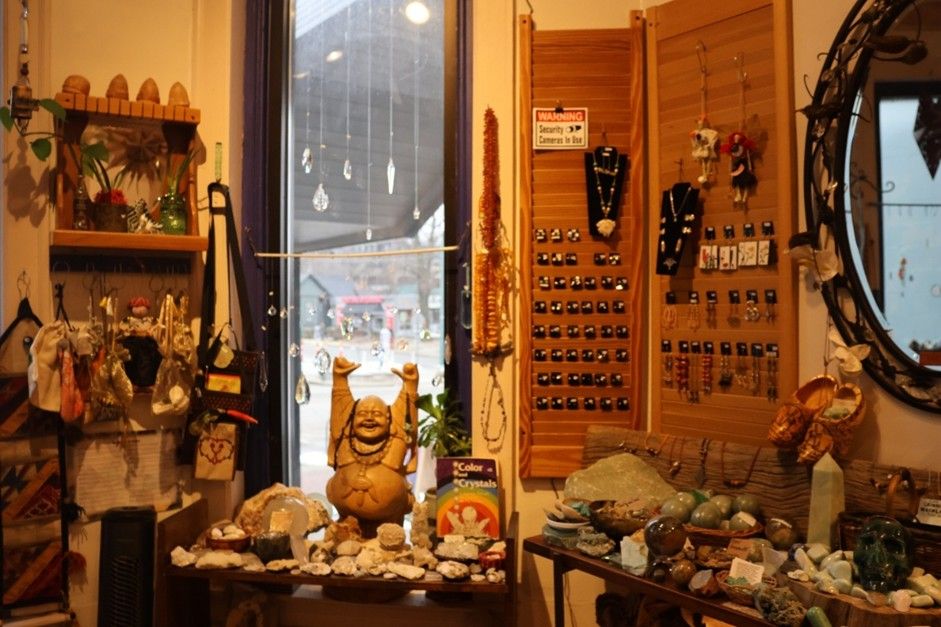
“Around here, I’ve basically not been ordering because business hasn’t been as good. I think everything is affected by the tariffs, even the local stuff.” said Kollum.
The tariffs put into place by President Donald Trump have caused issues for businesses who ship from overseas and buy products from businesses who ship from overseas. This obstacle comes after only 5 years from the start of the pandemic, which caused economic instability for many small businesses.
Kollum also owns Walkover Sounds and Stones, a record and LP shop and expressed her frustration with tariffs and overseas shipping.
“What we specialize in is really rare, amazing, vintage records and LP’s at the other shop from around the world, and essentially something that might cost a huge box $100 to ship has gone up to $200 to $500 just based on the taxes and everything.” said Kollum.
Kollum isn’t the only business owner with these feelings. Small businesses are expected to deal with an estimated $202 billion annual tariff tax. Because of the price increases, some businesses have dealt with supply chain problems.
Phil Eskew, owner of Common Room Games, has had some of his shipments never make it to the United States, or make it, only to be denied by port authority.
Eskew explained that a second edition of the board game “Gloomhaven” produced in China has been delayed due to the price increase on shipments. Those containers are sitting in China because the board game company would have lost money in attempting to send them to retailers in the United States.
“You see games like that where they’re just sitting in a shipyard here or in China, or they’re not being processed here by the port authority because people don’t want to pay the tariffs. So certain games have been held up in terms of release.” Said Eskew.
Board games are one of the many items coming from overseas that have caused supply chain issues for small businesses. Another popular item? Disposable vapes.
Joanna Morton works at 420, a smoke shop in Bloomington that sells disposable vapes, glassware, and more items related to smoking. Morton explained that the body of all disposable vapes comes from overseas, causing a large price increase for their disposable vapes.

“There was a good 2 or 3 months where just everybody’s orders were just getting stopped in customs. And so, we had several products that we just couldn’t get ahold of that are very popular products. And that has also obviously increased all our prices. Some from like 40% up to almost 200% depending on the brand, manufacturer, etc. A lot of distributors have been trying to eat some of that cost, but how long that lasts and whether they keep doing that. So right now, it’s just kind of affecting a bunch of people.” Said Morton.
Evidence shows that businesses are buying less vapes. During the month of May 2025, the US Food and Drug Administration only had 71 shipments of vapes. This compares starkly to May of 2024, when 1,158 shipments were recorded.
New regulations about shipping lithium-ion batteries and Indiana’s increased tax on tobacco and vapes have only added to these costs.
“Some of my distributors have had to ship things separately. So, I’ll have one thing coming from UPS and one thing coming from USPS even though it’s from the same company”
These costs add up, especially considering the lost funds from items that are harder to get due to tariffs.
“We have a lot of times when we used to be able to be like ‘alright every week what do we need, alright lets get that’, now we’ve kind of had to kind of wait and be like ‘okay they have those things in stock, and then spend all the money and get all of the product at one time so we have it for a minute’, so it’s kind of been working around that.” Said Morton.
Curtis Porter, owner of Things with Strings and More, a music shop that primarily offers guitars expressed his issues with supply and price increases post tariffs increases.

“We have a Seagull guitar dealership and they are from Canada and tariffs have really kind of been an issue with that, and to get parts for guitars they would rather send a new guitar than pay to send a part because of the costs and all that.” Said Porter
Despite the rising costs, Porter still wants to price things affordably.

“We try to price things so affordable that sometimes we lose money but, you know, we just try to keep that going, but yeah it is a problem all throughout.” Said Porter.
Kollum had expressed a similar sentiment about businesses losing money while trying to buy ethically.
“It’s really sad to see these incredible businesses that really believe in what they’re doing and trying to do things the right way, but we’re squeaking by because of that.” Kollum said.
However, some shops claim they haven’t noticed too much of an effect on their business. Adam Rodkey, who works at Bikesmiths, said his customers haven’t said much about the price changes.
“Overall, I don’t know if people don’t notice, but they don’t say much at least.” Said Rodkey.
Rodkey did note that some prices have risen while others haven’t.
“Some prices have gone up, and some have not, so you know some things are definitely costing more but you know in terms of specifics, people still buy stuff they just pay more for it I guess.” Said Rodkey.
Some consumers have expressed similar feelings about not noticing too much of a difference on the products they buy. IU student Mallory Rowe is one of them.
“I honestly haven’t really noticed any big changes in the price of the stuff I buy.” Said Rowe.
Some businesses have turned to their community for support, like Sydney Leeper who co-owns The Cat’s Closet, a thrift store and adoption center.
“We have tons of people that bring donations in, treats, litter, toys, cleaning supplies, we have an Amazon wish list and we have a lot of people who are really generous on there.” Leeper said.
Community can be a huge aspect in small businesses thriving. Eskew believes his customers are committed to buying locally and have empathy.
“I don’t hear as much grumbling from the board gamers, I think a lot of people just understand what’s happening so there’s empathy in a way.” Said Eskew.
While some businesses have gained the support of their community, others are still trying to find ways to cover rising costs. Businesses like Moon Stones are struggling to find customers, others struggle with supply chain delays, and some can’t afford to purchase products overseas as easily now. With an estimated $202 billion annual tariff tax on small businesses, the future of small businesses in Bloomington can feel unstable.