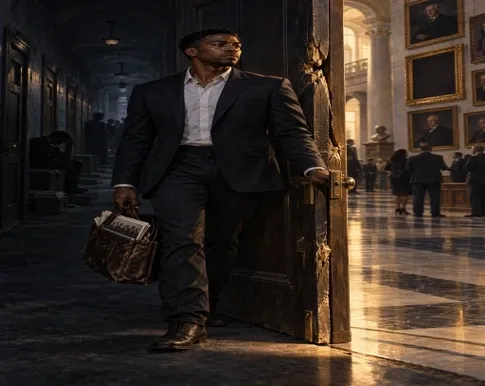
People celebrate breaking barriers in public but live it privately. The public sees the plaque, the ceremony, the headline, the applause. They rarely see the cost: years of work done without a spotlight, rooms entered without an invitation, and the quiet discipline required to keep moving when recognition arrives late or not at all. Being a Barrier Breaker is not simply an honor; it is a journey marked by sacrifice, persistence, and the occasional sting of being overlooked by people who know better.
Sometimes, the sharpest reminders of that cost come not from adversaries, but from familiar corners of the community, places where you assumed your work was understood, your contributions remembered, and your presence valued. Slights, intentional or not, reveal the emotional terrain beneath the public narrative.
The Quiet Politics of Being Overlooked
In the architecture of recognition, silence is never neutral. Institutions, organizations, and influencers all curate their own versions of history. They decide who gets highlighted, who gets mentioned, who gets folded into the story, and who gets left just outside the frame.
Sometimes the omission is accidental. Sometimes it’s political. Sometimes it simply reflects someone else’s priorities.
But for the person omitted, the experience is the same: a moment of pause, a flicker of confusion, a quiet recalibration of expectations. You ask yourself whether you misread a relationship, whether the omission was deliberate, whether you should respond or let the moment pass.
These are not questions of ego. They are questions of stewardship: how one carries forward one's work, how one holds one’s legacy, and how communities acknowledge the contributions they helped shape.
The Anatomy of a Slight
A slight is seldom about the act itself; it’s about the history that makes the act noticeable. It’s about the years of shared work, shared struggle, shared commitment. It’s about the expectation, earned through decades of service, that the community will recognize your presence when it tells its story.
When that recognition doesn’t come, you feel it; not as anger, not as bitterness, but as a small, sharp reminder that even the most public work can be privately misunderstood.
And yet, the discipline of leadership requires a steady hand. You don’t rush to confront. You don’t assume motive. You don’t allow the moment to reshape your sense of self. You address what needs addressing, and you release what needs releasing.
That is the quiet strength of someone who has broken barriers before.
The Cost of Being a Barrier Breaker
Breaking a barrier doesn’t just change the space you enter; it changes the people who were already inside. It shifts expectations. It disrupts narratives. It forces institutions to evolve. An evolution, even when welcomed, is rarely comfortable.
Barrier breakers often carry burdens others never see: The burden of being first, the burden of being visible, the burden of being held to standards no one else is asked to meet, and the burden of knowing that your success may unsettle those who prefer familiar hierarchies.
Recognition often comes late. Sometimes it comes selectively. Sometimes it comes with caveats. And sometimes it doesn’t come at all. But the work remains. The impact remains. The legacy remains. Barrier breakers do not break barriers for applause. They break them because the work demands it. After all, the community needs it, because history calls for it.
Grace as a Form of Strength
A kind of grace emerges only after decades of public service: the grace to absorb slights without internalizing them, to address omissions without resentment, and to keep working without waiting for validation.
Grace is not softness. Grace is not passivity. Grace is strength under control.
It is the ability to say: “I know what I’ve done. I know what I’ve built. I know what I’ve contributed. I know you know it too, and I will not allow anyone’s silence to rewrite that truth.”
Closing Reflection
Outside my window tonight, the rain has settled into a steady rhythm—no longer a storm, just a reminder. Pressure comes, pressure passes, and what remains is the work you’ve done and the people you’ve lifted. Barriers break, storms move on, and the ones who stand afterward are the ones who were built to endure.
Recognition is a gift. Legacy is a fact, and breaking barriers costs the price of shaping history.
A few months ago, at the 35th anniversary celebration of the Macon–Middle Georgia Black Pages, I ran into two men I had not seen since 1974 — Dewayne Davis and Willie Blash. I taught them both in the fourth grade at Green Street Elementary School. Back then they were boys with bright eyes and restless energy, trying to find their place in a world that didn’t always make room for them. I taught them they had a moral obligation to lead when they grew up. They taught me that the historical examples I gave them were dead men and women, so I started writing about living, breathing African American heroes.
After a few weeks, the principal fired me for renaming Black History Month African American History Month. The term African American was not in the acceptable lexicon in February 1974. Ten years later, Jesse Jackson followed Hakim R. Madhubuti's example (whom I had studied at Tuskegee) and pressed the nation to call Black people African Americans. I didn’t expect Davis and Blash to remember me. But they did. They told me the whole class cried for a week when I was fired.
They walked up with the kind of confidence that comes from living a full life, and they told me something I will carry for the rest of mine: the few weeks they spent in my classroom made them the men they are today.
Not the awards. Not the ceremonies. Not the public acknowledgments. But the work, the quiet, daily work of teaching, guiding, encouraging, and believing in them before they knew how to believe in themselves.
Standing there among old friends and new faces, I realized legacy isn't built where people choose to highlight you. Legacy is built in the lives that carry your influence forward long after you’ve forgotten the details of the moment that shaped them.
Recognition is a gift. Legacy is a fact. And sometimes the deepest validation arrives not in the spotlight, but in the unexpected reunion — when two men you taught as boys return decades later to remind you that breaking barriers is not just about what you accomplish, but about who you lift along the way.