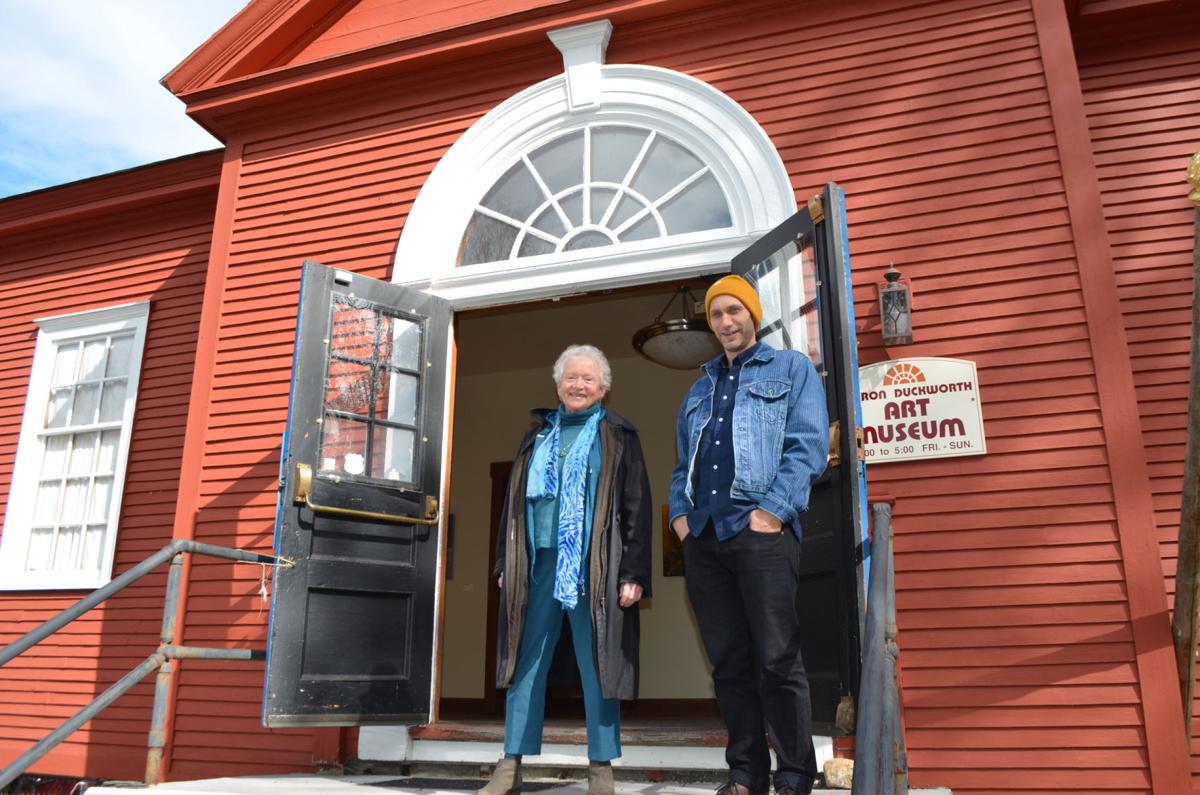
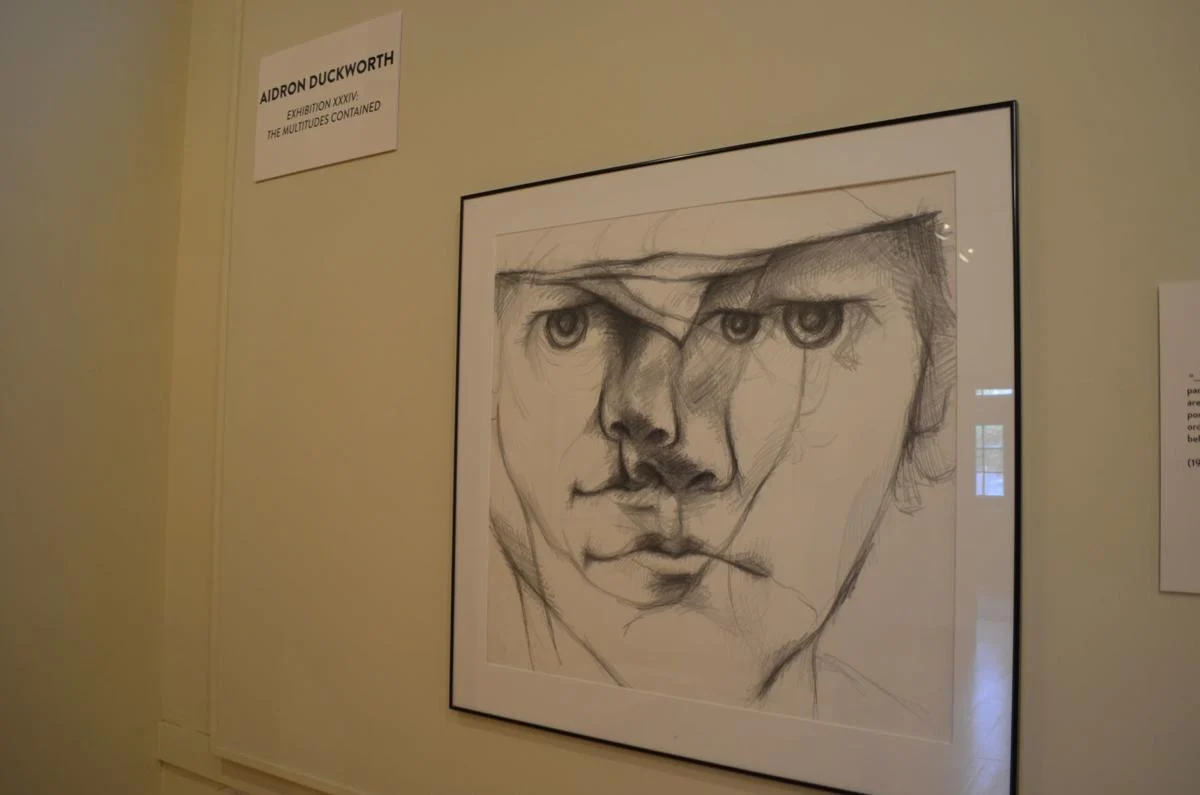
MERIDEN — The Aidron Duckworth Museum will be closing at the end of October and is giving a final exhibition of the artist’s work, as well as a sampling of artists who have exhibited there over the years. “Exhibition XXXIV: The Multitudes Contained,” examines the theme of the multifaceted self.
Aidron Duckworth was a British sculptor who turned to painting, he told the Eagle Times in January 2000, because “I found I could explore space more easily on a flat surface. Sculpture has a limited space.”
Duckworth retired from teaching art at the university level and moved to Meriden in 1976. After trying to run a residential art school for three months, he realized a better plan would be to use the house in Meriden — a former elementary school — as base camp and travel around, teaching. He taught in Claremont, Newport, Hanover, Norwich, Woodstock and other places.
After Duckworth’s death at 81 in 2001, supporters worked to turn his home and studio into a museum. The museum opened in 2002.
Duckworth disdained the commercialized mainstream art world, but as a teacher he encouraged his students to work in whatever style suited them best. According to Grace Harde, a former student of the artist and the driving force behind the museum, “He expected the most of you; you worked to your highest standard, and you just did better.”
Meanwhile, “Aidron just hated the mainstream,” she remembered. “Every time he dealt with the New York agent, he just basically kicked him.”
Duckworth’s exploration of human figures and faces is partly abstract and partly realist: he takes faces and elements of faces, figures and elements of figures, and puts them together to reveal something essential underneath. Some of his works are Escher-esque reconfigurations of faces, distorting the viewer’s sense of place and proportion. Others are brightly colored yet haunting faces reassembled from parts of themselves. The works are always multilayered and multidimensional, as each work expresses multiple selves, or multiple facets of selves. At the same time, the artist’s hand is always sure. Lines are definitive and even shapes that blend into each other have clear edges.
What will happen to all these works when the museum closes? Ben Finer, who became museum director last year, said he’s not sure; “We’re looking at options.”
When Duckworth arrived in the 70s, the community of Meriden didn’t quite know what to do with his work.
“His students were mostly women,” Harde remembered. “They painted a lot of landscapes; I think landscapes can be comforting, to women especially. We all have that inner turmoil we don’t want to deal with, and Aidron insisted on dealing with it in himself.
“There were people who worked with him 20 years,” Harde continued. “He would show them his work and they wouldn’t understand it.”
Finer said Duckworth’s work “actually fits the world we’re living in more than it did when he started painting in the ‘70s.”
That being said, Duckworth could be as stubborn as he was innovative. He never gave up his British citizenship.
“He was here all those years on a green card,” said Harde.
Duckworth wrote of himself, “I am an explorer rather than a rebel. I explore a small corner of the mystery of life through the human figure.”