Neptune’s Cradle is the first in a trilogy of three interconnecting stories from Genna's book, Amid the Streams. The unifying elements in this trilogy hold a subtle, deeper meaning that exists just beneath the surface and builds in momentum as the stories unfold. Her central characters embark on a unique and stunning journey that delves into the metaphysical, the transcendent aspects of the human experience, the majesty of nature, and the fulfillment of hope that dwells within us all -- from our life on earth, and beyond. --- Michael Vermuelen (MSV Literary)

Neptune's Cradle - Chapter 1
Shawmut Lane sidled through rows of thick pine trees, fields of salt marsh and crumbling stone walls with the sounding imagery of a Robert Frost poem. Had it not been for the recent storm, Katelyn Gallagher -- Kate, to many -- might have enjoyed her drive down the narrow New England side road. A March nor’easter had pummeled Farhaven Beach the day before, raging and indifferent, leaving its calling card everywhere. Muttering under her breath, she swerved her silver Jeep around jagged piles of fallen tree branches hidden behind curves along the sandy corridor. It was Sunday, bitterly cold and windy. And not how she had planned to spend her afternoon.
A hardworking reporter for The Farhaven Herald, she was enjoying some downtime when her editor called at noon with a tip about a homicide at Marguerite and Joseph Kaplan’s summer home on their woodland estate. Her assignment was to investigate the incident and file her story in time for the Monday morning edition. In her early thirties, Kate had established a reputation as a conscientious, empathetic journalist. Known for her meticulous, high-stakes reporting, she often worked long, uncoventional hours to delve deeper into a story in substantive ways while garnering admiration and respect from her readers. Yet she was unaware on that chilly afternoon, how Shawmut Lane was leading her toward an unprecedented investigation...one that revealed disturbing and hidden dimensions of the human experience amid the shifting sands of time.
Wondering if she had taken a wrong turn, she looked to her left and caught a glimpse of police car strobe lights glimmering eerily through the pines moments before the shoreline home loomed finally into view. The private lane ended at a man-made barrier of rocks and landfill -- a line of defense between Kaplan land and the vast, deep waters of the Atlantic Ocean.
Kate parked the Jeep and took hold of her camera to snap exterior shots of the property. Facing the ocean, the wood-clad, coastal retreat rested on thick, tall stilts. Its dramatic wall of windows and wrap-around deck provided panoramic views in all directions. Attractive landscaped grounds were rimmed by a natural fieldstone retaining wall in solidarity with the surrounding environment. In front of the wall, the slope of a hill descended for twenty yards to a wide swath of private beach. Driftwood, seaweed, and other ocean castoffs had been removed from the sand and rock pylons, bordering the beach down to the water’s ebbing tide.
Odd, considering that storm we just had, she thought. Lovely spot, but remote. She continued to take photographs as she made her way to the gated entrance at the rear of the home. Behind the gate, three police cars, a forensic unit and several police officers blocked her access to the house and backyard. Shivering amid the cold embrace of March, Kate gathered her woolen parka about her slender frame, forced a smile and held up her press card.
One of the officers stared at her ID. He shook his head. “Sorry, Miss Gallagher but no press is allowed right now.”
Homicides among the affluent and privileged who didn’t play by the rules were often catnip to the news-entertainment media. With a reputation for sensationalizing stories, they often applied "clickbait" effects to maximize their ad-fat profits. The gapers and social media frenzy would quickly follow. “Then you might consider setting up a barricade at the entrance to this private lane,” remarked Kate, glancing at his name tag. “The storm debris won’t discourage others for long, Officer Scully.”
“Yeah, well, we’re already takin’ care of that.” He didn't try to hide the disdain in his voice, or the smirk that crooked his sullen mouth when the reporter slipped the camera back into her shoulder bag.
Encountering a first responder harboring a visceral distrust of investigative journalists was not unusual. Kate found it tedious, nonetheless. Looking up at the house, she smoothed back her wind-tousled auburn hair and waved to the tall figure standing on the rear deck.
Detective Lieutenant Jackson Donlon recognized her immediately and motioned the officers to let her through. His steady eyes followed her with appreciation as she climbed two flights of steps to the huge platform that held dominion over the grounds below. “Good morning’, Kate,” he said. “Hell of a storm yesterday, wasn’t it?”
She managed another smile in the wind-driven cold. “Morning, Lieutenant. Can you confirm what happened here? Must be important if this is a priority for you.”
Lieutenant. Jack frowned at the formality. “The Commissioner wants me hands-on with this one. Looks like we might have a double homicide.”
“Two murders? My boss didn’t mention anything about that. Homicides in Farhaven Beach aren’t exactly common. And our editor-in-chief isn’t one for getting his facts wrong.”
“Yes...both the husband and the wife. We’re trying to keep a lid on this for now,” he confided. “I hope you’ll assist us in that effort in exchange for some down-stream scoops in the case. According to preliminary forensics, the scene might have been staged. We’ll need the final lab results to know for sure. For now, we're reporting this as a murder-suicide to keep our killer or killers thinking they're getting away with the homicides. Am I clear on this?” he asked, sternly.
“Well, that depends. Are you going to keep me standing on this freezing deck all afternoon? It looks like your forensic team has finished in there.” Kate motioned to the sliding glass doors leading to the Kaplans’ living room. She stared up at him, her wide, green eyes holding his -- alert and determined.
She has her father’s spirit, he thought. Connor Gallagher was a brilliant defense attorney, a legend in legal circles, a man whose character stood high among his peers. The detective was among those saddened when the famous litigator died from a massive heart attack at his Farhaven home the previous summer. He admired the reporter for leaving The Boston Chronicle in early January to care for her mother who had fallen ill after her father’s death.
Like Kate, Jackson Donlon had recently emigrated to the coastal community from another major city. In what many considered a bold move, Farhaven’s Police Commissioner searched beyond local talent pools for an experienced specialist to head up the FPD’s new detective division. He found him on the gridded streets of Chicago at the Central Investigations Division of the CPD. Impressed with the detective's dedication, skill and success rate in solving complex cases, the Commissioner offered him the job. After five years of dealing with the city's major crime rate and public corruption, Jack was ready for a change. And his boyhood memories of growing up on Illinois farmland made him secretly long for days when he could see clear to the horizon. He was especially pleased with his decision after meeting Kate at a press conference a week earlier.
As she turned to walk through an open glass door, he clasped her arm gently to shield her from what awaited inside the home. “The coroner’s initial estimate of time of death is between 8 and 10 last night. The scene’s been cleared but it’s still rough in there.”
“This isn’t my first homicide, Lieutenant. Sorry to be rude but I'm cold and bone tired."
He hesitated for a moment, nodded, then stepped aside. “Okay, let’s go in but only for a minute.”
The Kaplans’ living room was large and welcoming, with a summer living style, rich green carpeting and white leather furniture. Expansive picture windows enclosed the room except for one wall that braced a massive, fieldstone fireplace with a slab hearth. A collection of seashells appeared to have been collected over time were placed on layers of sand, beautifully arranged in glass displays. Apart from the overturned coffee table, everything else in the room was undisturbed. A photograph album, poetry books and gardening periodicals had spilled from the table to the floor.
Kate absorbed every detail of the crime scene, jotting down notes and cataloging mental images. Although forensic technicians had dispatched the bodies to the morgue an hour earlier, the stench of decomposition still choked the air. She could never find the words to describe the overpowering smell. Its foul ether permeated every porous surface it touched.
Turning down Jack's offer of menthol cream to mask the odor, she listened intently as he explained how the CSI’s had marked measurement points of both bodies on the blood-soaked carpeting to later create crime scene drawings to scale. The smaller of the two outlined with grim precision where Marguerite Kaplan had bled out on the living room floor near the couch from a gunshot wound to the chest. Blood spatter patterns were the result of death by shooting for both victims. Joseph Kaplan was sitting in front of the fireplace when a bullet ravaged his skull from a single gunshot through the mouth. Fragments of brain tissue and bone still clung to the fieldstone wall. A Glock 22 handgun registered to him was found at his side.
Kate walked over to a large glass display of seashells near one of the picture windows. She suspected the secluded beach house was a point of refuge -- more for the wife than the husband -- and felt an unexpected twinge of sadness for the loss of a woman she’d never met.
“Was anything stolen or any drawers rifled through?” she asked. “I don’t see any laptops or desktops.”
“No,” he replied. “Nothing was taken or seemed out of place…at least from what we’ve determined so far. Their computers are at the main residence in Manhattan where Joseph worked for a high-profile investment firm. They each carried a personal iPhone."
“Any surveillance or security cameras?”
“None, but that’s off the record.”
“Who discovered the bodies?”
“Caretaker, early this morning.”
Kate glanced down at the shoreline. “After he cleared the beach area of the storm debris?”
“Yes -- after. It’s why he was here so early. That’s also off the record. So is he, for now. He’s a local and a loner by the name of Oscar Crane. Dispatch instructed him not to touch anything when he called 911 at about 7:15 this morning. He was told to wait outside for the first responders. We want to keep him under the radar for as long as we can. He’s an older, quiet guy who spooks easily.”
While staring at the ocean, Kate could hear the seagulls shrieking at the water's edge as they sparred with the wind. A troubling instinct meddled with her thoughts. Something was wrong with the crime scene. The stillness in the room seemed burdened with secrets, grieving in muted aloneness. Sentient, subtle, and unyielding. She stiffened suddenly when a whispered breath trickled warmly across the nape of her neck. For a few seconds, she stood frozen and unable to move. Ever so slightly, nuzzling and nectar sweet, the murmuring quickly disappeared as though it was never there. As though a phantom hummingbird had grazed her with a flick of its wings. A non-believer in coincidence, intuition, or otherworldly signposts, she glanced at the open, sliding glass doors with a quiet sigh of relief. Wayward, vibrating particles of scent and sound must have drifted into the room on the wind from the grounds below. It was, she thought, the only way it could have happened.
Shrugging off her unease, she focused instead on a family photograph displayed on the fireplace mantel. Taken at their Manhattan penthouse, Joseph and Marguerite were smiling alongside a young man in his late teens or early twenties.
Jack caught her gaze. “Joe Jr., there in the photo, is the son and only child of the victims. He attends Cornell University. It took us a few hours to get in touch with him. He’ll be arriving here tomorrow afternoon.”
“He has his mother’s features,” she said, turning to face the detective. “What about suspects or persons of interest?”
“I can’t tell you that. At least, not for now.” Jack motioned for her to accompany him through the doors to the rear deck.
Kate followed him, grateful for the resurgence of life in the fresh open air. “I still have questions and a story to file before tomorrow morning. I do have a deadline.”
Closing the doors behind her, he said, “Some questions I can answer; others I can’t. You know that. For the record, the shooting deaths appear to be a murder-suicide, but it’s too early to draw any conclusions. We still have more work to do here. You can get the specific details on the Kaplans -- anything you need -- from the detective division.”
“Jack, I can’t work this case with you, directly. You’re aware of that. Nevertheless, I can research certain aspects of this homicide independent of your investigation.”
Donlon knew her reputation as a trustworthy investigative journalist. She was a pro of substance who knew where the lines were drawn. He was also relieved the more formal, ‘Lieutenant,’ had been dropped. As he stepped closer to her, a brief gust of wind swept past them. Brushing a thick strand of brown hair from his forehead, his rugged expression softened as he looked into hers. “Look, why don’t we discuss this over dinner tonight?” he asked, casually.
“Breakfast,” Kate countered. “Nine o’clock, tomorrow morning at my mother’s house.” She headed for the rear gate, leaving her escort standing at the foot of the wooden stairway.
“I’ll be there!” Jack called out, as he watched her walk briskly toward the driveway entrance. I wouldn't miss it, he thought. Smiling, he reached for his mobile to call the county morgue.
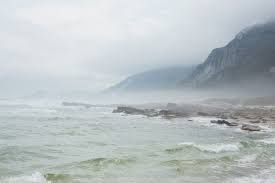
The reporter paused briefly to glance back at the Kaplan property before hurrying to her car and the drive home. Unresolved questions were still troubling. Owing to her innate, secret fear of the ocean, Kate failed to see the answers waiting in the ghostly tendrils of fog that formed in the distance -- reaching, enshrouding, silent.
Whenever Farhaven’s departed met with suspicious, unnatural or violent deaths, their remains were quickly dispatched to the Brestil County Morgue. Upon arrival, they were processed, tagged, and photographed, then slid into 40-degree coolers to await autopsy by the county’s forensic pathologist. Formal identification was required by next of kin whenever necessary. Joseph Kaplan’s brother, Nathan, and sister-in-law lived in Farhaven. Because fingerprints were never taken of the victims before they died and their son was not available, Nathan was summoned to the morgue for the gruesome task of identifying them. His wife accompanied him.
Detective Sergeant Ed Buhle from Donlon’s division was on hand to explain the day’s events and ask preliminary questions. At the conclusion of the ID and interview, he guided the Kaplans to the exit hallway. As he watched them walk toward the main door, he answered a call from his boss at the crime scene. “Hey, Jack. Yeah. They’re just heading out now," he said in a low voice, his eyes locked on the strange couple.
Nathan Kaplan looked remarkably unlike his younger brother. The body stretched out in one of the morgue coolers was 5’9” in length, stocky, and prematurely bald. In contrast, the older Kaplan was over six feet tall with a lean frame and thick, iron-gray hair.
A few inches shorter than her husband, Karen dressed like a woman in denial of her advancing years. Her bottled platinum-white hair framed a face hardened by aggressive cosmetic procedures and piercing, brown eyes. The instant her designer boots touched the concrete steps outside the morgue entrance, she reached into her handbag for a cigarette “You go ahead, Nate. I’m going to have a quick smoke and meet you at the car.”
Nate nodded, knowing she’d probably smoke two before making her way to the parking lot. He quickly found his vehicle, moved into the driver’s seat and started the engine, grateful for the enveloping warmth and solitude. His thoughts traveled back to his Neverland days at Shawmut Lane where he and Joe ran wild as boys.
As other haunting memories from the past began to overwhelm him with grief, the passenger door jerked open. Karen slid into the car, flipped the window visor down and checked her makeup in the mirror. “Soooo,” she sighed. “Joe finally did it. What a shit thing to do to his son.”
Nate wiped the sorrow from his eyes and said, “Detective Buhle emphasized this is still an ongoing investigation.”
“A waste of the taxpayer’s money. It was murder-suicide,” she insisted. You know how unstable Joe’s been; it’s why we stopped seeing them. And his ongoing love affair with booze. Well…that’s one thing he had in common with his kid, Little Joe."
“I wish you’d stop referring to my nephew like that. He prefers his nickname, Jay. And his personal life isn’t any of your business.”
His wife grinned sarcastically. “Jay…you always defend him. Your nephew. You mean the son you never had.” She turned in the passenger seat to confront her husband. “Aren’t you just dying to see what’s in Joe and Maggie’s Wills and Trusts? There’s Joe’s money and Maggie’s money…”
“No, I’m not. You can make this tragedy tolerable or unbearable, Karen. It’s your choice.”
“Oh, what a fuckin' hypocrite you are. That detective doesn’t know…”
“Stop! Enough of this, please.” Nate jerked the steering wheel, hard, as he backed out of the parking space. He paused for a moment to look at his wife with a depth of sadness. “I’d like to take a drive out to the old beach at Farhaven Point.”
She shook her head. “I want to get home before dark. Someone should be there in case Jay arrives tonight. You know how unpredictable he is. My guess is he didn’t want to be here to identify them."
“For Chrissake, can you blame him? And there’s no need to come with me. I’m best alone right now. I’ll drop you off at home on the way.”
They rode in stone silence to their residence in an upscale suburban neighborhood. After conveying his wife to the driveway, Nate headed for Swamscutt Way. A countryside road leading from Greater Farhaven to an older, rock-filled beach at Farhaven Point. The few homes dotting the landscape ranged from high-end summer retreats to dilapidated bungalows. The section of road abutting a half-mile of the coastline was nicknamed, "Tin Can Alley." Lot owners had not been allowed to rebuild after The Great Hurricane of '38 tore through Southern New England. The acquatic apocalypse, with its mammoth tidal waves and winds gusting over 180 miles an hour, killed nearly seven hundred people, shredded miles of coastline and destroyed entire communities. In response to subsequent permit restrictions, every 4th of July weekend, a long row of vacation trailers seemed to sprout up through the sand overnight with make-shift decks and patios.
Throughout winter’s unrelenting cold, residents would occasionally walk across the beach near the water’s edge or sit in their parked cars, gazing off into the distance. Whether searching for answers, redemption, or an inner peace, they were drawn to nature’s liquid infusion with an irresistible longing.
It was dusk by the time Nate pulled his car into the beach parking area. The coastline was deserted. He walked toward the water and sat on one of the larger rocks, not caring if the wind’s bitter stings tore into him. He needed to feel what was there, what was real beyond the human condition of anguish and loss. Staring at the waves, Nate wept as he whispered, “Forgive me.” He did not return to his car until the ocean began to lull the molten copper and gold from the sky. The vivid glow of the sunset was an allusion he couldn’t bear to watch the night take away.
© Genna Eastman. All rights reserved.