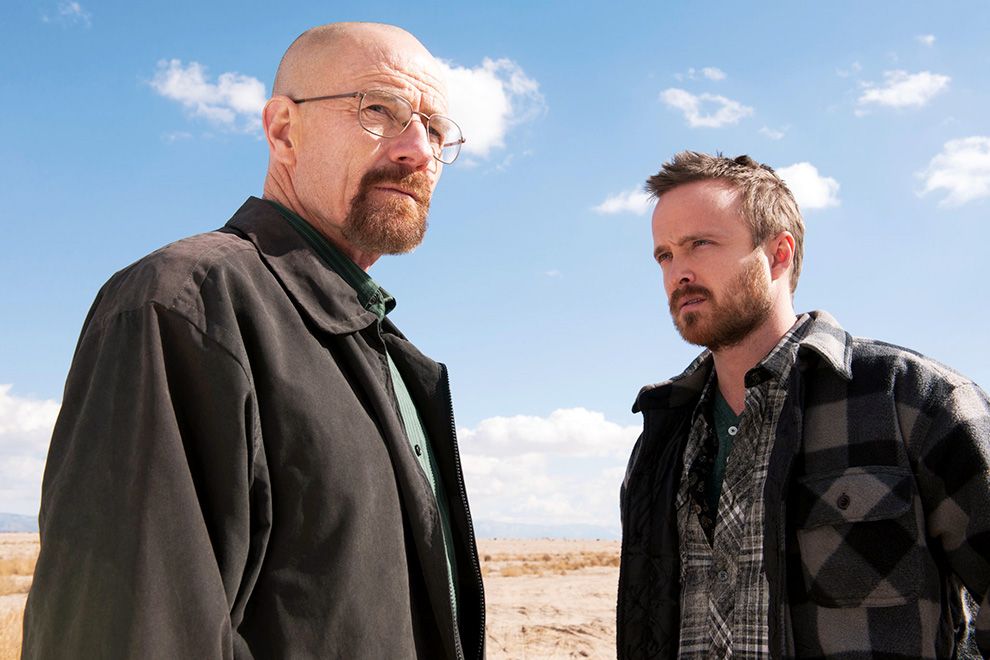
“Respect the chemistry.”
Vince Gilligan, the creator and producer of Breaking Bad, understood this concept quite well. A virtual tour-de-force of acting and storytelling, Breaking Bad is a perfect fusion of complex character development, the illusions of power and control, and imaginative visuals of symbolism and metaphor. In other words, a brilliant chemistry.
On the surface, Breaking Bad resonates with elements of the modern gangster genre but with deep undertones of classic Greek tragedy and Shakespearean themes. I suspect this iconic original will be discussed, praised and emulated for years. The series was nominated for 262 industry awards during the several seasons it aired. It won 110.
The story takes place in Albuquerque, New Mexico. The central character, Heisenberg -- brilliantly portrayed by Bryan Cranston -- was born from the insecure, cancer-stricken, and over-qualified high school chemistry teacher, Walter Hartwell White. "Technically, chemistry is the study of matter," he once remarked to his students. "But I prefer to see it as the study of change. It's all of life…it is growth, then decay, then transformation. It is fascinating." His definition of chemistry was a clever metaphor in that it provided viewers with an intriguing glimpse into the radical changes about to unfold with the character arc of this gifted and caring teacher and family-man, and the mounting psychological burdens he endured in becoming a merciless criminal.
Walter White (The Caring High School Chemistry Teacher) View on YouTube
Walter's transformation into the infamous methamphetamine cook and drug kingpin was fueled initially by his desire to pay for the expensive cancer treatments not covered by his HMO. Money would also be needed for his family when the advanced disease eventually claimed his life. A less magnanimous incentive, however, soon took hold: Walt’s bitter resentment that his former research partners never acknowledged or rewarded his Nobel Prize team-winning contributions to their company, Gray Matter Technologies, which grew into a multi-billion dollar enterprise.
Walter White (The Ruthless Drug Kingpin, Heisenberg) View on YouTube
In the episodes leading up to the finale, Walt had relinquished his drug business. "I am out of it," he said with resignation. Although he assumed a normal life would follow, fate had other plans. When his Heisenberg identity was discovered by his brother-in-law and DEA agent, Hank Schrader, a chase ensued into the desert with tragic consequences. Despite Walt's frantic efforts to save him, Hank and another federal agent were murdered by some of White's prior associates, Jack Welker’s deadly White Supremacist crew. Welker hijacked most of the drug money Walt had buried in the desert sand while disposing of the two bodies in the same location.
Taking the blame for Hank's death, Heisenberg fled Albuquerque for New Hampshire, leaving his family behind. While stashed away in an isolated White Mountain cabin, Walt tried to think of a way he could leave what remained of his drug money to his family before succumbing to cancer. He was also angered to learn that someone else was manufacturing his coveted, 99% pure crystal-methamphetamine, 'Heisenberg Blue.'
Reviews of the Finale
This hub article originated over my disagreement with some of the finale reviews. Although they hailed the series as brilliant, several critics viewed the finale as a disappointing, Hollywood-style, favorable outcome in which Walter White had fully redeemed himself.
I will not use this forum to argue whether Heisenberg’s final moments of clarity made up for his past deeds. Nor will I debate the moral illogic of cheering for a gifted yet ruthless man who left so many destroyed lives in his wake. The purpose of this article is to clear up some of the myths certain reviewers have advocated, including one unrealistic supposition that Walter White froze to death in a car during the New Hampshire winter, and the finale was actually a dream sequence he experienced while in the final throes of death. At minimum, there are two vital details in this closing episode that would have made such a scenario impossible. Vince Gilligan explained this during a brief news conference when these unfounded speculations went viral on the Internet. In viewing any series, there is looking, and there is 'seeing.'
The Final Episode
(Contains spoilers for those who have not yet viewed the series finale.)
Several months have passed in the closing episode. Walt decides to use what time he has left to gain dominance over his own fate. He returns to Albuquerque, seeking to avenge Hank's murder and protect his family and legacy. Upon his arrival, he surprises his former drug business associates at a cafe: The treacherous Lydia, the European distributor of Heisenberg Blue who threatened Walt's family, and Todd, a cold-blooded killer and sociopath from Jack Welker’s crew. His appearance shocks them. Walter White is nearly unrecognizable due to his weight loss and deeply creviced features. He walks quietly, slightly bent at the shoulders, with the fading essence of a man who knows he is dying. Nevertheless, Heisenberg is unwilling to "go gentle into that good night.”
White slides a chair over to their table and sits next to Lydia as she orders her favorite chamomile tea. She is unaware he had previously handled the packet of Stevia she nervously taps on the table. Having recently discovered his methamphetamine was being produced at the Welker compound, Walt makes arrangements with Todd to meet with them that evening under the pretext of revealing a more cost-effective formula for cooking his product. He then leaves the café to drive into the Chihuahuan desert.
A battered structure of what used to be a dwelling opens up into the desert where we see a few stone remnants similar in shape to broken pillars. It is surreal in the sense that this is Walter White’s Ozymandias: “Look on my Works, ye Mighty, and despair!” The reference to Percy Shelley's famous poem also reverberates certain elements from a previous episode. (Similar echoes and metaphors abound in the finale.)
Two empty window frames at the front of this broken facade are the eyes of a torn and embittered soul. What is left in the shadows and splintered wood is a harbinger of the death and destruction still to come. The deadly white ricin Walt inserted into the Stevia packet at the cafe now courses through Lydia’s body as he toils in the desert beyond, assembling his M60 killing device in the mid-day sun.
Ozymandias (Read by Bryan Cranston) View on YouTube
Walt kneels on the desert sand, singing the words to ‘El Paso’ while he completes his final creation. The wedding ring attached to a length of twine around his neck falls forward; it no longer fits due to his weight loss from cancer. This also symbolizes the enduring love he still holds for his wife, and their marriage which Heisenberg destroyed. Tucking the ring inside of his shirt, he stares across the barren landscape.
During Walt's flight from justice, the White home was RICO’d by the feds, and their bank accounts, frozen. His wife, Skyler, and their two children have been forced to live in a small, bleak apartment. On the final afternoon of his life, like a shadow, he slips, undetected, into the apartment to bid farewell to his devastated wife. He has no intention of surviving the events he has planned for that evening.
“It’s over. And I needed a proper goodbye,” Walt tells her. He leaves the tearful Skyler with two gifts: Information on the location of Hank’s body and how he was murdered, and finally, the truth as to why he became the notorious Heisenberg. Rather than repeating the false, “I did it for the family,” his admonition provides some measure of relief to Skyler after lying to her for two years: “I did it for me. I liked it. I was good at it. And I was really...alive.”

They do not touch in this poignant scene. Skyler remembers the love she had for the man her husband once was and grieves for their family bond that is hopelessly shattered.
Before Walt leaves the apartment, his hand tenderly caresses his infant daughter as she sleeps in her crib. His teenage son will bear the ignominy of Walt’s legacy as a notorious drug kingpin for the rest of his life. So will his beautiful wife and daughter. The awareness of this is deeply etched in Walter’s expression as he peers through a glass window across the apartment courtyard, watching his son for the last time.
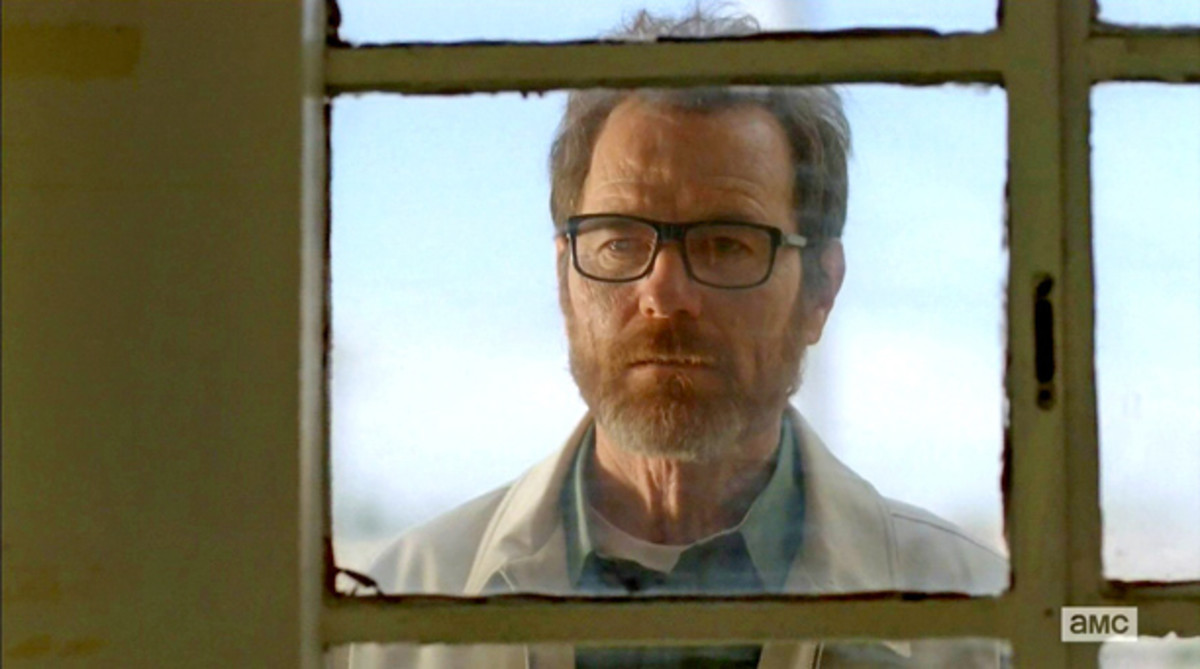
Ironically, upon his return to Albuquerque, Walter did manage to maneuver in secret his remaining drug money to his family. It was the one goal he sought to achieve before Heisenberg was fully realized. He accomplished this by coercing his former research partners at Gray Matter. His need for retribution finally satisfied, he says to them with a cold stare, “This is where you get to make it right."
The true source of this wealth and what Walt does for his family during the last 24 hours of his life -- born from whatever humanity remains in his soul -- will never be known to them. He neither asks for nor receives recognition or forgiveness.
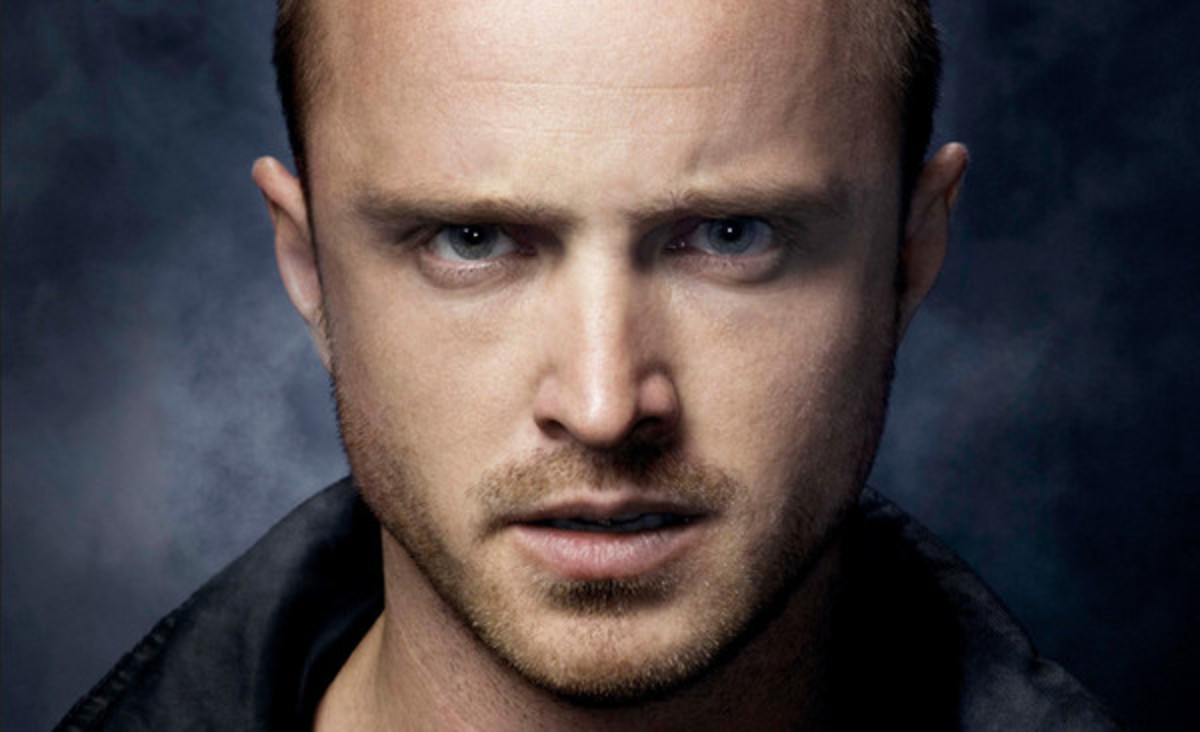
In another scene, we see Walt’s former protégé, meth cook and young partner, Jesse Pinkman, in a fantasy memory. He recalls the beautiful box of Peruvian wood he made while in high school. (Walter White was his chemistry teacher.) Rather than giving the cherished box to his mother as originally planned, he traded it for drugs. The paradox of this memory is startling. As Jesse leaves this fugue daydream reflecting his innermost desire to create such beauty with his hands, he is in a harness and chains, imprisoned in the lab at the Welker compound where he has been forced to create Heisenberg's prized, crystal-blue meth. The irony of this captivity also reflects the deeply manipulative, complex and nocuous relationship he shared with his former partner and friend.
Night has fallen by the time Walt arrives at the compound. The final madness of Heisenberg explodes as a barrage of bullets -- triggered remotely from the M60 device hidden in the trunk of his car -- tear through the front of the house, killing nearly everyone inside. Despite Jesse's earlier betrayal of him, Walt hurls him to the floor and saves his life. Released from his chains and Heisenberg’s world, he flees into the night.
As Jesse is given another chance at life, Heisenberg's journey ends. Tragically and perhaps deservedly, the only peace he will know is amid the equipment in the meth lab from which Jesse is freed. Moments before he succumbs to a stray bullet wound, Walt wanders the path of destruction Jesse was forced to walk for months. He gently strokes a lab boiler with the same tenderness he showed to his daughter only hours before. The cold glass and steel would never recoil from him, nor judge him. Having never consumed his own product, he smiles in admiration of the chemistry he created, the power and money it generated...the only success in life that made him feel alive.
Walter Hartwell White died on the lab floor, alone and without solace from those he loved, surrounded by his drug of choice.
© Genna Eastman. All rights reserved.
Viewing Availability: “Breaking Bad" is available for streaming on Netflix and Netflix Standard: buy or rent it digitally on Amazon Video, Fandango At Home, Apple TV, Google Play Movies, and YouTube.]
Breaking Bad -- Final Scene (View on YouTube)
♦ An HP Editor's Choice Selection