"No art passes our conscience in the way film does, and goes directly to our feelings, deep down into the rooms of our souls.” ---- Ingmar Bergman
The world of cinema is an all-embracing experience combining elements from various art forms. Since the days of silent film, music has played an essential role. At times taken for granted as a kind of wallpaper in the background, music adds another dimension enriching the film’s thematic ideas and artistic content. When applied discriminately, it facilitates our mood, invokes sense memories, and threads the emotional context of the film. Music also advances the storyline, acts as a bridge which ties together characters and events, and can serve as a signal to us when something is about to happen. Whether through song or orchestration, the composer creates a visual image of the culture and history of an era in the mind of the viewer. In some ways it becomes the scene itself.
“The importance of music to film is the new hybrid that is growing stronger.”
---- Robert Redford
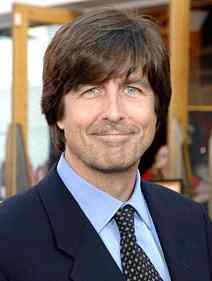
Thomas Newman
A gifted musician and violinist, my mother provided me with insight into the vast and beautiful realm of music as well as composers. (I began playing the piano under her wonderful tutelage at the age of seven.) Thomas Newman, one of my favorite writers, is one of the most talented, versatile and sought-after artists and composers in this industry. His father was Alfred Newman, the longtime music director at 20th Century Fox Studios and winner of nine Academy Awards. Composer, Randy Newman, is his cousin. Although Thomas has been nominated for fifteen Oscars, ironically he has yet to win. You may recognize his music from such films as Little Women, Pay It Forward, Finding Nemo, The Green Mile, American Beauty, The Shawshank Redemption, The Help, Skyfall, Bridge of Spies, and Elemental. Compositions for television include Six Feet Under, Angels in America and The Newsroom.
The Collaboration Between Composer and Director
The composer usually becomes involved during post-production before the film has been fully edited. During the creative process, music and film marry, thus becoming inseparable. The film score should never clash with or upstage the action depicted on-screen lest the viewer be subjected to a kind of lovers’ quarrel. The collaboration and communication between composer and director are therefore vital to the film’s success. Creative differences may occasionally lead to an impasse, a.k.a. “my way or the highway.” (Having once worked in the entertainment industry, I can assure you such conflicts do arise, albeit not often.)
“I kind of see everything with music.” ---- Martin Scorsese
Newman is well-known for having a unique voice and the absence of an egocentric approach which has enabled him to collaborate successfully with many directors, including Steven Spielberg, Robert Redford, Sam Mendes, Frank Darabont, Andrew Stanton, Mike Nichols, and Steven Soderberg,
The following clip illustrates the scoring of the film soundtrack for WALL-E. Thomas and director Andrew Stanton also worked together on the award-winning animated film, Finding Nemo:
The Newman Sound
Often referred to as “traditional Hollywood,” orchestral and melodic film scores possess harmonic progressions and repetitive motives or musical phrases. A motive (or motif) is the sequence of notes we hear that is central to the composition or musical idea.
More modern scores often include electronic elements. A contrast to the melodic is the technically ingenious action score, such as Hans Zimmer’s from Batman - The Dark Knight. Zimmer presents us with a distinctly non-melodic feeling. What is instead predominant are a striking timbre and rhythm. The strings and powerful brass build on the pervasive tension and movement, anchored by two instantly recognizable notes that prevail throughout:
"Electronic music lends itself to an abstract way of storytelling, so it keeps evolving. There's a whole movement truly driving music further, and there is no other music innovating as much as music in film." ---- Hans Zimmer
Newman utilizes both schools and elements with compositions for large orchestras, simpler, more subtle content for smaller ensembles of musicians, and percussion-driven scores. He also employs a hybrid approach with distinctive rhythms, repeating phrases, and a duality of emotion. He prefers to experiment by using unusual instruments juxtaposed with standard orchestral sounds.
Meet Joe Black
The 1934 film, Death Takes a Holiday, was the inspiration for this romantic fantasy directed by Martin Brest. The Angel of Death (Brad Pitt) pays a call on William Parish (Anthony Hopkins), a wealthy and powerful CEO of a media empire. Death informs Bill that before taking him to “that next place,” he wants to remain in his world for a brief time to experience what life is truly like for mere mortals. In exchange for Bill’s services as a tour guide, he will have more earthly time to take care of his affairs before departing for the Hereafter. Left with little choice in the matter, Bill accepts his proposal.
In order to move through the human world incognito, Death (Joe Black) takes the form of a young man who was killed earlier that day after a coincidental meeting with Bill’s daughter, Susan (Claire Forlain), in a coffee shop. Joe’s arrangement with Parish is further challenged when he and Susan -- unaware of Joe’s true identity -- fall in love.
Newman's Score
Newman’s modern classical theme is both rich and romantic. In the following clip, the strings build in harmony to a crescendo (the kiss), and a motive that is repeated. Newman’s beautiful score helps make this film memorable.
The Road to Perdition
Directed by Sam Mendes, Perdition was adapted from Max Allan Collins’ novel. Mike Sullivan (Tom Hanks) is a hit man for the Irish mob in Depression-era Chicago. His employer, John Rooney (Paul Newman), has strong ties to Al Capone. Sullivan was raised by the generous Rooney who loves Mike as a son. Their relationship is tragically tested when Mike’s own son, Michael, inadvertently witnesses the execution of a man at the hands of Connor Rooney (Daniel Craig), John’s cruel and deceitful biological son. Despite the boy’s promise to remain silent, Connor, who has been stealing from his father’s operation for years, takes matters into his own hands. During a failed attempt to silence the boy, he murders Sullivan’s wife and younger son, Tommy.
Grief-stricken and enraged, Mike takes his revenge while on a road trip to the town of Perdition where he plans to leave Michael safely with his aunt. Capone’s organization refuses to cooperate with Sullivan because of Rooney’s influence, and hires a hit man to kill him. Although John is furious with Connor, he ultimately protects his son and refuses to give him up. “This is the life we chose; the life we lead. None of us will see heaven,” he tells Mike.
Newman's Score
Rooney and Sullivan once played a piano duet at John’s home during an Irish wake. On the final evening of his life, as John and his bodyguards walk toward his car during a storm, we hear only Newman’s music. The soft piano notes wander in the quiet night rain. Bright flashes in the distance mark the silent explosion of bullets tearing into the bodyguards through the darkness. Rooney is left standing alone, awaiting his own death. The piano tones fade as Sullivan emerges from the shadows and walks slowly toward his former boss and friend. Rooney’s eyes meet his, and we see in both men the regret and sorrow over what has been lost, and what has now become unavoidable:
If the haunting piano tones in the above video sound familiar, you have a very good ear as you’ll hear when playing the following clip from the film, American Beauty:
American Beauty
Similar to the Perdition scene, we are presented with an evocative, beautiful aura that stirs the soul. The piano notes drift with the floating movements of the bag…its beauty, unnoticed by society. The simplicity of the castoff dancing in the wind against a hardened and indifferent background is lyrical and almost heartrending in its grace, as if whispering, “This is what you have lost.”
The Oscar-winning American Beauty was directed by Sam Mendes. Alan Ball wrote the original screenplay, which centers on the longing for youth, and the beauty and esteem in a society preoccupied with superficial facades. The story follows the rebellion of Lester Bernham (Kevin Spacey), a cynical, middle-aged family man experiencing a severe midlife crisis. His wife and daughter deal with their own frustrations and resentment as they try to cope with the value changes taking place in this “perfect America family” that has long since stopped communicating.
In creating the film score, Newman used instruments from the percussion family of which the piano is a member. His brilliant compositions capture the rhythmic pulse of humor, beauty and tragedy that interfold throughout the story.
The Shawshank Redemption
Adapted from Stephen King’s novella, Shawshank was written and directed by Frank Darabont. The film tells the story of Andy Defresne (Tim Robbins), a banker who is sentenced to life at Shawshank State Penitentiary following the unjust murder conviction of his wife and her lover. In prison, he befriends fellow inmate, Ellis “Red” Redding (Morgan Freeman), a seasoned lifer. Andy survives the brutality of prison life for many years by drawing on his intelligence, dignity, and his unshakable belief in hope, despite the cynicism expressed by Red: “Hope is a dangerous thing; hope can drive a man insane. It’s got no use on the inside.”
Many viewers theorize that Shawshank is a metaphor for the prison in which we might find ourselves at some point in our lives. Red personifies the spiritual arc in the story. Andy is the redeemer, and the catalyst of self-realization and triumph of the human spirit through which adversity is overcome.
Newman's Score
The only music we hear with melodic harmony in this moving film relates to Andy as the inspiration. For example: During the rooftop tarring scene conveying a sense of hope and freedom; the beautiful Mozart opera Andy plays over the prison loudspeaker, providing inmates with a momentary deliverance from the harsh realities of prison life; Andy's triumphant escape from Shawshank; and Red's parole release and final journey to join his friend and begin life anew which appears in the following video. Red’s closing words as narrator are, “I hope” :
Note: My apologies for omitting such film scores as The Horse Whisperer, Angels in America, and Elemental. Several hubs would be needed, at minimum, to encompass Newman’s entire body of work.
References and Bibliography:
- Film Music Magazine; Interview with Thomas Newman; Daniel Schweiger; November 5, 2012
- Musicnotes.com
- Finding Newman: The Compositional Process and Musical Style of Thomas Newman; Adam Schoenberg; May, 2010
© Genna Eastman. All rights reserved.
Said copyrights do not extend to the videos which are utilized solely for illustration and learning purposes.
♦ An HP Editor's Choice Selection