It’s common for humans to look at relics from a time long before they existed; now we are the ones being examined
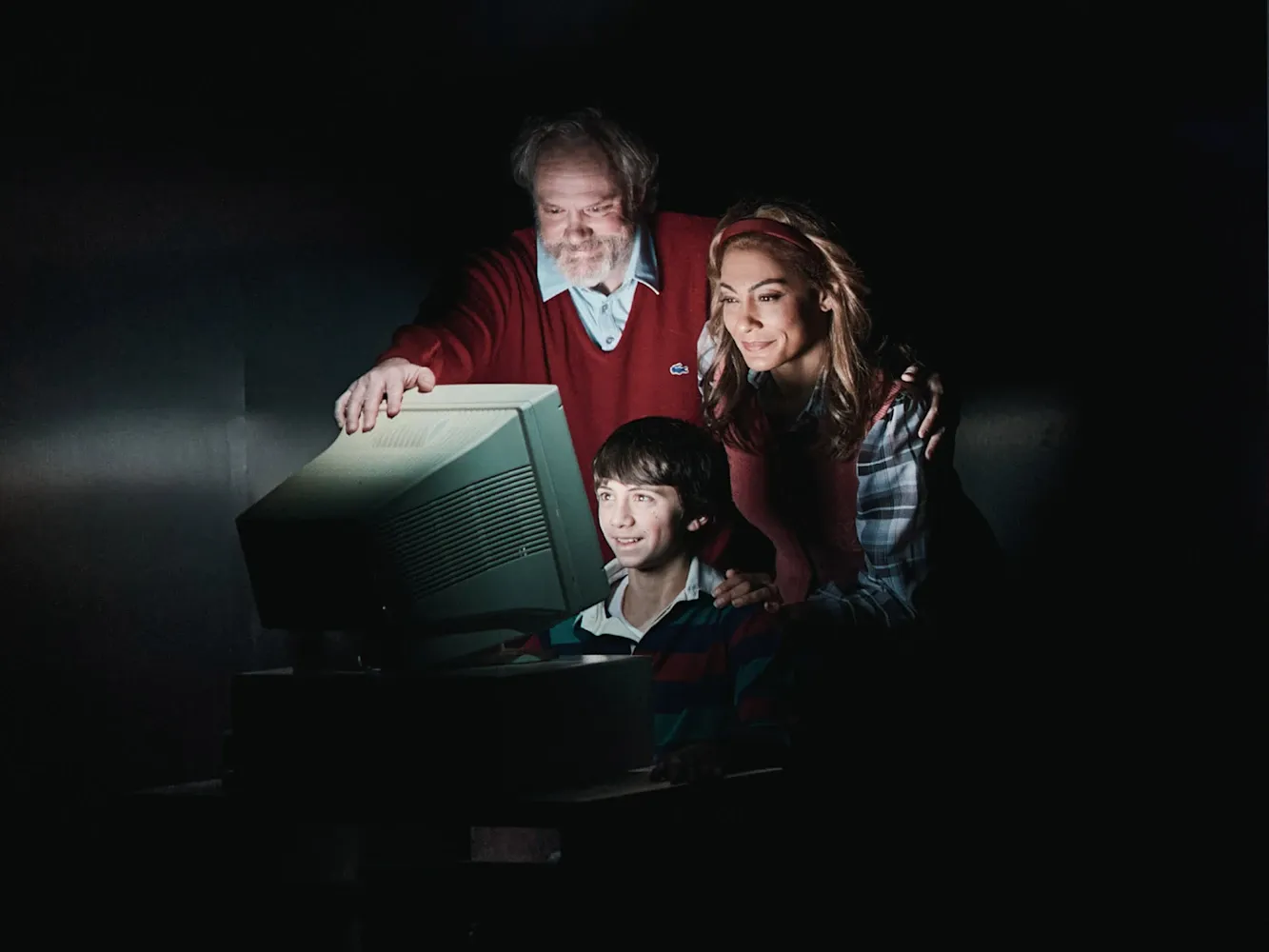
Darkness covers the stage, illuminated only by a spotlight over two “inorganics,” as “The Antiquities” playwright Jordan Harrison calls them. They huddle together at the stage front, talking to the crowd with a broken, uncanny-like cadence, making it clear that they are not of the human race. The pair tries their best to explain the new race of computer-powered humans.
The audience then gets transported to the shore of Lake Geneva in the year 1816, with five friends attempting to tell their scariest stories to each other. Mary Shelley emerges victorious with her tale of a doctor who creates a technological monster, Frankenstein, and is unable to control the creature.
Vignettes from different time periods take up the bulk of the play. The stage going dark for each transition serves as an effective way to split the performance into palatable chunks for the audience, and more conveniently, a way for the stage crew to swiftly switch the sets without the crowd noticing. Each scene serves as an exhibit for the new, AI-powered race, looking back in time to a life before them.
From peeking into the life of a 1910s child factory worker severing his finger and replacing it with a wooden one, to witnessing an $80 million lawsuit over an Artificial Intelligence company, the crowd gets to see glimpses of life evolving through a technological lens. Every exhibit shows how modern inventions eventually replace human intelligence, with humans not realizing they are creating the eventual demise of their race. It is a cynical viewpoint, a mockery of the individuals interacting with evolving technology.
The scenes become murky when the playwright attempts to look into the future. Perhaps creating such sequences is difficult, as it is mostly speculation, but the scenes from the past feel more fleshed out. The dystopian-style war in 2076 between the humans and the “inorganics” is a cliche seen in countless sci-fi films–the robots win, and the humans lose–everyone knows how that plays out.
Emotions take over the final half, however, when the audience gets taken back in time to the years they saw minutes prior. There is a focus on human connection in these second glimpses, something that the “inorganics” simply lack. The 1910 boy who slices his finger off creates a genuine bond with the other workers in a burial for the digit.
It is easy to look at the rise of technology in hindsight and come to the conclusion that humans have made mistakes along the path. “The Antiquities” shows that people tend to forget how human emotion is something unique to our race. The “inorganics” at the start of the show struggle to grasp the simple, everyday human tasks and feelings.
Perhaps we have created our own Frankenstein with the rise of artificial intelligence, but rather than looking at our future as imminent doom, “The Antiquities” tells us that we humans have something that no one, not even an AI brain chip, can replicate.