The concept of race hit me abruptly when I was eight years old, from the back of my third-grade classroom at Midtown Community Elementary School in Neptune, NJ. Like any group of children being forced back inside after recess time, we were rowdy, unable to stay calm on our walk back. Two of my classmates were bickering towards the back of the line—let's call them Jason and Sarah. Like most children that age, it was over something trivial: the order in which we got to use the computers for class the next day. Of course, they did not know when, or really how to stop, so things between them continued to escalate until we got back into the classroom. Everything came to a head when Jason yelled out and called Sarah the n-word. The entire class gasped in shock. Sarah responded by calling him a cracker before our teacher took both of them to the principal’s office.
At that point in my life, I pretty much knew nothing about racism, outside of the limited American history curriculum in elementary school; despite being mixed, both of my parents made it a point to shelter me from that. I knew that the n-word was offensive, something you don’t call someone, especially if you are white.
With that knowledge in mind, I took Sarah’s side that day.
Jason, however, was one of my best friends until college.
Race was always something that I tried to avoid personally. My beliefs on the topic hold strong, I know its importance in a greater society, and that being colorblind is an objectively backwards way of thought. My own race, however, is where I start to become uncomfortable. Years of repressed feelings have started to surface, and it has become difficult to confront.
As mentioned earlier, I am mixed; my mother is White, and my father is Black. I hate saying that. The last thing I want this to be is some kind of sob story about how bad mixed people have it. Logic has already made a rap career out of that.
Although my race was something that I personally did not like to mention, people growing up took every chance to bring it up. Race was brought up a lot in Neptune. The town was split nearly evenly between black and white residents, and everyone hated each other. There were exceptions, of course. Sports typically brought kids—and by default, parents—together. I thought the dynamics of Neptune were normal growing up, but having lived in New York for nearly five years, I’ve realized that the level of agitation in Neptune is not the standard, especially given the region. However, that might be up for debate.
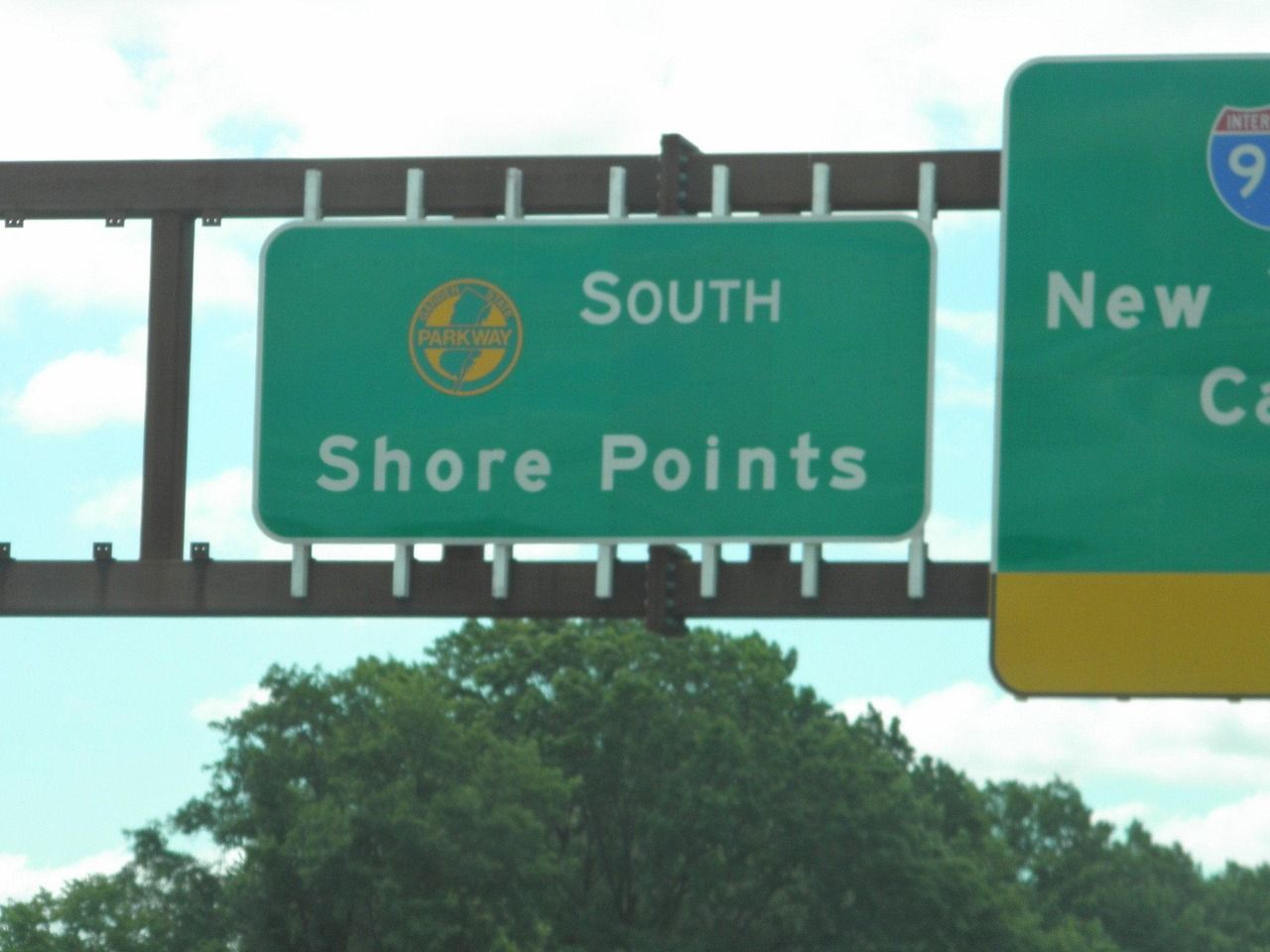
Being in the top 10 in the United States in terms of ethnic diversity, New Jersey has a generally positive reputation for being accepting of anyone from all walks of life. This holds true in certain areas, especially when you get towards New York City. This slowly starts to fade, however, as you pass each exit heading south on the Garden State Parkway.
If you are not from New Jersey, chances are you have an image of the state already preconceived in your mind. Maybe it’s the countless smokestacks you see when touching down at Newark Airport. Or perhaps it’s the grime and endless traffic throughout Newark and Jersey City. Maybe you think you know New Jersey from watching The Sopranos. Surprisingly, no, we aren’t all like Tony.
I have always considered North and South Jersey to be essentially two separate states, split by the Driscoll Bridge in Perth Amboy. The northeast region of the U.S.—known for its progressive views and culture—ends in my mind once you cross that bridge. South Jersey resembles more of the mid-Atlantic, alongside Delaware, Maryland, and Virginia; life here just moves a pace slower compared to its northern counterpart.
The ethnic melting pot ends down there as well, with towns typically consisting of an overwhelming majority of just one race. Some towns are technically diverse when glancing at demographic numbers, but remain divided when going inside the town. Neptune was one of these towns, and we even had nicknames for the all but segregated neighborhoods. “Down the Hill” was majority African-American, with an increasing Haitian and Jamaican population—the White population here comes in at just under 4 percent. Just a ten-minute drive away was “Shark,” whose Black population was less than one percent. Both neighborhoods had thousands of people living in them, so this was not just a coincidence or a small sample size.
I spent a lot of time in Shark growing up. All of my friends from baseball were there—since I was the only one in the group not from the neighborhood, I went to them. Shark was on an island, separate from the rest of Neptune. There was just one commercial establishment there, a small deli that peeked out in a sea of residential homes. With my friends and I being 12 and having limited access to transportation, that was the only place to get food when we would hang out. We often went in together, grabbed our food, and ate while watching sports on the single TV in the deli. The workers were, for the most part, respectful, except for the owner, who was old and grumpy at times. I always assumed that he wasn’t too fond of a group of obnoxious 12-year-old boys yelling at baseball games on the TV in his shop.
One time, however, I entered the deli alone. I wanted to grab something to eat while waiting for my mother to pick me up. It was the middle of winter, so I did not want to wait out in the cold. Like every other establishment, you had to buy something to stay inside. I was starving, so this was not an issue.
The owner was the only one working that day and made my sandwich with a frown on his face. Once my food was ready, he put it in a bag for me, which I thought was odd, considering they typically put it on a tray to eat inside. I took my bag into the seating area anyway, and sat down to eat my food. The moment I opened the bag, I saw the owner moving closer towards me out of the corner of my eye. I start to eat my food, then notice he is even closer, watching every bite I take. I grew suspicious. I knew I wasn’t doing anything wrong.
I looked up at him again, and he yelled at me to leave his store; meanwhile, I was still not even finished with my food. He’s towering over me when I try to tell him my situation; I’m simply just waiting for my mom to pick me up. He snapped at me, “I don’t want you guys in my store.” I responded by telling him that I was the only person here, and I was too naive to realize what ‘you guys’ actually meant.
He went back at me, “I don’t know what you are up to. I know you aren’t from around here. Get out before I call the police.” I complied, confused at what just happened and not wanting to get in trouble. So I waited out in the cold until my mom picked me up, with the owner staring at me through the window.
It took me a while to process what had just happened. I asked my friends if that had ever happened to them; it had not. Nervous that I had done something wrong, I waited for days to tell my mother, who resorted to excuses such as “maybe he was having a bad day,” leaving me even more clueless.
People say that history repeats itself, and that was true, at least in this situation. My brother Jack, who is five years younger than I, also got into baseball and made tons of friends in Shark. Nearly five years after my incident with the store owner, the exact same thing happened to my brother. This time, however, I picked him up from the store. I was older now and could realize that the owner likely didn’t want my brother and me in his store because we did not look like him or the rest of the neighborhood.
With high school American history curricula often halting at Martin Luther King Jr.’s “I Have a Dream” speech during coverage of the Civil Rights Movement, the concept of redlining is unfamiliar to most people. It’s more important to end on a positive note than to recount the entire story. What often goes untold in classrooms is the decades of fallout and racial tension directly following the Civil Rights Act of 1964. Redlining further divided America’s suburbs throughout the 1970s, with the racial boundaries created from the practice still standing today.
Boundaries were an understatement for Neptune; our neighborhoods felt like different worlds, all being contained within eight square miles. As a kid, I would ask my family why this was the case, and they couldn’t give me an answer. Even my grandmother said the boundaries were the same when she was a child. That’s understandable given that she was born in 1941, but why has nothing changed?
It turns out that unknown post-Civil Rights phenomenon hit Neptune pretty hard. My neighborhood, “The Gables,” made statewide waves shortly before integration became law, with the real estate group that owned the development refusing to sell to African-Americans. The case eventually made its way to the New Jersey Supreme Court in 1962. According to court documents, the owner, Harold Strauss, said, “No law or no one is going to force me to sell to a Negro a house in this development. Now, if this man wants a house, let him find a plot and I’ll build it for him. Before I will sell to a Negro in this development, I will close up the development.”
Redlining’s effects still hit Neptune to this day, and with a corresponding elementary school for each neighborhood, the schools are basically still segregated. Each of the five separate elementary schools condenses into Neptune Middle School once students reach sixth grade, and for many, it’s the first time being in an integrated classroom.
I didn’t go to my local elementary school; Midtown was the only school that had the accelerated program my parents wanted me in, so I went there for five years. Midtown was Down the Hill, so outside of Jason, every student was Black. It was a stark contrast to my preschool in Shark, where I was the only person of color in the classroom. There was a lottery for preschool placement in Neptune, so occasionally, kids would attend school in different neighborhoods. Even now, I can picture all of the parents’ eyes on me when I would exit class at the end of the school day. My mom would say it was because I was “a cute kid.” I’ve since realized that it was likely due to the fact that I did not look like anyone else.
Looking back on it, Neptune resembles a bygone era of post-Civil Rights Movement stagnation, where White and Black residents were often living in the same communities for the first time. Most of these communities throughout the country eventually overcame their racial tensions; perhaps the neighborhoods shifted demographics after the end of redlining, or the town’s residents became more accepting across the younger generations. Not Neptune.
Neptune’s race issues are under the radar; in the public eye, there is an image of unity across the town, and in reality, there is, to an extent. Town officials organized rallies and protests following the murder of George Floyd, to which both Black and White members attended. Multiple town-wide events, such as “Neptune Day,” were held yearly, and again, people of both races were present. It’s what is said in private, however. That is where the tension builds.
I saw the tensions reach a peak as a freshman in high school. President Trump’s first election win in 2016 broke up friendships that had previously lasted years. We were fourteen, so none of us truly understood the full context of what was happening within our government, or at least how to process those emotions. That did not stop some kids from wearing MAGA hats and taunting other kids in the school, however. Desperate to keep the few friends I had during that time, I stayed out of the political talk, going wherever the wind blew, depending on what was being said.
One day in March of 2017, a single Snapchat picture spread across my school like wildfire. It was of Nick throwing up a peace sign in front of a spray-painted swastika symbol with the n-word written behind it. Our town isn’t huge, so everyone across Neptune got hold of the image. The general reaction from the school was swift, suspending him until further notice just a day following the incident. A surprising number of people, however, quickly came to his defense.
Nick was a senior at Neptune and was one of the highest-ranking members in our JROTC program. The officials of the unit let him stay, but stripped him of his rank. Having joined JROTC just weeks prior, I heard upperclassmen argue that they were being too harsh with his punishment. He also had a college scholarship to continue ROTC pulled, which parents around the town argued was uncalled for. Even my mother objected to the discipline, saying it was unfair to “ruin the kid’s life over a picture.”
There was always an underlying current regarding race within my mom’s side of the family. To my knowledge, no one had a problem with my parents’ marriage—everyone loves my father. What often got brought up, however, was this sentiment that he was not “actually Black,” as my uncle Bobby would put it. As a kid, I never could understand what he meant by that. He would say the same about my brother and me—I always assumed that it was because we were mixed, so in that sense, he was right. As I grew up, I started asking Bobby questions about that statement out of curiosity. He said that my dad being “college-educated and articulate” disqualified his blackness. My father comes from a long line of HBCU graduates, so does that mean that none of them are Black? In Bobby’s mind, yes. Did I comply with what he was saying? Also yes.
I never knew what to do in those situations. I never pushed back. I never said what I thought—just nodded my head in silence. This complicity that I fostered over the years eventually made the people around me more comfortable telling me their opinions. My friends were the first to get comfortable. It started with microaggressions, which evolved into racist jokes about others. Then those jokes were directed towards me, and I just laughed them off every time. I thought I was one of them, and in Neptune, I was to an extent. Stepping foot outside of the town, I was hit with the reality that I was, in fact, not.
A group of tiny, resort-like beach communities surrounds Neptune, each with a unique, picturesque charm, something you would see on a postcard. Each town gets jam-packed with tourists over the summer, then becomes a ghost town after Labor Day. What they all have in common, however, is that they are exclusively White, and the residents of those towns often held a hostile energy towards Neptune—I could never understand why, as a kid. Even Asbury Park—the lone city with a historic Black community—has been the victim of rapid gentrification over the better part of two decades, with its Black population being heavily diminished.
The exclusion within these communities has deep roots. When thinking about the Jim Crow era, New Jersey is likely one of the last places that comes to mind. Its remnants, however, crept their way into South Jersey and had a sustained presence throughout the first half of the twentieth century. The Ku Klux Klan was active throughout New Jersey until the conclusion of the Second World War, with Monmouth and its neighboring Ocean County having an estimated 7,000 Klan members during this time. They were not in secret either, holding numerous rallies on the boardwalks of Belmar and Point Pleasant.
They even had the support of notable figures in Neptune. The neighborhood of “Ocean Grove” is a historic community that is fully aligned with the United Methodist Church, and its lead pastor in 1923 said this of the Klan: “I am heartily in favor of some of their programs. Any real American should be.” Although I did not grow up in that neighborhood, everyone on my mother’s side did, and they have been in Neptune for nearly 150 years.
The Klan held a lot of influence then, with their “endorsement coveted by many candidates seeking political office at all levels of local government,” according to a 2017 article from the Asbury Park Press. Even after the Civil Rights Movement, the Klan lingered in South Jersey, with then-Grand Wizard David Duke showing face at a rally in the nearby town of Barnegat ahead of the 1980 presidential election.
This blunt force of racism has long since exited these communities. A subtle form has remained around, with redlining also running rampant throughout the towns. However, discriminatory lending practices continued there until 2022. OceanFirst Bank, which is headquartered in nearby Toms River, was ordered by the U.S. Department of Justice to pay $15 million in a settlement. The DOJ found that OceanFirst catered its outreach disproportionately to majority-White towns in the area, while simultaneously refusing services to minority neighborhoods.
It was not until my senior year of high school that I traversed areas outside of Neptune alone. I finally saved enough money to buy my first car, a twenty-year-old Jeep fast approaching 200,000 miles and a cracked radiator. In my mind, the car freed me, and I wanted to explore. I met my girlfriend Maddie at the same time, and she lived in Manasquan, one of the small and scenic beach towns. Our relationship started during the height of the COVID-19 pandemic, and with my grandmother being 79 and a lung cancer survivor, I would go to Manasquan to see Maddie. For some reason, I thought that arrangement was safer for my grandmother.
(Virtual) High school was over, I was laid off from my retail job, and summer baseball was canceled due to the pandemic, so I saw Maddie nearly every day that summer. Each visit, I would take the same way there—Route 71 the entire journey, then turn onto Maddie’s side street. The arterial passed through the towns of Belmar, Spring Lake, and Sea Girt, and cops would follow me every time I crossed them. It was practically clockwork—when I would exit the jurisdiction of one town, their corresponding police would peel off, just to find a new set of cops trailing me minutes later.
Soon, their pursuit turned into routinely stopping my car. I didn’t speed—with the amount of traffic on Route 71 in the summer, it was impossible to. I didn’t run any stop signs or red lights. I didn’t forget to use my blinkers. I even made sure to play my music quietly. Each time I was pulled over, the police wanted to know my business of being there. I lived just three towns away, so was it really that odd to drive there?
One police interaction from this time has always stuck out to me. Maddie and I were driving back from the beach to her house across town, which was just half a mile away. The cop pulled me over as I turned onto her street, and for the first time, I talked back to the officer. I asked why I was being stopped because I hadn’t done anything wrong. He did not answer the question and snapped back, demanding why I was in his town. He looked perplexed upon telling him I was dropping off my girlfriend, and finally responded to my question—my brake light was out. Just out of interest, I wanted to see if the light was not working. It worked perfectly.
My mom immediately dismissed my encounter with the police as unfair, even going as far as to allude that it was my fault. “Maybe it's time to cut your hair. There's a good chance they stopped you because of that fro,” she told me. I did not know what that had to do with being pulled over, but I cut my hair the following week.
I met my mom for brunch over Easter break at a place in Belmar that she would take us as kids. We caught up over some iced coffee and pork roll sandwiches (no, it's not called Taylor Ham). I told her about what I was writing about, and she was, to my surprise, apologetic. “It had to be hard growing up; I know I should have done more,” she told me. I had never seen this side of her before, so it kind of left me more confused than anything. She elaborated by saying that she thought Jack and I were going to be immune to hate—when I asked her why, she could not give me an answer.
I explained to her that some of the things I experienced were on me, that I should have used my voice more, and set those boundaries with my friends and other family members earlier. I feared the direct confrontation, but have since realized that it would have paid off in the long run.
She then asked me some questions: “Did you hate being raised here? Is that why you left for New York?” After sitting back and thinking for a minute, I realized I had no angst toward where I grew up. I moved to New York City for opportunities, not to escape something. It’s not her fault for raising me on the Jersey Shore. There are a lot of other places throughout the country where this would have happened to me. The reality is that despite what happened to me growing up, it was still great to live in Neptune. I answered both of her questions with a simple no, and we returned to eating our pork roll sandwiches.