Rails or Trails? QueensLink says that they can do both.
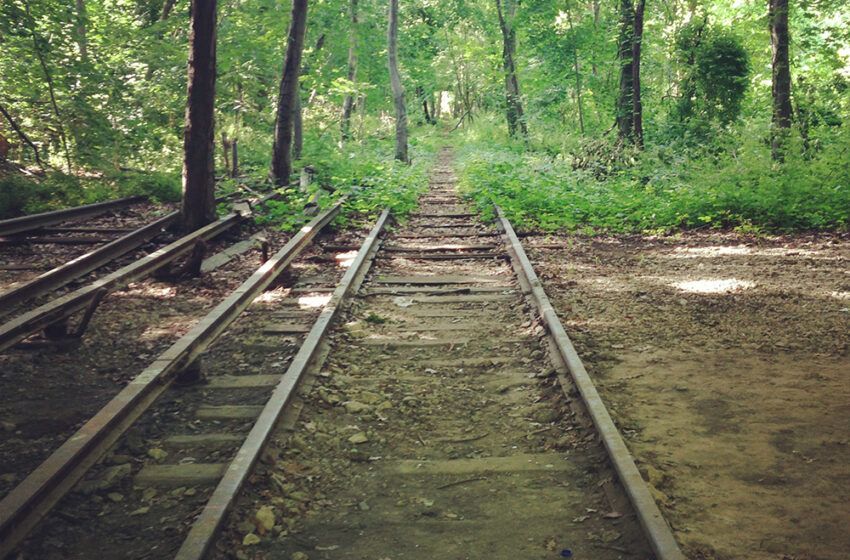
In its current state, one could never tell that the Rockaway Beach Branch ever was an active transit line. Nature has long since reclaimed the five-mile-long stretch of rail that was abandoned in 1962. The elevated line, which runs primarily through the neighborhoods of Richmond Hill and Ozone Park, has deteriorated into a behemoth of rusted metal with overgrown shrubbery bursting out from the structure’s sides, and trees sprouting from the tracks above. Its underbelly is so oxidized that scraps of metal dangle by a thread over the cars on Rockaway Boulevard. What once took riders of the Long Island Rail Road across Queens, with over 67 daily trains during its peak, now serves as an eyesore for the residents of South Queens. The only true purpose of the line nowadays is for residents to illegally park their vehicles under a dark section of one of its overpasses. Quite ironic.
People in the neighborhoods have grown tired, however, and are seeking some form of change for the Rockaway Beach Branch. A group called QueensLink has a simple solution—just rebuild the rail that operated for eight decades. If realized, QueensLink would revitalize the rail, creating four new subway stations as part of the New York City subway’s M line. Rather than continuing to its terminus at 71st Street-Forest Hills, under QueensLink, the M train would turn onto the abandoned line in north Queens and continue into Rockaway Park.
Andrew Lynch is the brains behind the project. He took over as the team’s chief design officer in 2019 and developed their plan. He’s perhaps better known by his online alias, Vanshnookenraggen, which stems from his AOL Instant Messenger account name that he created as a high school student in Boston. Inspired by his father, an architect, Lynch pursued a degree in geography and mapmaking at Hunter College. He found his “creative outlet” by making blog posts about construction designs for abandoned rail throughout New York City. After studying the Rockaway Beach Branch, Lynch teamed up with QueensLink and created their current design in November 2019.
But QueensLink is not the first group to propose an overhaul of the abandoned rail line; that title belongs to QueensWay, which is much further ahead in the process. QueensWay’s main focus is to fix the lack of green space in the area. Outside of a few run-down baseball fields next to the Belt Parkway, there are no public parks south of Forest Park. Their partnership with the Trust for Public Land—a nonprofit that focuses on developing green spaces nationwide—has been essential for them to expand the awareness of the project.
Two organizations with nearly identical names, both fighting over the same stretch of abandoned rail in South Queens. QueensWay started operations just over two decades ago. They want to transform the decrepit rail into an elevated public park, taking notes from The High Line, which spans through Lower Manhattan. Rather than trains, bike paths would line the sides, giving residents direct access to the borough’s more elaborate bike network in the north. Lynch, who is a staunch pro-transit advocate, calls the leaders of QueensWay “stone cold NIMBY’s” for being so abrasive to public transportation in their neighborhood. Prior to their current plans, QueensLink was willing to join forces with QueensWay for a compromise, but they were not interested, Lynch noted.
“We tried to reach out to QueensWay, and they rebuffed our proposals, and we just said, screw it,” Lynch said. “Let's just go. We have a great idea. Let's just design it ourselves.”
After nearly a decade—and a name change from QueensRail—QueensLink has finally started to make some ground on QueensWay in its quest to claim the rail line. They have started to garner endorsements from city representatives, with their most prominent being New York City Council Majority Whip Selvena Brooks-Powers, who represents a chunk of South Queens. She was a main proponent behind getting Resolution 59 passed, which requires the MTA to conduct an environmental impact statement (EIS) on QueensLink, which will analyze the plan’s effectiveness as an alternative to QueensWay.
“The passage of Resolution 59 is a meaningful step forward in the push to improve transit equity in Queens,” Brooks-Powers said in a statement. “As Chair of the Committee on Transportation and Infrastructure, I was proud to help advance this resolution, and I will continue to advocate for the MTA to conduct a full Environmental Impact Statement on QueensLink.
“Our communities—especially those in Southeast Queens—deserve a thorough and transparent process to evaluate the potential of this project to expand access and connect transit deserts to the rest of the city.”
With roughly 665 miles of subway track alone, New York City is often revered as the pinnacle of public transportation in the United States. Despite all of that rail, however, the city’s outer boroughs are often left out, with Queens being the most underdeserved outside of Staten Island. South Queens, in particular, has just two lines that serve the general area; both the A and J trains bring commuters straight into Manhattan. Since the Rockaway Beach Branch’s closing in 1962, there has been no subway connecting South Queens with its northern counterpart.
This lack of inter-borough connection is what ultimately energized Edward Zheng, born and raised in Southern Queens and a student at the University of Chicago, to become a part of QueensLink as a volunteer. Growing up, Zheng was annoyed with the lack of transit options in his neighborhood, and discovered Lynch’s blog when he was 14. Inspired that someone actually cared about his neck of the woods, Zheng joined the QueensLink team in 2021.
Zheng currently serves as the self-proclaimed messenger for QueensLink, informing people about the project through social media and getting them on board; he calls this process radicalization, perhaps to sound more edgy.
“I’m the guy who mentions QueensLink in all of my videos, no matter how obscure the topic is,” Zheng bragged. “It could be a video about Chicago [public transit] and I’ll manage to sneak in QueensLink somewhere.”
Zheng’s passion for the project is unmatched. The fact that people even support QueensWay makes his “blood boil”; he is tired of the debate.
“I just don't see how anyone can, in good conscience, say we want QueensWay without looking at the other option,” Zheng said. “QueensLink is literally the compromise option.”
QueensLink’s “rails and trails” motto is the ultimate compromise for the project, but that does not come without a steep price tag. They have estimated the project to cost the city between $3.4 billion and $3.7 billion. However, the MTA believes the full restoration of the line will run up to $8 billion, according to a 2019 study. In terms of cost, QueensWay has them beat by a wide margin, coming in at an estimated $122 million to complete the entire park.
QueensLink prides itself on being grassroots and building an organic following free from the shackles of large corporate donors. Social media director Noelle Hunter, a Georgia native, moved to New York while completing her studies at Columbia University and joined the project in 2022, helping to expand the plan to wider audiences through official press releases. She insists that support on the ground has increased, despite few people even knowing about QueensLink in the first place, according to internal polling from the group.
“Very rarely do we ever find someone who does not support QueensLink,” Hunter said. “People in the area are overwhelmingly positive in support of QueensLink…once they realize what we are about.”
Hunter boasts that they have garnered the support of thousands of transit advocates over social media, but getting the residents of Richmond Hill and Ozone Park acquainted with their plan seems to be a major roadblock. The online “transit warriors” come from across the United States, pushing for nearly every transit proposal. However, most of those individuals will not be able to impact the plan in any way outside of a donation. Aligning with local electors and organizations appears to be the most effective way to get any planning done in New York City, having been successful for QueensWay.
Unlike QueensLink, which champions themselves on being transparent, QueensWay operates in the shadows. Having a significant amount of lead time over the rail-favored plan, QueensWay prioritized gaining high-ranking city officials' trust, with each of New York City’s past two mayors endorsing the plan. The nonprofit tailored its pitches towards two of ex-mayor Bill de Blasio’s traffic safety initiatives, raising $1.2 million by 2014. QueensWay finally got its big break in 2022 when Eric Adams announced that the plan would be built, allocating $35 million from their partnership with the New York City Economic Development Commission (EDC) to build its first phase.
QueensWay’s largest advantage is its partnership with the EDC, which gives it a direct line to city government. A presentation conducted by the EDC in December 2024 estimated the project’s first phase total cost to be $46 million—with an $11 million grant from the U.S. Department of Transportation, ultimately in the hands of the Trump administration—meaning that QueensWay is inching closer towards breaking ground near Metropolitan Avenue, the middle of the rail line. Lynch argues that their decision to start construction there is simply to make it harder to implement QueensLink’s plans in the future.
“They got support from the city and the federal government to start building in the middle of this right of way is because they know that once this park is here, it's going to be a lot more difficult to build rail if you started at the north or the south, you could fit the rail in there,” Lynch said. “They're doing this very strategically, and I've just had too many interactions with their leadership to think that there's any way that they'd come to the table.”
QueensWay has made it clear that they want to hit the ground running and finally end their 19 years of planning. Karen Imas, who is on the leadership team for the project, told the Queens Daily Eagle that the last thing she wants to see is the Rockaway Beach Branch being “vacant and unused for another generation.”
With city-sponsored renderings of QueensWay through the EDC already being circulated and the government’s highest officials supporting—and funding—the project, one can wonder how QueensLink still has a chance. But QueensWay has had its fair share of opponents to the project for a while, with The Gothamist saying it would “kill NYC’s last best chance to build real forward-thinking transit options in Queens and Brooklyn” in a 2014 editorial.
Since its inception, QueensLink has embraced the ever-increasing rumblings from local residents and city council members. Their $400,000 grant, received from then-President Biden’s DOT, is minuscule compared to that of its rival, but what matters more than the dollar amount is the recognition of their plan, Hunter argues.
“On the US DOT side, and getting the recent grant, which is now obviously in limbo, means that we have had federal support. We've also had some state support and some city support,” Hunter said. “Obviously, it's just a matter of time before one of these things kind of breaks through, and we're hoping to help push that along, I guess.”
With QueensWay entering its final phases of pre-construction, it raises the question of what purpose QueensLink is trying to serve outside of simply being disruptors. Hunter remains optimistic, however, citing how officials quickly flipped the switch on the Interborough Express (IBX), a proposed light rail line that would run from Bay Ridge in Brooklyn to Jackson Heights in Queens using out-of-service street-level rails. In January 2022, Gov. Kathy Hochul directed the MTA to start the environmental review process for the project after years of previous administrations saying it was impossible.
“The Regional Plan Association proposed the IBX consistently multiple times over the course of twenty years to the MTA, and they would always give a different excuse as to why it could not be built,” Hunter said. “Then one day in 2022, Hochul said the IBX would be built. It was really out of the blue.”
“What this tells me,” she added. “Is that basically, a project that you might think to be dead politically today could be like the next big project tomorrow.”