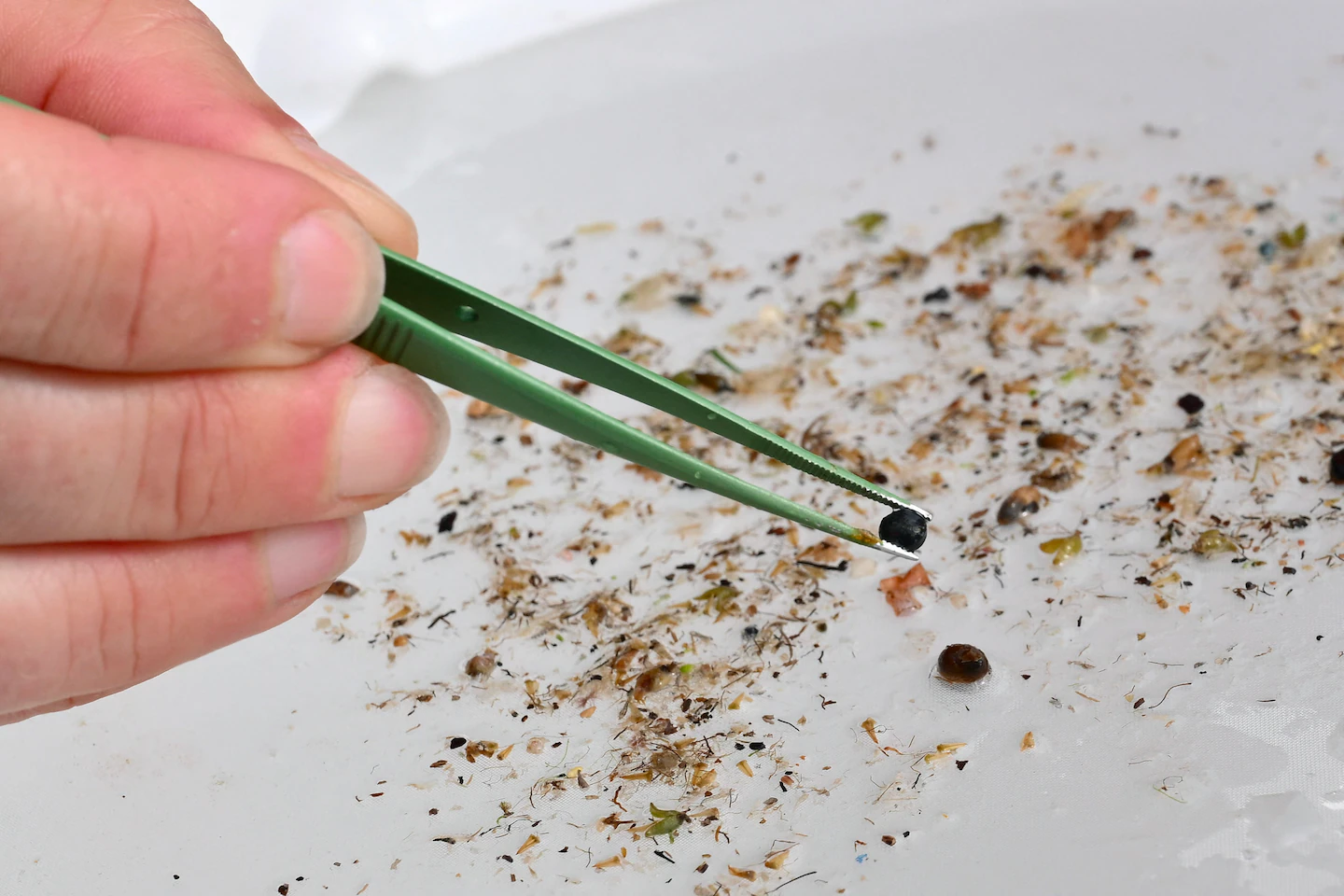

For many scientists, 2025 was the year of microplastics. Researchers have known for decades that tiny plastic particles were floating around in rivers and lakes and accumulating in the ocean. But it’s only in the past year or so that they have begun to understand that the tiny plastics — including some that are impossible to see with the naked eye — are in our bodies and food as well.
And scientists are beginning to crack open what that means for human health.
Here are some of the main things we learned about microplastics in 2025.
Microplastics are accumulating in the brain
After discovering the particles in testicles, kidneys, the liver, placenta, and even a baby’s first poop, scientists turned their attention to the brain. Last year, a team of researchers at the University of New Mexico used cadaver brains to analyze whether the tiny particles were passing through the blood-brain barrier.
They found the plastics were not only entering the brain — they were actually accumulating there. Brains of people who died in 2024, for example, had significantly higher concentrations of microplastics than the brains of people who died in 2016. And there was no correlation between the amount of microplastics and the age of the person at the time of their death.
Researchers also looked at brain samples going back to 1997 and found the same trend — newer samples had more microplastics.
The study also estimated that the human brain was 0.5 percent microplastics by weight — or that the brain contained around 7 grams of the tiny plastics, about the weight of a plastic spoon. That finding has been challenged by some other experts, who say that certain fatty cells in the brain can resemble microplastics.
New links between microplastics and certain diseases
Although the science of microplastics is new, studies in 2025 linked the tiny particles to several diseases, including Alzheimer’s and heart disease.
In one study by researchers at the University of Rhode Island, scientists analyzed mice with a genetic predisposition to Alzheimer’s. When the mice were exposed to tiny particles of polystyrene — the same plastic used in Styrofoam — the mice showed signs of memory problems consistent to early-stage Alzheimer’s. The mice not exposed to microplastics did not show the same problems.
There are other suggestive links. In the New Mexico study, researchers found that patients with dementia had three to five times the amount of microplastics as patients without. But, the researchers warned, dementia can make the brain more porous — meaning those brains were more vulnerable to the tiny particles.
Scientists are also looking into a connection between microplastics and heart disease. In a 2024 study, a group of Italian researchers found that people with microplastics in a key artery were more likely to suffer heart attack, stroke, or death in the following three years. Another study by scientists at the University of California at Riverside found that male mice exposed to microplastics were more likely to develop atherosclerosis, or a build up of plaque in arteries that can lead to heart attack or stroke.
Scientists around the world have continued to find microplastics in food and drink. One study of beverages in the United Kingdom found the tiny particles in hot coffee, hot tea, bottled water, fruit juice, energy drinks and soft drinks. Microplastics have previously been found in tap water across many different states and countries; they are also in fruits, vegetables, meat, highly processed foods and fish.
But researchers say one of the key risk factors is heat. A plastic cup with a hot drink, for example, is more likely to shed tiny particles into the beverage than a cold drink. Other researchers have found that plastic tubs and containers shed many more particles when heated or placed in the microwave.
Highly processed foods are also more likely to contain higher concentrations of microplastics — likely because the food passes through numerous assembly lines and processing equipment before it reaches the plate. Those foods are also more likely to have high concentrations of plastic chemicals that can disrupt hormones in the body, such as phthalates or bisphenols.
There are still many questions about the health risks of microplastics. Researchers are trying to understand what average exposure might look like for a typical American, and whether it takes abnormally high exposure levels to create health problems.
“If 2025 taught us anything, it is that we need accurate data, standardized analytical methods, and high-quality research to inform decision-making,” said Kimberly Wise White, vice president of scientific and regulatory affairs at the American Chemistry Council, a trade group for chemical companies. White said that a 2025 report from the European Food Safety Authority argued that most of the studies on microplastics in food so far didn’t meet minimum quality standards.
But scientists say new research is on the way. The world produced 450 million tons of plastics in 2025, and that number is only expected to climb. If all of those plastics eventually turn into tiny microplastics, the planet will be facing one of the most prolific forms of pollution ever — and one that we know very little about.
Understanding our climate: Global warming is a real phenomenon, and weather disasters are undeniably linked to it. As temperatures rise, heat waves are more often sweeping the globe — and parts of the world are becoming too hot to survive.
What can be done? The Post is tracking a variety of climate solutions. It can feel overwhelming facing the impacts of climate change, but there are ways to cope with climate anxiety.
Inventive solutions: Some people have built off-the-grid homes from trash to stand up to a changing climate. As seas rise, others are exploring how to harness marine energy.
What about your role in climate change? Our climate coach Michael J. Coren is answering questions about environmental choices in our everyday lives. Submit yours here. You can also sign up for our Climate Coach newsletter.