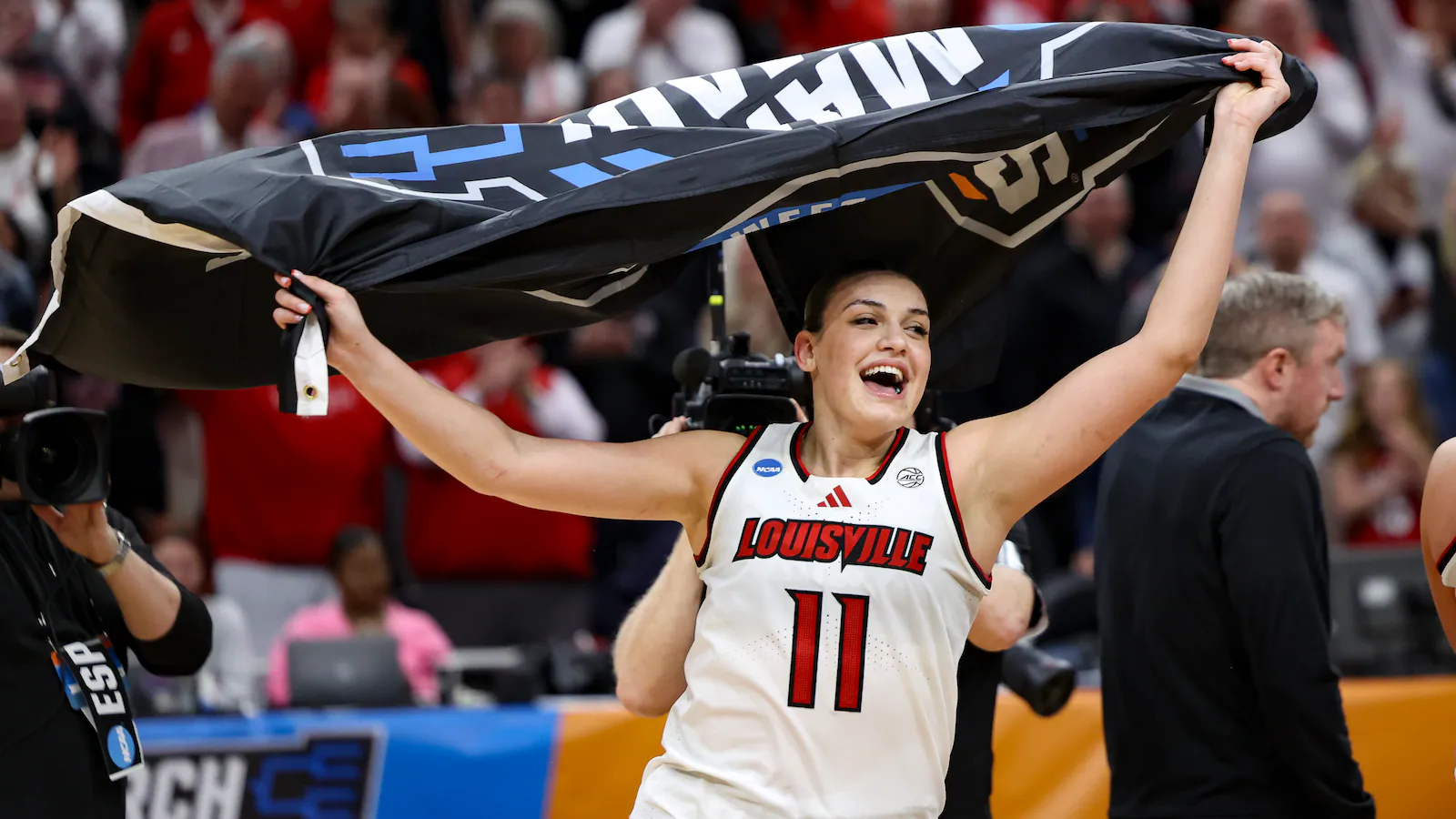
At 12, she wondered whether diabetes would end her basketball dreams. Nine years later, the Louisville senior is answering that same question for children she’s never met.
LOUISVILLE, Ky. (WDRB+WAVE) — For about a year, Elif Istanbulluoglu’s mother kept a notebook.
What her daughter ate. What her blood sugar measured before a meal. What it measured afterward. How much insulin she needed.
Page after page. Meal after meal. Day after day.
It wasn’t a basketball notebook. But in some ways, it helped make possible everything that followed on the basketball court.
Istanbulluoglu was 12 years old when she was diagnosed with Type 1 diabetes. She remembers the hospital. The doctors rushing around her bed. And something she had never seen before: fear on her parents’ faces.
Her mother and father were good at hiding their worries. But when doctors moved them away from her hospital bed, she saw something different.
“I never seen a face like this before in my life,” she said.
She was sleeping as many as 15 hours a day. She couldn’t eat. She was constantly thirsty and had almost no energy. Her mother finally took her to the emergency room, beginning a frightening stretch of hospital care and an introduction to a condition that would require attention for the rest of her life.
When doctors explained what was happening, Istanbulluoglu had a question.
Not about needles. Not about medication. Not about how her life was going to change.
“Am I gonna be able to play basketball?”
It was the question of a little girl who had fallen in love with the game while watching her older sister practice. And it would become the question that helped shape the next nine years of her life.
Today, Istanbulluoglu is 21, a senior on the University of Louisville women’s basketball team, a member of Turkey’s senior national team and a starter for a Cardinals squad that has climbed to No. 3 in the nation.
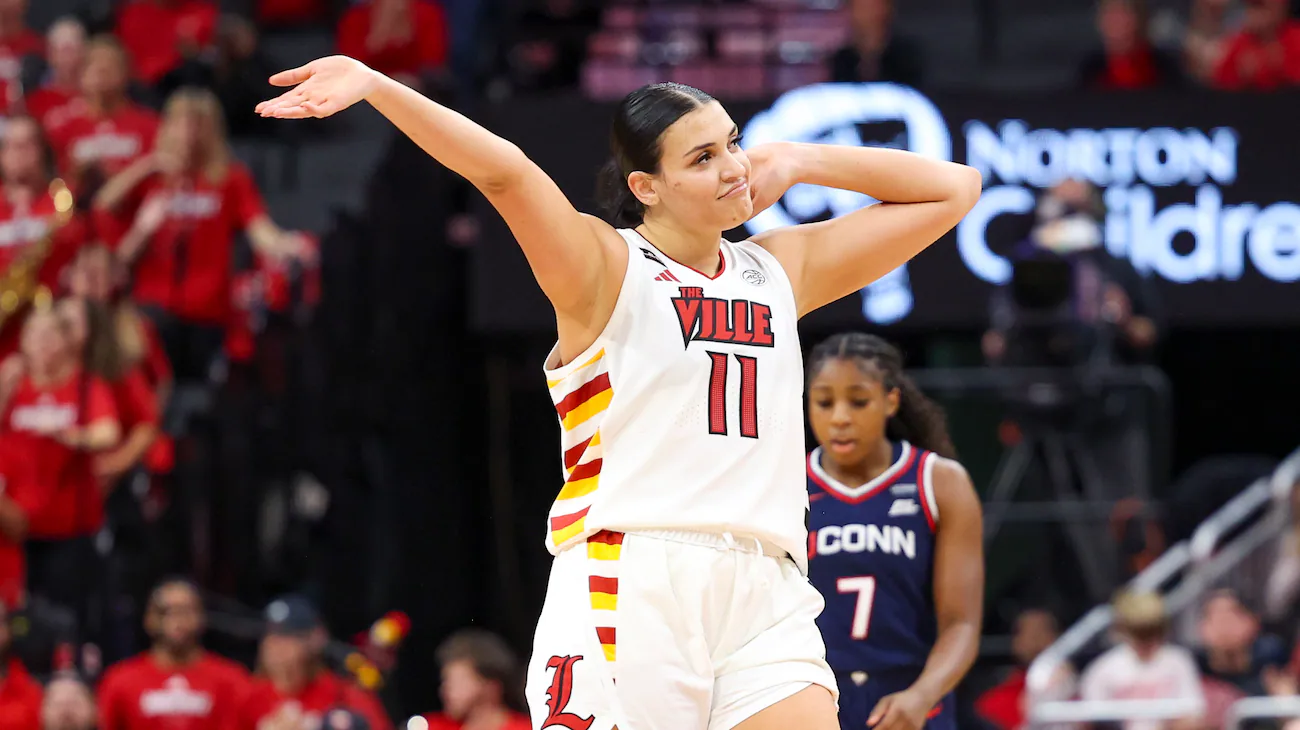
She played 27 minutes Sunday as Louisville dismantled fourth-ranked Connecticut 69-51, contributing six rebounds, six points and the kind of steady defensive work that doesn’t attract much attention until it’s missing. She committed no turnovers. No fouls. And she helped a Louisville team that had spent years trying to catch UConn leave the Huskies behind.
Her scoring average is down this season, partly because Louisville has so many other options. She missed time early with an ankle injury. It hasn’t changed how Jeff Walz sees her.
He said Istanbulluoglu, along with junior forward Mackenly Randolph, are “the most important players on our team, hands down.”
“And it’s not because they’re going to score 20,” Walz said. “It’s because they communicate and they talk the entire time. … when they’re on that floor they’re directing everybody, and they’re not always going to get the credit because they might not score the most. But man, they’re making sure everybody’s in the right place.”
A year ago, she averaged 10.1 points and 5.1 rebounds and started all 36 games. In September, she represented Turkey at the FIBA Women’s World Cup.
She has become a more complete player, a more confident person and, increasingly, a resource for people she has never met.
And it began, in part, with that notebook.
“She was writing down everything I eat,” Istanbulluoglu said.
There was no negotiating with the diagnosis. Her parents made certain she understood that.
“My parents didn’t play about that,” she said.
Eventually, though, there came another lesson. She would have to learn to do it herself.
Her father believed in independence. Not the kind that comes from being left alone, but the kind that comes from being trusted to figure things out. Her mother supplied the discipline. Together, they helped their daughter understand that managing diabetes wasn’t something to do around basketball.
It was something she would have to do around everything. And basketball was very much part of everything.
Her mother had hoped she might play volleyball. Her sister played basketball, and young Elif spent hours watching her practice, sometimes doing her homework at the gym so she could stay.
She had a basketball in her hands even when she wasn’t old enough to join the action.
“I wanted to do my homework so that I can go watch the practice,” she said. “And I literally spend time just in the court. I have a ball in my hand, just like sitting there watching my sister.”
Her motivation was wonderfully uncomplicated.
“I’m gonna beat my sister,” she said.
Both parents had played basketball, too. Sports were a constant presence in the family home. Basketball, tennis, swimming, boxing, football. If somebody was competing somewhere, there was a decent chance the Istanbulluoglu family was watching.
But basketball was the game she wanted for herself.
And when diabetes threatened to complicate that future, she began looking for someone who could show her it was still possible.
She found a Turkish basketball player, Alper Saruhan, who also had diabetes and helped her understand how to continue pursuing the sport.
But she couldn’t find a female basketball player at the level she hoped to reach who could serve as the same kind of example. So she decided she might become one.
“Okay, that’s a challenge,” she remembered thinking.
It was a substantial challenge.
Basketball players worry about their shooting, their conditioning, their opponents and their place in the lineup. Istanbulluoglu worries about those things, too. But before a game, she also has to consider her blood sugar, what she has eaten, what her body might do as her heart rate increases and whether she needs to make adjustments.
“That’s the type of stuff I’m thinking constantly,” she said.
She doesn’t describe diabetes as an opponent to be conquered. She understands that isn’t how it works.
“If you’re trying to play with diabetes, like, that’s gonna win for sure,” she said. “So okay, I’m gonna plan my life around this.”
That approach helped carry her through Turkey’s national-team program, where her play eventually caught the attention of Walz.
Walz saw Istanbulluoglu playing for Turkey’s under-20 national team in Lithuania. She had already competed for the under-18 team that summer, and the additional tournament pushed her schedule close to the beginning of the American college year.
There wasn’t much time for the usual recruiting process. There was, however, plenty of time for text messages. Apparently, Walz doesn’t require much sleep.
“He was texting me and I was checking the time. It’s like four a.m. here,” she said. “I’m like, I just got up, so like, how are you up?”
Eventually, her mother suggested the family ought to meet the man who wanted to bring their daughter to Kentucky. Walz came to their home in Turkey. He met the family. He ate Turkish food and drank Turkish coffee.
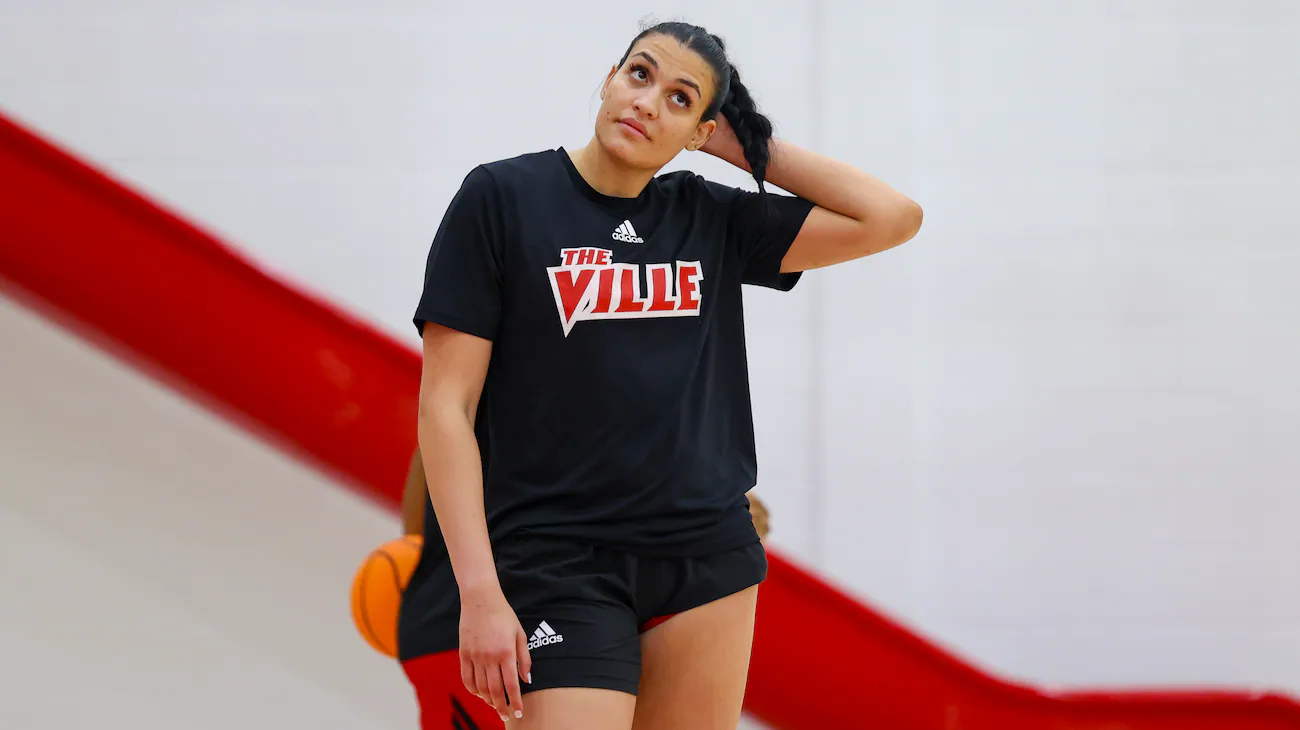
And Istanbulluoglu decided she was going to Louisville. Without visiting Louisville.
“I have never had a visit. I just committed, so like my visit was the day that I came to campus,” she said. “So when I told that to my friends, they’re like, ‘Are you crazy?’ I’m like, ‘A little bit, maybe.’”
Consider the leap.
An 18-year-old, thousands of miles from home, managing a medical condition that requires constant attention and arriving in a country where almost everything was unfamiliar. The language. The school. The basketball. The food.
Especially the food. She remembers going to an American grocery store, buying bread and discovering that it tasted sweet. She checked the ingredients. Sugar.
“Oh okay, that’s not what I used to have at home,” she said.
It was a small discovery with larger implications. Even ordinary things required adjustment.
Her freshman season was difficult. She arrived late, had little time to acclimate and found herself trying to learn college basketball while learning how to live in a new country.
“I knew it was gonna be hard, but I never imagined that it was gonna be this hard,” she said.
Her father’s advice wasn’t particularly comforting, at least not in the traditional sense.
“I want you to go there and like struggle, learn, and like solve your own problems,” she recalled him telling her.
Which, come to think of it, is a fairly good description of college basketball.
Istanbulluoglu kept working. She spent hours in the gym during her first two seasons. As a freshman, she averaged 2.6 points and played less than 13 minutes a game. As a sophomore, she averaged three points.
Then came her junior season. Her playing time doubled, her scoring more than tripled, and she became a fixture in the starting lineup — one of Louisville’s most dependable frontcourt players.
This season, with a deeper roster and more scoring options, her role has changed again. She can work inside or step out to the three-point line. She can defend and rebound. And on Sunday, in Louisville’s biggest victory of the young season, Walz kept her on the floor for more than two-thirds of the game.
There is another responsibility now. Istanbulluoglu is the longest-tenured player in the program, and she knows the newcomers are watching.
“My number one thing for this season,” she said, “also getting better as a basketball player, but also being a better leader.”
One of those newcomers is another young Turkish player, Ayse Melek Demirer, whom Istanbulluoglu took under her wing. She understands the homesickness. She understands the culture shock. She understands the feeling of being a long way from everything familiar. And she wants to make the adjustment easier for someone else.
“I’m like her big sister right now,” she said.
It’s an interesting development for someone who started playing basketball because she wanted to beat her own big sister. There is another group of people looking to her for guidance, too.
Parents.
Istanbulluoglu receives messages on Instagram from mothers and fathers whose children have diabetes. Some play soccer. Some play basketball. Their parents have questions.
Can they keep competing? What should they eat? What happens if their blood sugar drops during practice? Will coaches understand if they need to stop? She remembers asking those same kinds of questions. Now she gets to answer them.
She wears a Dexcom continuous glucose monitor, which allows her to track her blood sugar through an app. Her family can follow the readings, too.
Sometimes people notice the device and ask her about it. She explains how it works. She talks about what she eats before practice and how she handles the moments when her blood sugar needs attention.
And she emphasizes something that athletes, especially competitive ones, don’t always want to hear. Sometimes the right play is to sit down.
There are moments in practice when she’d rather keep going, when teammates are running or playing five-on-five and she doesn’t want to miss anything. But she knows better.
“Go sit down, eat something, feel better, and go again,” she tells herself.
“Don’t play about your health,” she said. “Listen to your body.”
It is a message she delivers with the authority of someone who has lived it, not simply read about it.
She worries, too, about the cost of diabetes care, particularly for families in Turkey who struggle to afford what their children need. Not every family has the resources and medical support she has had. She wants those children to have the same opportunity: not necessarily to play basketball at Louisville, not necessarily to play professionally, just to keep chasing whatever it is they love.
For now, Istanbulluoglu has some basketball left to play herself.
Louisville is unbeaten, ranked third nationally and coming off a victory that suggested its ambitions might be more than preseason optimism.
Istanbulluoglu has seen enough close losses over the years to appreciate the difference. At ACC Media Day in October, she talked about the importance of finishing games, maintaining concentration and refusing to let a few bad minutes undo 35 good ones.
She remembers those losses. All of them, she said. Now she’s part of a team beginning to produce different memories.
She wants this season to be her best.
After that? Perhaps another season, now that eligibility rules permit. Perhaps professional basketball. She isn’t interested in getting too far ahead of herself. She prefers to deal with what’s in front of her. That, too, is something life has taught her.
Nine years ago, she was a frightened 12-year-old in a hospital bed, watching doctors rush around her and searching her parents’ faces for reassurance.
Today, Istanbulluoglu manages those responsibilities herself. She plays basketball thousands of miles from home. She leads teammates. She answers questions from parents who are frightened for their own children.
She has become the kind of person she once needed to find.
The notebook is a phone now. The numbers come from a sensor, and her family can follow along, too. But the questions flow the other way now, from parents she has never met. They want to know whether a child with diabetes can still pursue a dream.
Elif Istanbulluoglu knows something about that.
She asked the same question once.