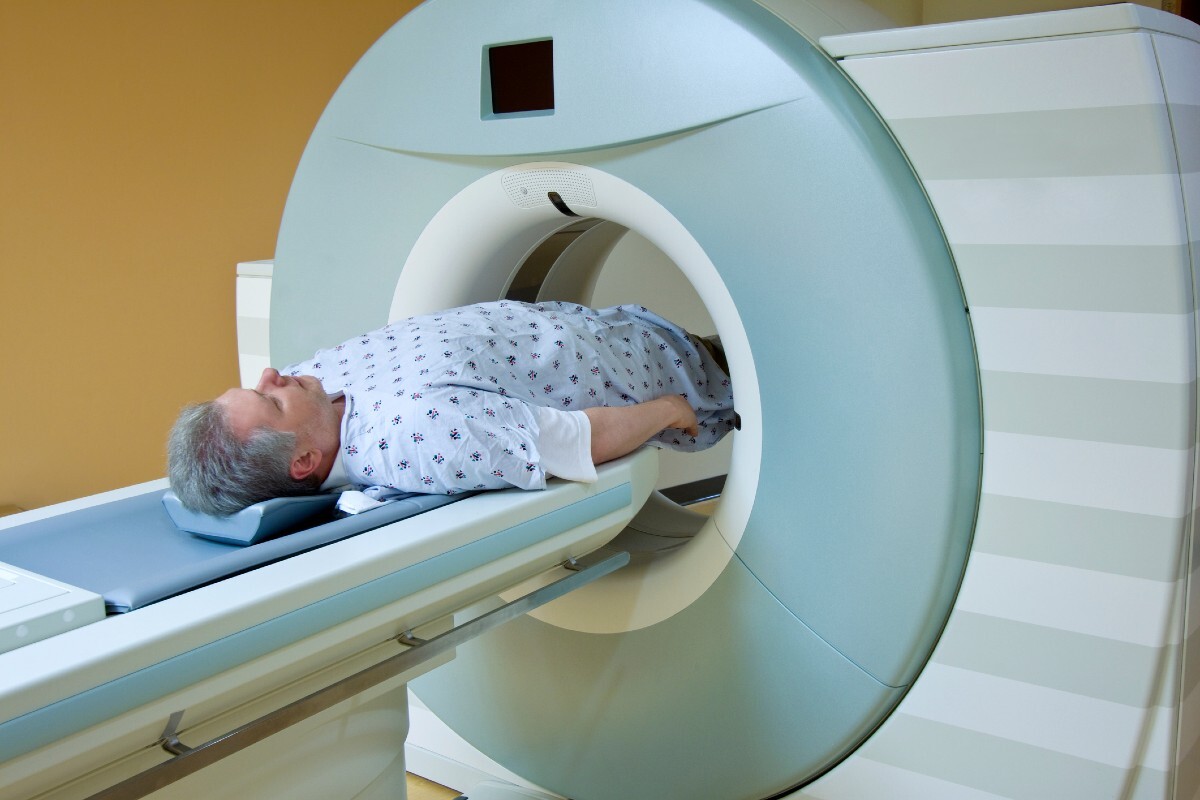
Five artificial intelligence tools for more accurately detecting prostate cancer in MRI scans have been approved for use on the NHS.
NICE said the tools have the potential to act like a ‘second pair of eyes’, helping radiologists review prostate MRI scans and improve accuracy and consistency of diagnosis.
The software can be over a two-year period where more evidence is collected on their effectiveness, the independent committee said in draft guidance.
Two further AI tools were rejected due to more research needed on their use before they can be used in routine practice.
Use of the tools may lead to better detection of clinically significant prostate cancer, and fewer unnecessary biopsies and treatment for people with non-clinically significant prostate cancer, NICE said.
They work by highlighting areas on a prostate MRI scan where cancer might be present, making it easier to spot and report.
There were more than 58,000 new diagnoses of prostate cancer in England in 2023.
Demand for prostate MRI scans has increased in recent years, placing additional pressure on radiology services.
The new technologies could help to free up time and capacity, NICE added.
Dr Adrian Hayter, GP and chief medical officer at NICE, said: ‘These tools could help radiologists identify clinically significant prostate cancer more accurately and consistently, while helping NHS services manage growing demand for scans.
‘They would support, not replace, radiologists, who would still review the scan and the AI results before any decisions about patient care.’
Dr Anastasia Chalkidou, programme director for HealthTech at NICE, said: ‘These AI technologies have the potential to act like a second pair of eyes, helping radiologists review prostate MRI scans.
‘They have the potential to make MRI reporting more accurate and could help identify people whose scans need priority review.
‘Our committee concluded that the technologies can be used in the NHS while further evidence is collected on how they perform in routine practice and across different groups of patients.’
Professor Peter Johnson, NHS national clinical director for cancer said a radiologist would still review every scan.
‘As we have already seen with AI in lung cancer, innovations like this can help us diagnose cancers faster, and we welcome the opportunity to gather more evidence on how they work for different patients across the NHS.’
NICE said more evidence would need to be collected from NHS settings on diagnostic accuracy, patient outcomes, NHS workflows, costs and performance across different groups of people.
In August, NHS England issued updated advice to GPs on when to offer PSA testing.
It follows a review from the National Screening Committee which advised against whole-population routine NHS prostate cancer screening – recommending instead a targeted screening programme involving PSA testing every two years for men aged 45 to 61 who have a pathogenic BRCA2 variant with a family history of breast, ovarian, pancreatic, or prostate cancer.
Continue with clinical updates and expert-led education before the year ends in person at Pulse LIVE in Belfast, Liverpool, or virtually this October. Whether you prefer face-to-face or virtual learning, register today to save your free spot and connect with peers. Check out what’s on the calendar and join us at the next one