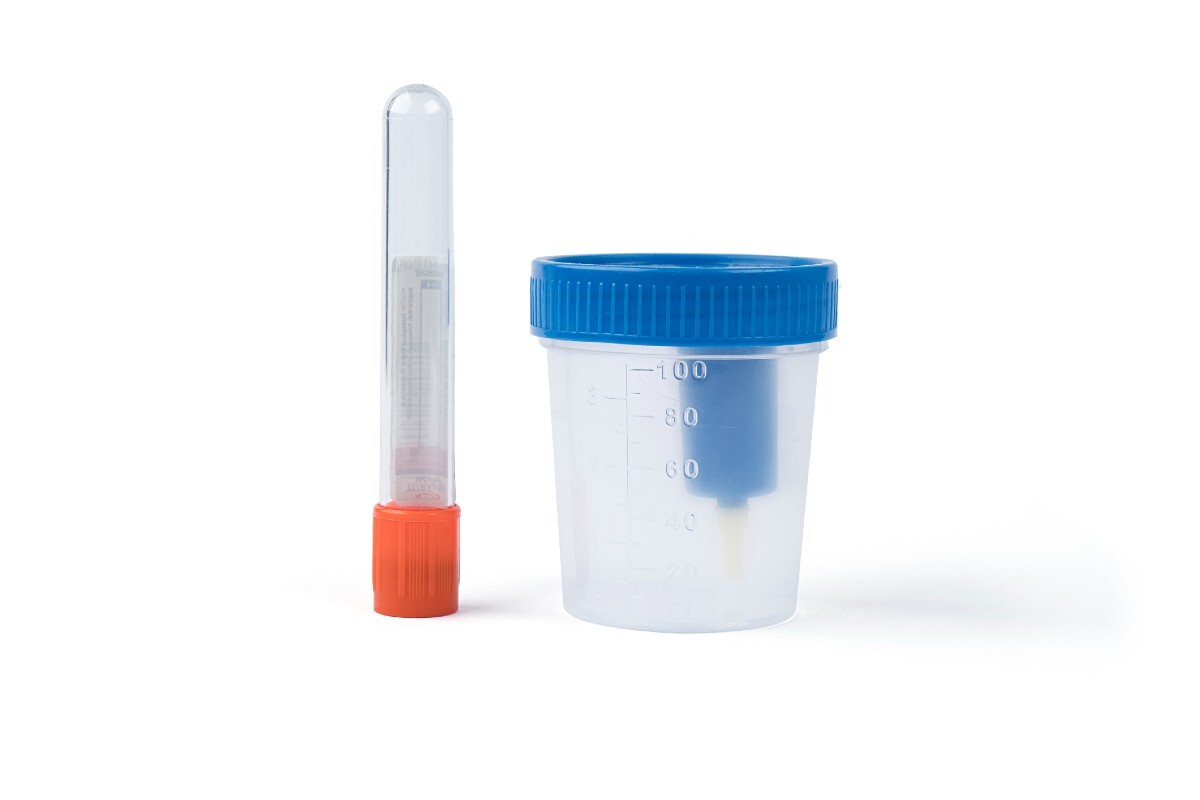
A non-invasive urine test could speed up diagnosis of bladder cancer, an NHS study has found.
Trials of the GALEAS urine bladder test across seven NHS sites found it discovered nine in ten patients with the disease.
In the future, the DNA-based diagnostic test, it could be used to stratify who needs to be fast-tracked to further tests, the researchers said.
Among 964 patients who had been referred for cystoscopy for urgent investigation of haematuria, 77 (8%) were diagnosed with bladder cancer based on cytology results.
The urine test, which can be done at home, detected 71 of the 77 cases, including all 17 muscle-invasive bladder cancers and 35 of those 36 found to have high-grade disease.
It suggests that the test could be used to triage patients with haematuria to immediate or deferred cystoscopy, the University of Birmingham researchers concluded in European Urology Oncology.
For the 30% of patients in the study with non-visible haematuria, the urine test identified all bladder cancers with a negative result associated with a 100% probability of not having bladder cancer, they added.
The test detects for mutations in 23 bladder cancer–associated genes shed into the urine by bladder cancer and was originally developed by the University of Birmingham with funding from Cancer Research UK.
Professor Richard Bryan, director of the University of Birmingham’s Bladder Cancer Research Centre and co-author of the study, said the research built on promising early studies to show its use in a large real-world patient population with suspected cancer.
‘These results show that molecular urine testing can be used now to help clinicians decide which patients need an urgent cystoscopy and which can safely have that procedure deferred.
‘The results are very significant for clinical practice. Only 8% of patients in the study were ultimately diagnosed with bladder cancer, which highlights the challenge facing NHS haematuria services where large numbers of patients currently enter the same urgent diagnostic pathway despite most not having cancer.’
The test is being used in some within some NHS pathways in England and Wales, with further NHS sites adopting the test as clinical use expands, the team added.
Further analysis by the team showed that incorporating urine-based testing in bladder cancer pathways could reduce the burden on urology departments.
At the most cautious pre-specified clinical threshold, using the GALEAS test to triage patients was estimated to result in 730 fewer urgent cystoscopies for every 1,000 patients, compared with urgent cystoscopy for everyone, with no loss of net clinical benefit.
Michelle Mitchell from Cancer Research UK said: ‘Too many people are waiting longer than they should for a bladder cancer diagnosis, and it’s essential that we find ways to tackle this problem.
‘It’s early days for this test and further research is needed, but it’s vital that we continue to find faster and less invasive ways to help diagnose or rule out cancer.’
Discover Pulse’s remaining free, CPD-accredited events for 2026, with face-to-face events in Glasgow, Belfast and Liverpool, plus monthly virtual events. Book your free place today and join us in person or online.