Droughts that last just a year can have a profound impact on the grassland and shrubland ecosystems, according to a new, wide-ranging study published on Monday. Those impacts had previously been underestimated, the researchers found, and with climate change significantly increasing the frequency and severity of such droughts, the results suggest many grassland areas are at increasing risk.
"Single year droughts are the most common and impactful drought experienced by terrestrial ecosystems globally," said Melinda Smith, of Colorado State University and co-lead author of the study along with Kate Wilkins, of the Denver Zoo. Previous research has shown that drought does have negative impacts on plant growth and productivity, she added.
"However, what we did not expect is that a single year of drought, when extreme, would far exceed previously reported losses."
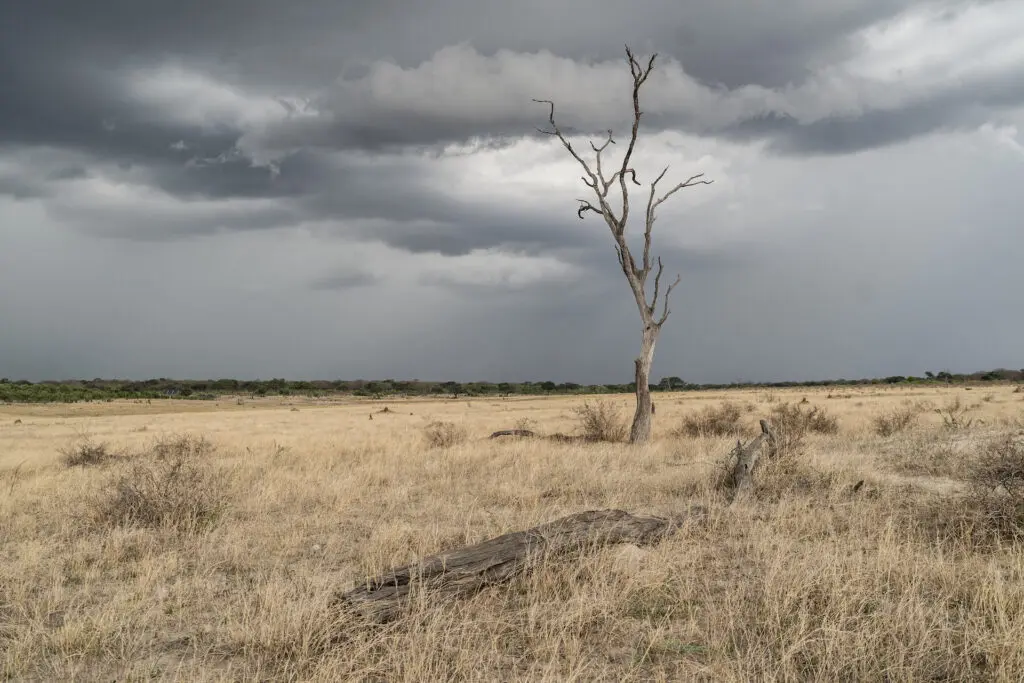
Using small shelters and other structures, the researchers recreated the effects of a single year of drought at 100 small sites across six continents. About half the sites were tested under an "extreme" drought scenario, akin to a drought that would occur once ever hundred years; the rest experienced a drought that occurs more commonly. The results were published in Proceedings of the National Academy of Sciences.
They found that a measure of ecosystem function known as "aboveground net primary production" suffered much more in the extreme drought scenarios — they saw a 35% drop in production, compared with 21% at the more moderate drought sites. That loss greatly exceeded previous reports on the effect of even longer-term drought on grass and shrublands.
This has major implications for the global carbon cycle, and represents what could be an important climate feedback loop: these ecosystems are important carbon sinks, meaning they take up carbon from the atmosphere and store it. When their production drops so precipitously after even just one year of severe drought, their ability to store carbon drops as well, meaning more is in the atmosphere, helping warm the planet further and add even more drought risk to the already dangerous world.
Smith told The Messenger that existing climate models do account for that feedback loop, but some of the variation between sites they observed is much harder to pin down. Some dryer areas seem much more resistant to a year of extreme drought than wetter spots. A better understanding of that variation will help improve climate models going forward.
"We have produced a truly unprecedented quantification of the effects of a single year of extreme drought — with the largest and most extensive field-based climate change experiment ever conducted," Smith said.