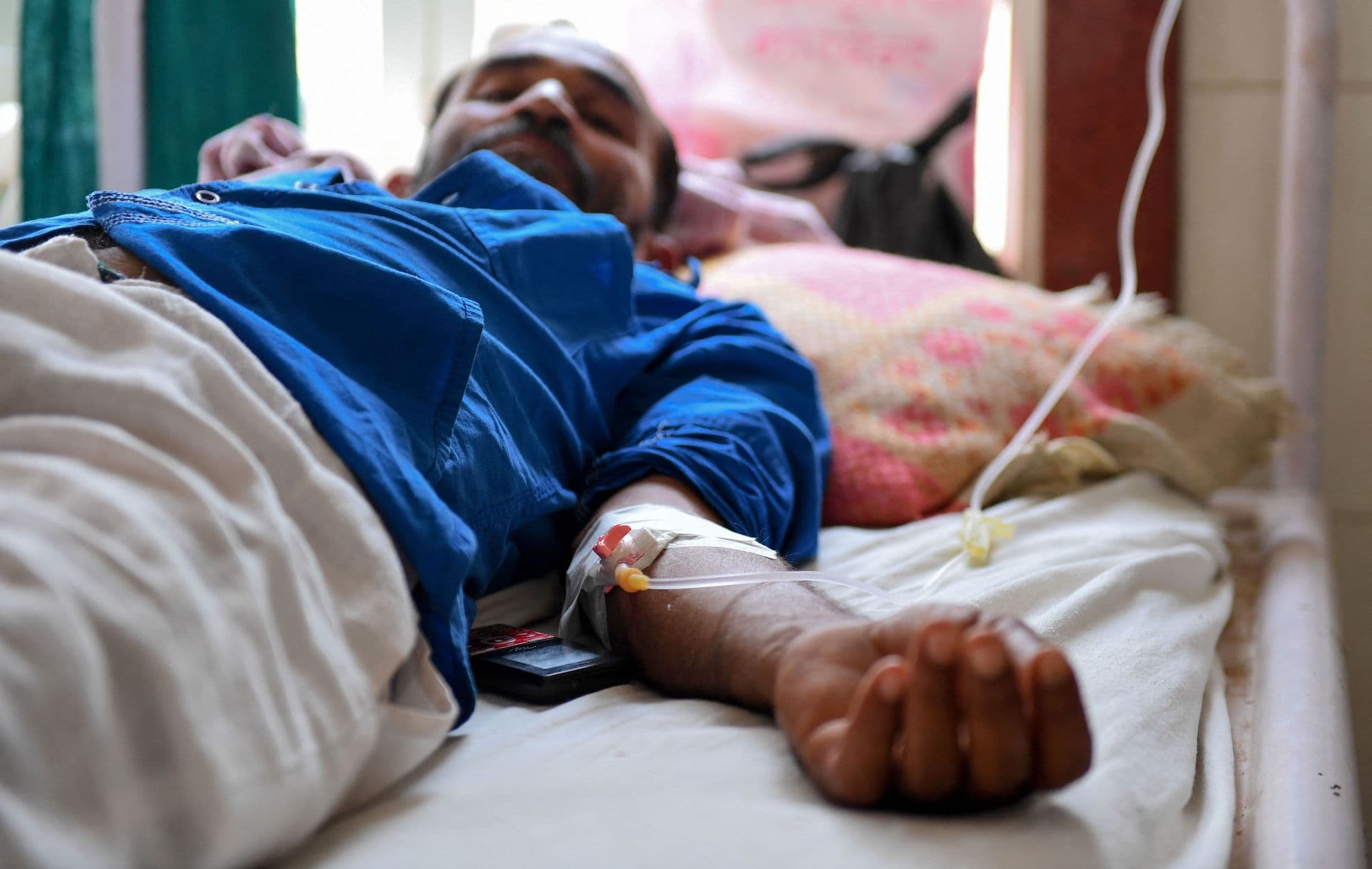
The warming climate is reducing human life expectancy, a study published on Thursday found. Rising temperatures and changes to precipitation patterns conspire in a variety of ways to reduce a person's average time on the planet, by as much as half a year for every one degree Celsius of warming.
The world has already warmed around 1.2 degrees above pre-industrial levels. Last year set a record for the warmest year ever recorded, with a global average approaching 1.5 degrees above those earlier temperatures.
"Climate change is indeed considered one of the most significant global health threats facing humanity today," wrote the study's author Amit Roy, of Shahjalal University of Science and Technology in Bangladesh, in the journal PLoS Climate. "Our findings suggest that temperature rise will negatively affect life expectancy."
Roy compared data on average temperature, rainfall and life expectancy from 191 countries over an 80-year period, using per-capita numbers to adjust for international discrepancies.
The changing climate can affect those life expectancies through both direct exposures — flood damage, heat waves, drought and other natural disasters — and also through indirect issues, like not having enough food, having to leave your home, air pollution and disease.
Roy found that a change in temperature of one degree Celsius is associated with a decline in life expectancy of 0.44 years. When he added in changes to rainfall patterns, the decline increases to 0.50 years. Interestingly, the analysis suggests women may be more at risk than men.
There are some limitations with the analysis, and Roy cautioned that it might not fully capture climate change's impact on health.
But the connection between human health and climate is clear. The World Health Organization estimates that climate change will cause 250,000 additional deaths per year between 2030 and 2050, thanks to undernutrition, heat stress and disease. The World Bank predicts an even more dire scenario, with climate change resulting in 21 million additional deaths between now and 2050.
Conversely, tempering climate change could lower the health burden. The U.S. National Climate Assessment points out that a low emissions scenario could reduce health impacts and related healthcare costs in the country by 50% compared to a high-end emissions world. But that could also be an underestimate, as the affect of climate change on health issues like mental health are difficult to quantify.
"Countries should come forward with prompt initiatives to contain global temperature rise and protect the health of the population on the verge of climate change," Roy states in the paper. "Public health measures, disaster preparedness, and healthcare infrastructure improvements can enhance resilience and reduce the health risks associated with climate change."