As many as 95% of the counties along the East Coast of the U.S. are slowly sinking, according to a new study published on Tuesday. Though they are descending at just a millimeter or two per year, the sinkage adds to the growing list of hazards caused by rising seas that put millions of people at risk of flooding and displacement.
"Infrastructure damage due to subsidence has direct, indirect, short-term, and long-term consequences, such as disruptions of clean water supplies, transportation, education, and health care, economic stagnation, and a severe death toll," write study authors led by Leonard Ohenhen, of Virginia Tech University, in the journal PNAS Nexus. "In many nations, land subsidence barely registers as an issue of public policy."
For the new study, the researchers used satellite and other data to examine the vertical land motion of 172 counties along the East Coast. They found that a subsidence rate above zero is present in between 89 and 95% of those counties, exposing a total area just under the size of South Carolina to the effect.
Importantly though, the bulk of that land is falling at a very slow rate, on the order of 1 or 2 mm per year. Only between 7 and 43 counties are subsiding at a rate of 5 mm per year or greater. Other research has shown that subsidence can be very localized when examined at smaller scales than counties: a study published in September showed that while much of New York City is sinking, the area immediately around LaGuardia airport is sinking faster.
While the situation along the East Coast may be dire, the issue is so glaring as to be impossible to ignore elsewhere in the world. For example, Indonesia's government recently decided to relocate its capital away from Jakarta, which is subject to high subsidence rates along with rising seas.
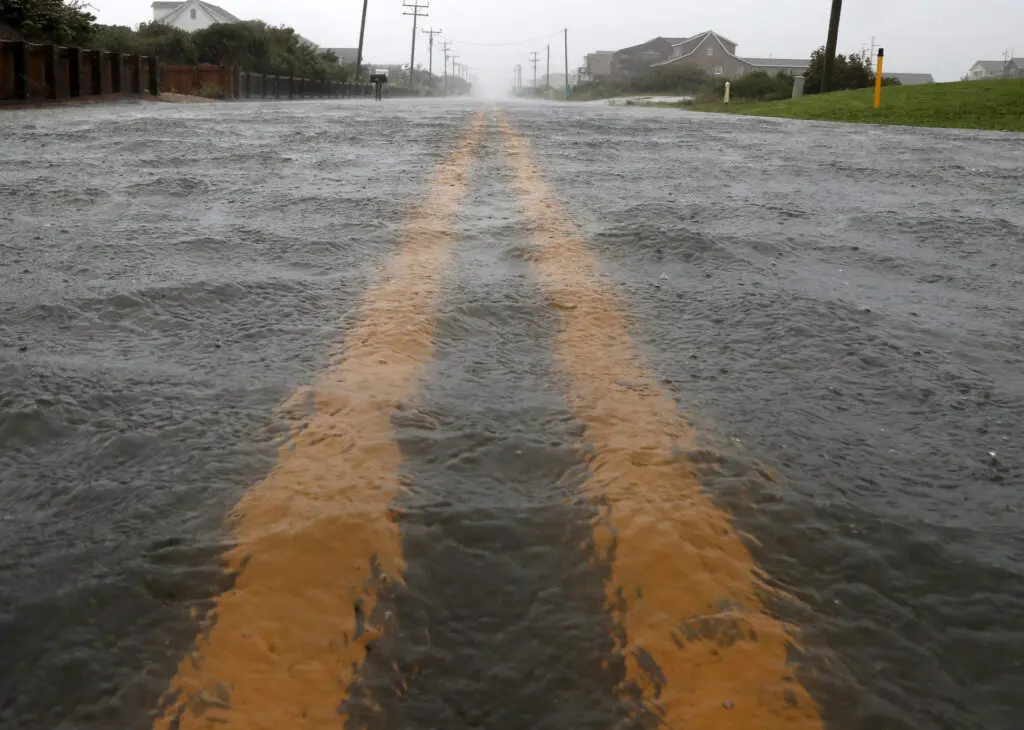
In the new study, New York was again among the places with relatively high subsidence rates. Other major metropolitan areas with subsidence rates above 1 mm per year include Baltimore, Newark, Norfolk and others. These areas are already subject to increasing nuisance flooding, which research has shown will increase dramatically as the climate warms and severe rainfall increases, and as sea level rises.
"Such flooding disrupts economic activities, resulting in fiscal losses worth billions of dollars from damaged properties, flood insurance payout, and the loss of lives," the authors wrote. "Subsidence governance is a crucial sustainable mitigation strategy for minimizing the exposure of coastal communities on the US east coast."