
The 50-year-old law faces profound new challenges to save species in an uncertain 21st century
This story is the third and final part in a series about the Endangered Species Act — landmark legislation that marks its 50th anniversary this month. Here's a link to the first story, which examined the act's remarkable track record, and a link to the second story, which highlighted its collision with climate-change priorities.
When the Endangered Species Act became law in 1973, solving the extinction crisis seemed simpler than it does today.
Yes, the situation was bad back then, with iconic species like grizzly bears, timber wolves, bald eagles all in decline and scientists worried that they could be lost forever. But the causes of those declines — things like habitat destruction and over-hunting — were clear. And so were the solutions to those problems: stop destroying habitat and killing endangered animals.
“In the 1970s, most people thought, ‘There's nature out there, and it is a particular way, and it stays that way unless we mess with it,’” said Holly Doremus, an environmental law expert at the University of California, Berkeley. The Endangered Species Act was written to prevent us from messing with the slices of nature that struggling species depended on.
This static view of nature, Doremus says, infused the ESA itself and informed the sort of law it became, both in writing and in action. Over the past 50 years, that’s been enough to prevent 99% of species listed from disappearing. And while many species languish after they’re listed — only 3% have fully recovered — they do tend to move towards recovery, albeit at a snail’s pace.
But now, this static law is colliding with an increasingly dynamic and politically polarized world, raising worries about whether the ESA can keep up.
Human-caused climate change is forcing plants and animals to move, and the rapid introduction of invasive species is forcing them to contend with predators they’ve never seen before. Amid this turmoil, longstanding problems like habitat loss are still shrinking suitable spaces for animals to live.
- Endangered Species Act Turns 50: Can We Save Animals and Stop Climate Change, Too?
- After 50 Years, the Endangered Species Act Has an Almost Perfect Record
- Polar Bear Study Shows How to Close Major Loophole in Endangered Species Act
- White House Celebrates 50th Anniversary of Endangered Species Act
- Thousands of Animals Were Just Added to the Endangered Species List, and Climate Change Is to Blame
- Biden Administration Targets Endangered Species Protections Weakened Under Trump
To top it all off, the law itself is more politicized. From Reagan to Trump, Republican administrations have chipped away at the ESA’s powers, and funding remains insufficient to conserve all imperiled species.
“I do think there needs to be some re-thinking,” around the act and how it’s implemented," said Doremus. “But I don’t think any individual has the singular answer as to how.”
CLIMATE CHANGE wasn’t on many legislators’ radars when the ESA was drafted back in the 1970s. If a tract of land supported a species at the time of listing, it made sense within that static view of nature that the same tract would support that species for decades, if not centuries, to come.
That’s increasingly not the case for many species. As many as 99.8% of listed species are sensitive to climate change, according to a 2019 study published in the journal Nature. Changing temperatures and rising seas are prompting some animals to move out of their historic ranges and into new ones. These kinds of changes can push already precarious species over the edge.
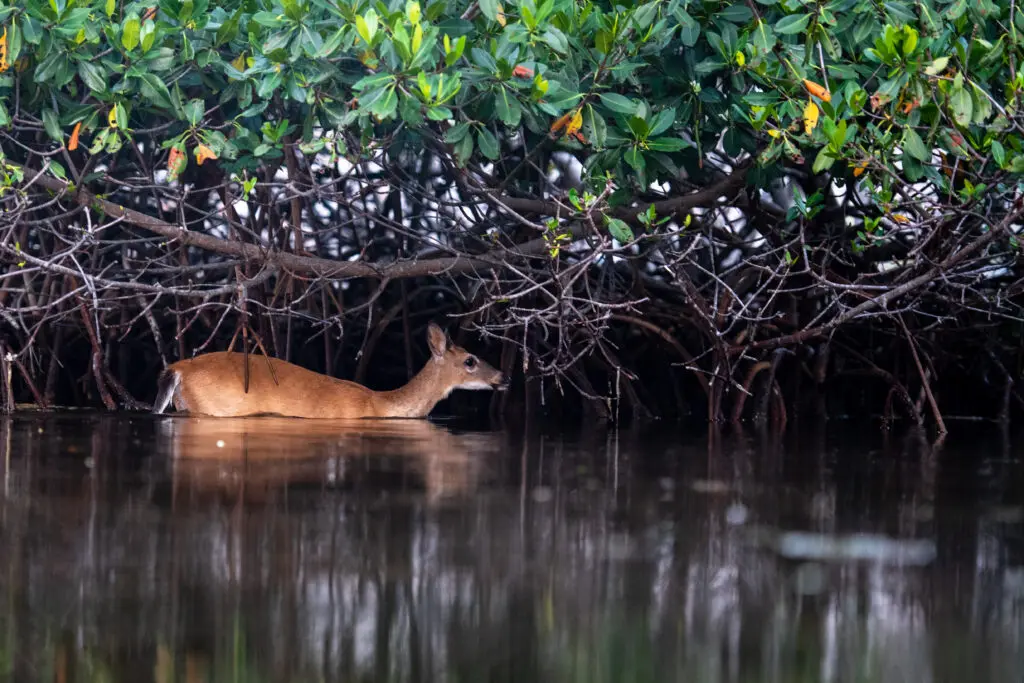
Some endangered species may simply have nowhere to go. On mountains, many species accustomed to narrow temperature ranges, like the American pika, are climbing to higher altitudes as temperatures rise, and, eventually, will run out of space. On low-lying islands, rising seas are erasing many habitats, including the home of Florida’s Key Deer, which lives on the state’s southern archipelago.
“For about a third of listed species, whatever conservation recovery we’ve done in the last 50 years is going to be completely offset by climate,” said Brett Hartl, director of government affairs at the Center for Biological Diversity.
The federal government is starting to acknowledge this future. Earlier this year, the Department of the Interior relaxed restrictions on where experimental populations of endangered species could be introduced, allowing them to live in areas outside their historical ranges.
But such changes aren’t enough, according to Hartl, as the government hasn’t yet started to actually plan for these future climate change scenarios yet. “They might mention it in their documents,” he said, “but they don’t have the sort of vision that thinks five steps ahead about how to solve these problems.”
That kind of vision is sorely needed to save species over the next 50 years – and not just because of climate change. Invasive species are wreaking havoc on many native plants and animals and already harm about 40% of listed endangered species.
In Hawaii, invasive rats and mosquitoes carrying avian malaria have decimated many native bird populations. All across the U.S. invasive plants, like the water chestnut or the rapidly growing Tree of Heaven, are crowding out native plants, pushing many species to the brink.
As global trade continues to expand and shuttle creatures around the globe, the menace posed by invasive species will likely grow. Altogether, the risks to biodiversity are just more complicated than those that sparked the creation of the ESA 50 years ago.
“It’s easier to wrap your head around how to do conservation when someone is proposing clear-cutting a forest” than when scientists must consider how to “do conservation when our entire economic model facilitates the rapid spread of invasive species all over the world” and stokes climate change, said Hartl.
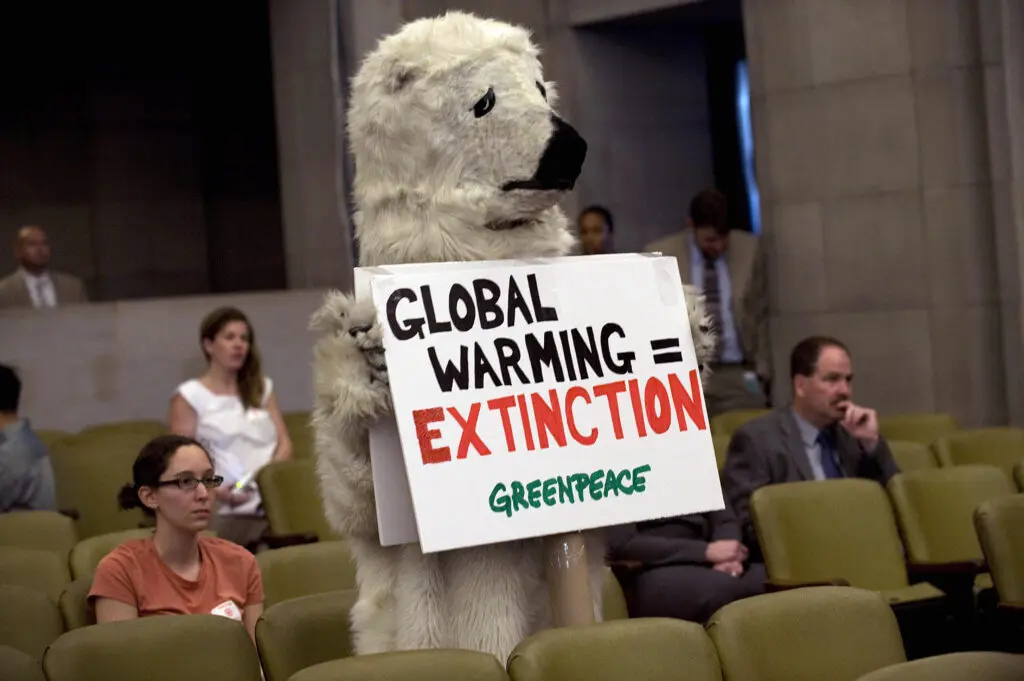
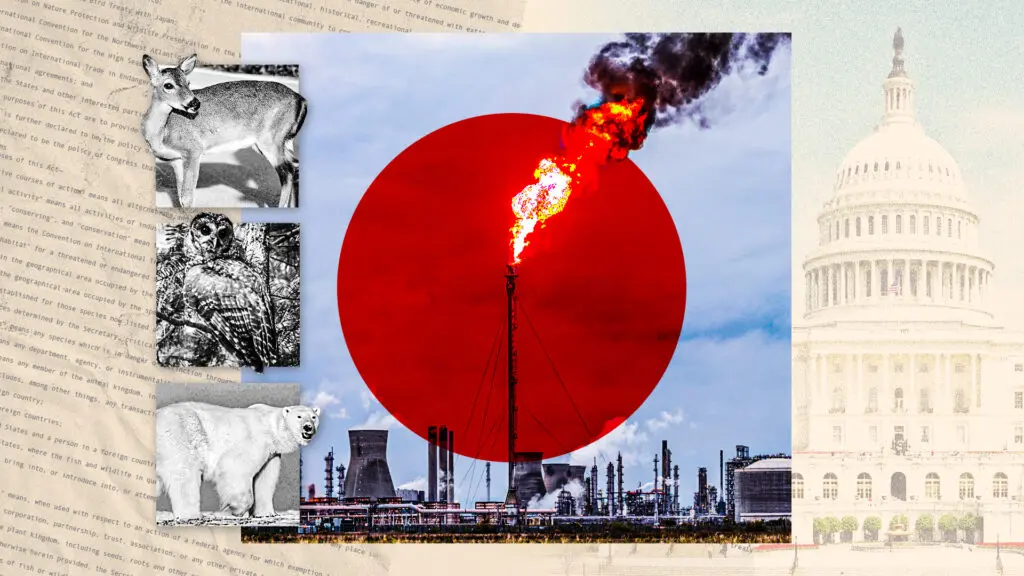
One complicated answer would involve assessing the impact of climate-warming greenhouse gas emissions on certain endangered species, like polar bears, and regulating them accordingly, said Hartl. Burning fossil fuels warms the atmosphere, which melts polar bears’ critical habitat — sea ice. So far, the government hasn’t considered the impact of new emissions on polar bears, essentially arguing that it’s too complicated. But that stance could change as scientists get better at estimating the direct effects of specific fossil fuel projects on polar bear survival, though such a move would likely encounter stiff opposition from industry.
SAVING A SPECIES is largely a numbers game. Thriving populations can naturally sustain themselves through reproduction. But as populations shrink, it becomes harder and harder for their numbers to return to a healthy level.
“Once species are endangered enough to be officially listed under the ESA, they’re already at a point where recovery is really difficult and really costly,” said Christian Langpap, an environmental economist at Oregon State University. “It’s like triage in an emergency room,” with interventions — habitat protection, captive breeding — kicking in when species are in deep trouble, he said.
Many experts argue that the Endangered Species Act could improve its effectiveness if it intervened sooner — acting more like a general practitioner than an ER doctor. One possible improvement: Make it easier for species to receive protection earlier in their decline, when they have a better overall shot at avoiding extinction, Langpap said.
Speeding up the listing process could help too. Nearly 400 species sit in listing limbo, awaiting a final decision on whether they’re endangered or not. The government is supposed to respond to petitions to list species within two years, but it often blows past that deadline. From 2000 to 2009, the median wait time for listing was 9 years, and it improved to 3 the following decade. Such delays ultimately make recovery harder and more expensive.
But making it easier to list more species could stir up controversy.
While the ESA enjoys broad support from the American public, the actual listing of specific species can be very contentious. Private landowners often oppose listing species that could live on their property because regulations could limit what they can do with their land. That can incentivize landowners to destroy potential habitat on their property, to skirt any regulations that might come with listing.
Considering this, Langpap offered a hypothetical. “Say I’m a private landowner who owns a forest that I want to cut down some day to pay for my kids’ college or retirement — it’s an asset,” he said. “If an endangered species comes into my land and sets up a nest, I know that constrains what I can do with that forest, so I might preemptively harvest the trees earlier than I would have.”
It’s hard to know just how frequently this happens, Langpap explained, “but it’s definitely been documented.” That’s a problem, since one-third of listed species exist only on private lands.
The government currently tries to counter these incentives through “Safe Harbor Agreements,” which let landowners skirt some regulations in the future if they take some conservation actions now.
Some experts think more could be done. Aaron Haines, a wildlife biologist at Millersville University, has an idea for one possibility: “If a private landowner has an endangered species on their property, and they can show that they’re setting aside habitat to benefit a species, there should be tax breaks for that.”
Moreover, Haines argues, why not better incentivize conservation before a species gets in deep enough trouble to be listed? “The act isn’t going to be able to work as swiftly as other preventative policies,” that encourage conservation before populations get too small, he said. “How can we get everybody together to keep common species common, to prevent species from being listed?”
Money would help.
CONSERVING SPECIES costs a lot. Money to protect critical habitat. Money to fund biologists who keep tabs on at-risk species. Money to support captive breeding programs. It adds up. Many biologists argue that current federal spending on endangered species isn’t nearly enough, especially with the growing threats of climate change and invasive species.
“There's not nearly enough money… to do what we need to do, even without climate change,” said Lisa Crampton, who leads the Kauai Forest Bird Recovery Project in Hawaii.
The U.S. Fish and Wildlife Service currently spends about $331 million each year on endangered species. Yet the Center for Biological Diversity, a conservation non-profit, argues the program really needs almost triple that amount, and it’s unlikely such an increase would pass our currently divided Congress.
But another conservation bill with bipartisan support offers another path forward.
Over the past several years, lawmakers have tried, and so far failed, to pass the biggest environmental legislation since the ESA, dubbed the Recovering America’s Wildlife Act. The bipartisan bill would pour roughly $1.4 billion into conservation each year, aiming to help both endangered and more common species.
Crucially, most of that money would go directly to state wildlife agencies, which have struggled to stay afloat as revenue from hunting and fishing licenses dries up. The act would also prompt agencies to spend more money on non-game wildlife, which often get short shrift. The legislation would also give Native American Tribes roughly $100 million a year to help them manage their lands, which account for about 7% of the continental U.S.
“State agencies would get significantly more money to enact local conservation initiatives on the ground,” said Haines. Giving states more power could help generate more buy-in from the public who might be wary of federal oversight, he said, ensuring these efforts are sustainable.
“States have expertise on the ground, and often have better communication with local people,” said Doremus. “Giving them a more active role would be a good thing.”
Despite bipartisan support, the Recovering America’s Wildlife Act still languishes in Congress amid squabbles over how to pay for it. Last December, lawmakers left the bill out of the omnibus spending package, and they haven’t held a vote on it this year.
The conservation struggles on Capitol Hill exemplify the challenge of doing more to save species in an increasingly polarized political environment. Some worry that politicization of the ESA could weaken the Act itself.
THE ACTUAL text of the ESA hasn’t changed much since it passed in 1973. But several administrations have gradually chipped away at some of its power by changing the regulations that guide its implementation.
“The trendline has not been good over the last 40 years,” said Hartl. “[The ESA] has only gotten weaker since the 80s.”
The Trump administration took several big swings at the act, purportedly to ease “the regulatory burden on the American public.” Moreover, the administration narrowed the definition of “critical habitat,” and it limited the ability of the Fish and Wildlife Service to designate habitat on lands not currently occupied by a given species — an ability that many biologists say is necessary to help species survive a changing climate.
Since 1973, the act directed agencies to make listing decisions based solely on the best available science. In 2019, the Trump administration allowed “commercial information” to be considered too, a move that allows the economic costs of listing a species, such as lost oil revenues, to influence whether a species gets listed. Trump officials also limited the ability of agencies to consider climate change’s long-term impacts on species.
Trump officials also sought to allow economic considerations to influence listing decisions, something that had been prohibited, and limit the ability of agencies to consider climate change’s long-term impacts.
These kinds of changes significantly weakened the ESA. Courts and the Biden administration have struck down or reversed some but not all. Hartl, from the Center for Biological Diversity, and others worry that similar efforts could further limit the ESA’s ability to save species facing mounting threats.
Still, “the law itself is on the books and structurally sound, so that limits how much an agency can weaken [the ESA] through regulations,” said Hartl.
The ESA and the species it protects face very real challenges in the coming decades, Hartl said. “But in my mind, they’re all solvable. Structurally, the act can handle the challenge if we give the agencies and the government the tools they need to do the job.”