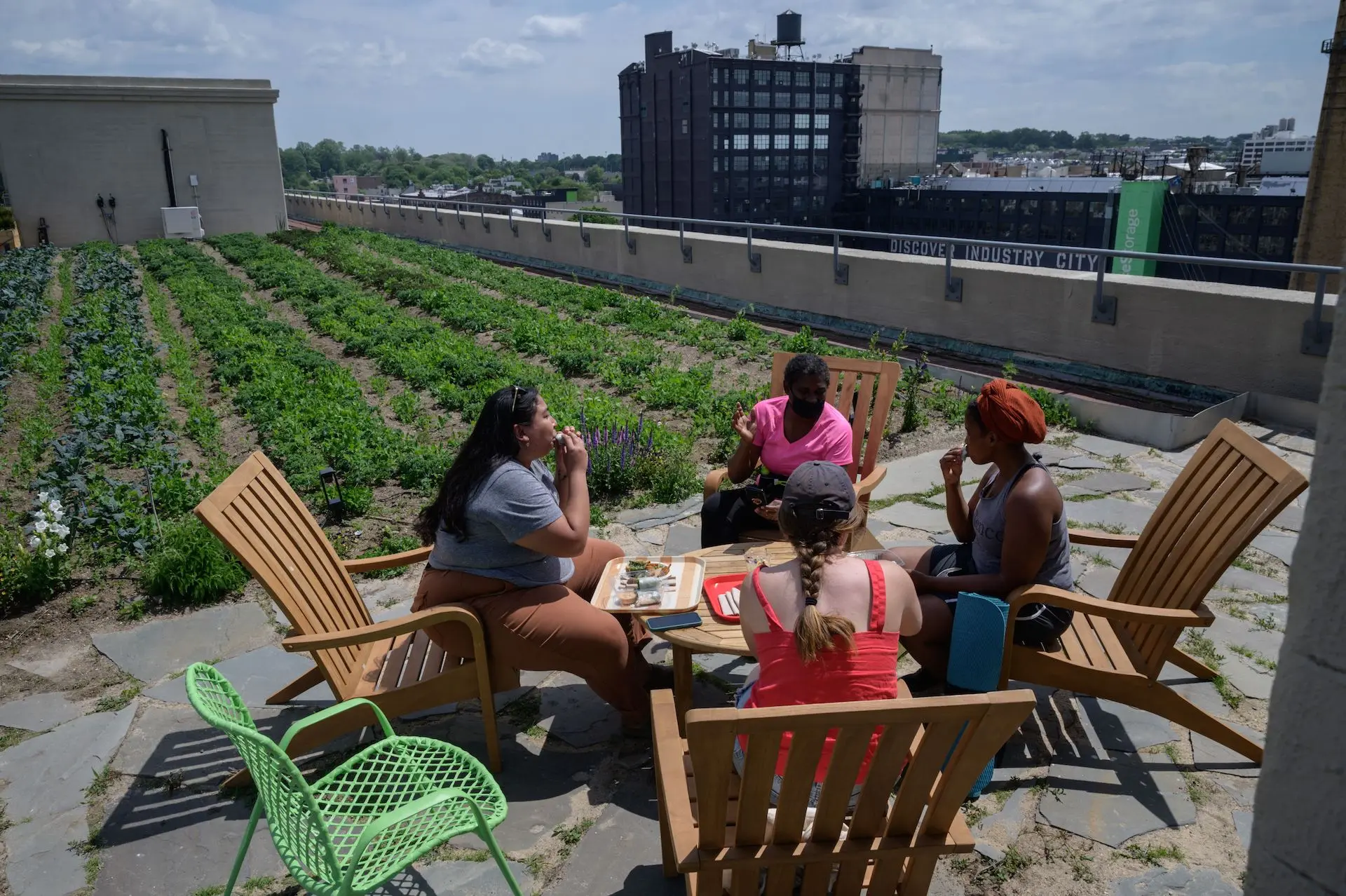
Urban farming — the idea that cities can be transformed to incorporate agriculture, like rooftop gardens or vegetable plots — might not be as green as its proponents would like. In a new study published on Monday, scientists found that, on average, urban agriculture produces food with six times the carbon footprint of that from traditional farming.
Notably, there were some exceptions where urban farming was the greener option, suggesting there may be specific niches where city farms can offer a big climate boost. In turn, the researchers caution that rather than give up on urban farming, cities can instead make their farms more climate efficient using these new results.
"Urban agriculture offers a variety of social, nutritional and place-based environmental benefits, which make it an appealing feature of future sustainable cities," said Jason Hawes, a doctoral student at the University of Michigan and the study's co-lead author, according to a press release. "This work shines light on ways to ensure that urban agriculture benefits the climate, as well as the people and places it serves."
The researchers examined data from 73 urban agriculture sites in Europe and the U.S. and compared them to conventional food production. On average, the carbon footprint was much greater for food produced by urban farming, at 420 grams of carbon dioxide per serving of fruit and vegetables, compared with 70 grams per serving for produce from traditional farms.
But the trend wasn't universal across all kinds of produce. For example, tomatoes grown outdoors in urban spaces had a lower carbon footprint than those grown in conventional greenhouses. And some crops that travel to markets via air, like asparagus, had pretty much the same carbon footprint regardless of where it was grown.
The study, published in Nature Cities, examined three types of urban agricultural site: urban farms, which are larger professionally managed sites; individual gardens, owned and run by just one person or household; and collective gardens, where communities participate in the food production. About 25% of individual gardens outperformed traditional agriculture when it came to their carbon footprint.
Urban farming has other climate benefits — greening cities can combat the heat island effect (where inner cities experience hotter temperatures) by covering rooftops and other areas with vegetation, as well as boosting biodiversity.
Still, the results may come as a blow to many urban agriculture proponents — as they imply some of the food produced may actually be adding to the climate problem.
"This dataset reveals that urban agriculture has higher carbon emissions per serving of fruit or vegetable than conventional agriculture — with a few exceptions," said Benjamin Goldstein, an assistant professor at the University of Michigan and the study's co-lead author.