Global negotiations around climate change turned a corner in 2023, but whether they can truly deliver a broad solution remains frustratingly unclear
Our Year in Review series examines the most important trends, people and companies within science and technology in 2023.
After almost three decades, the United Nations' approach to climate change seemed to arrive at an inflection point in 2023.
In the year leading up to the summit known as COP28 in Dubai, the fossil fuel industry’s outsize influence loomed large over the proceedings, achieving a central role like never before. At the same time, many countries and activists around the world pushed for a long-awaited agreement on the eventual end to the fossil fuel era, a seemingly obvious step that the previous 27 COPs had failed to take.
When the dust settled in mid-December after COP28, those calls had been answered — sort of. The world did indeed agree for the first time to transition away from coal, oil and gas, but observers were divided on whether this represented a true and groundbreaking success or if everyone had actually signed off on a toothless, useless agreement filled with loopholes.
The question of whether the process can actually push the world toward a net-zero system where greenhouse gas emissions and temperatures have stabilized remains open. Upcoming COP summits (COP stands for Conference of Parties, meaning the almost 200 countries that participate in the U.N. climate process) are slated for other fossil fuel-reliant countries (hosting rotates through various parts of the world, though they are currently on a unique run of oil and gas producer hosts), and the system’s output of incremental, often disappointing progress shows no sign of an update.
“Seeing yet another disappointing outcome, it's easy to criticize and claim the [international] system of COPs and the [U.N.] as failures,” said Hailey Campbell, the co-executive director of a youth-led climate advocacy group called Care About Climate. “I find myself conflicted over whether it delivers in a meaningful way.”
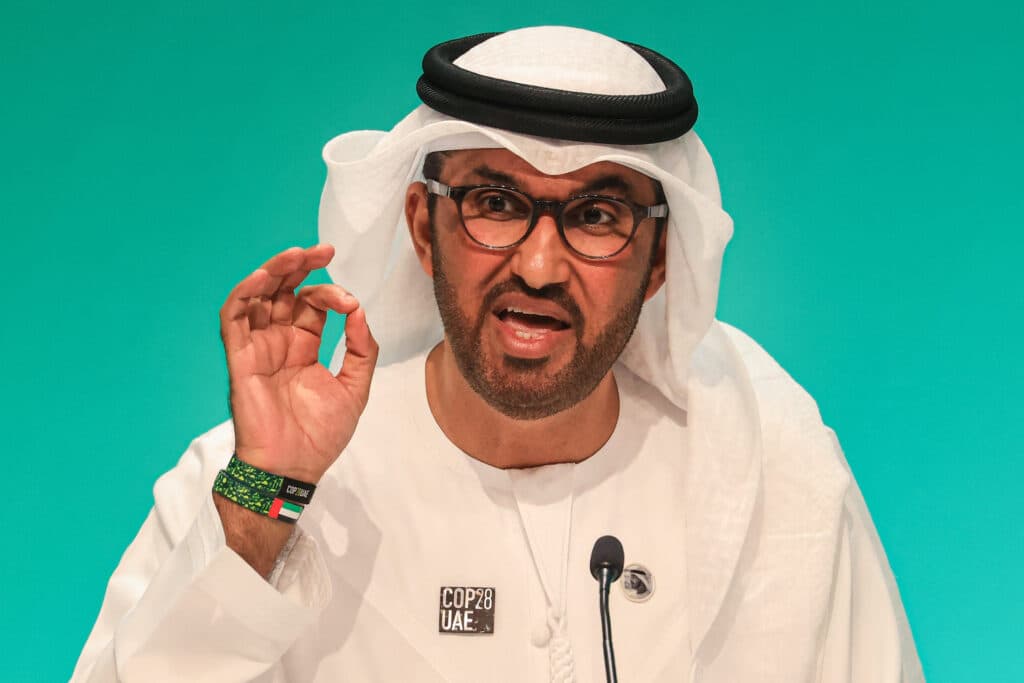
COP28 WAS hosted by the United Arab Emirates, a petrostate that is among the top oil and gas producers in the world. Already considered a problematic location as a result, the host country further inflamed climate activists early in 2023 when it appointed oil executive Sultan al Jaber as the COP28 president; Al Jaber also serves as the head of ADNOC, the UAE’s national oil and gas company, which to many created a clear conflict of interest. Al Jaber spent much of the run-up to the summit fending off questions about that conflict.
Once the COP began, the fossil fuel presence continued to make headlines. An advocacy group found that more than 2,400 representatives of the industry were attending, some in official capacities as part of national negotiating teams that hash out the summits’ official agreements. That was more than four times as many who attended COP27 the previous year.
Meanwhile, the drumbeat for countries to produce a first-ever agreement to phase out the use of fossil fuels reached a fever pitch. The previous two summits, in Glasgow and then Sharm El-Sheikh, Egypt, had managed only a call to “phase down unabated coal power,” though scientists have made clear that the world can only meet important temperature targets through a total end to fossil fuels.
After two weeks of negotiations, the eventual agreement called for “transitioning away from fossil fuel energy systems, in a just, orderly and equitable manner… so as to achieve net zero by 2050.”
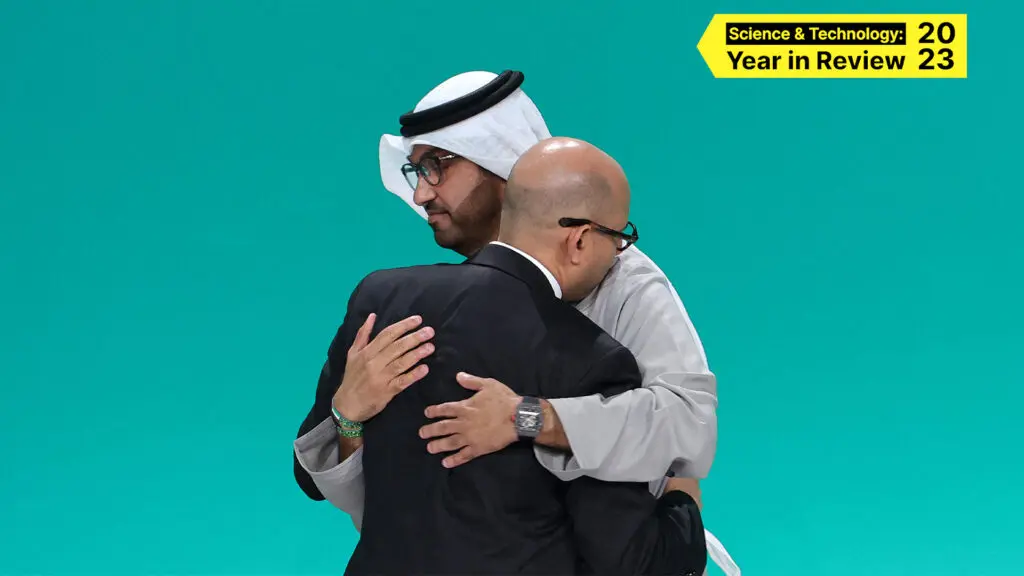
Given the failure of previous 27 COPs to call out the problem by its name, many hailed this as a win. “Given the broader geopolitical tensions, it’s reassuring that multilateral decisions can still be taken on climate,” said Linda Kalcher, the founder and executive director of European climate think tank Strategic Perspectives. “One can be cynical about this process delivering too little, too late for the climate and the 1.5 [degrees Celsius] target.”
That target, set forth in the 2015 Paris Agreement, is approaching rapidly, with around 1.2 degrees of warming already behind us. Scientists say it may arrive by the end of this decade or soon after, barring some truly dramatic emissions cuts. And the call to transition from fossil fuels doesn’t appear to be anywhere near enough to push countries toward those cuts. There is no enforcement mechanism behind it, and the text of this year’s agreement contains references to “transitional fuels” (meaning, most likely, natural gas) and unproven carbon capture technology that some say gives countries license to keep burning fossil fuels far longer than the science suggests they should.
In a sense, this middle-of-the-road compromise is exactly how the U.N.’s process has always worked.
“The UN system was not built to be transformational, it was built on consensus and incremental progress. It requires 200 countries reaching a consensus,” Campbell said. She compared it to trying to find a restaurant to accommodate a 200-person family, a process in which “everyone is always going to be a little unhappy.” Still, she acknowledged that the COP process has succeeded in raising awareness of the issue around the world and has likely helped bring the projected warming down from a devastating 4 or more degrees Celsius into the (still catastrophic) 3-degree range.
But this year’s landmark agreement still left the most vulnerable countries wanting more. In a symbolic misstep, negotiators for the Alliance of Small Island States, which represent nations like Nauru and the Maldives where rising seas are lapping at the doorstep, were literally left out of the room when the final decision was gaveled in. The group did not object to the final agreement, but the alliance and other vulnerable countries have stressed a need to accelerate the move away from fossil fuels.
Campbell said the failures at COP28 are not necessarily a structural issue with the process. “I don't think it's a failure of COPs or the critically underfunded [U.N. climate body], I think it's a failure of parties' political will to act and to put themselves in someone else's shoes,” she said. “In a party-driven process, we will not have transformational change until parties that have the power and the money” — like the world’s biggest economies and emitters, from the U.S. and China to the European Union — “to help rewrite the norms and rules that promote the status quo come to the table ready to find solutions rather than stall progress.”
MOVING FORWARD, the incremental progress the COPs have shown seems likely to continue. COP29 is slated for November in Baku, Azerbaijan, a country that gets an even higher percentage of its revenue from oil and gas than the UAE. After that it heads to Brazil, the world’s ninth-biggest oil producer — though the South American nation has made the impressive and climate-friendly move of slashing deforestation rates to a five-year low in 2023 after President Luiz Inácio Lula da Silva took office last January.
Even with the oil and gas-related roadblocks to the UN process, observers think that the momentum achieved on renewable energy and other climate change issues could have achieved a sort of runaway momentum, with the progress made at COP28 reflecting that trend.
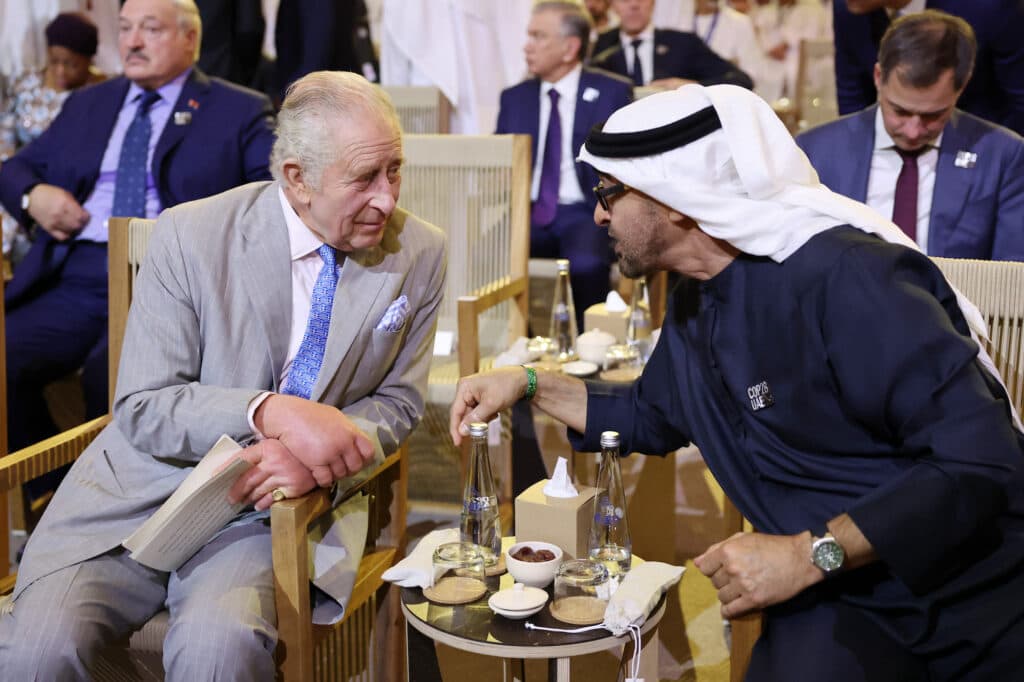
“The next years will show if the impetus from Dubai shifts the economics and energy systems on the ground,” Kalcher said. “If we succeed on financial reforms to allow all countries to benefit from the new industrial era of green technologies, we will see many countries more than triple renewables.” If governments have confidence that financial support is available and collective progress is happening, they may increase ambition when the next round of national pledges, known as Nationally Determined Contributions, are due in 12 to 15 months. “They will show if we were right on the beginning of the end of fossils fuels.”
Campbell agreed, adding that the focus on the U.N. and the COPs can be somewhat misguided. “I think the message that gets lost in the whole process is that countries don't need an international agreement to do the right thing — to phase-out fossil fuels, to fund global mitigation and adaptation efforts, or to be a leader in tackling climate change,” she said. But that doesn’t mean international agreements aren’t important, she added, in particular for their ability to signal the need for action.
“At this critical inflection point, it feels like it's time to reflect — how can the U.N. better meet this moment?” Campbell asked. “How can countries with power use it to defend and support the most vulnerable? How can we be team players rather than opponents?”