Wielding force is nothing compared with the power of controlling, disciplining and managing it.
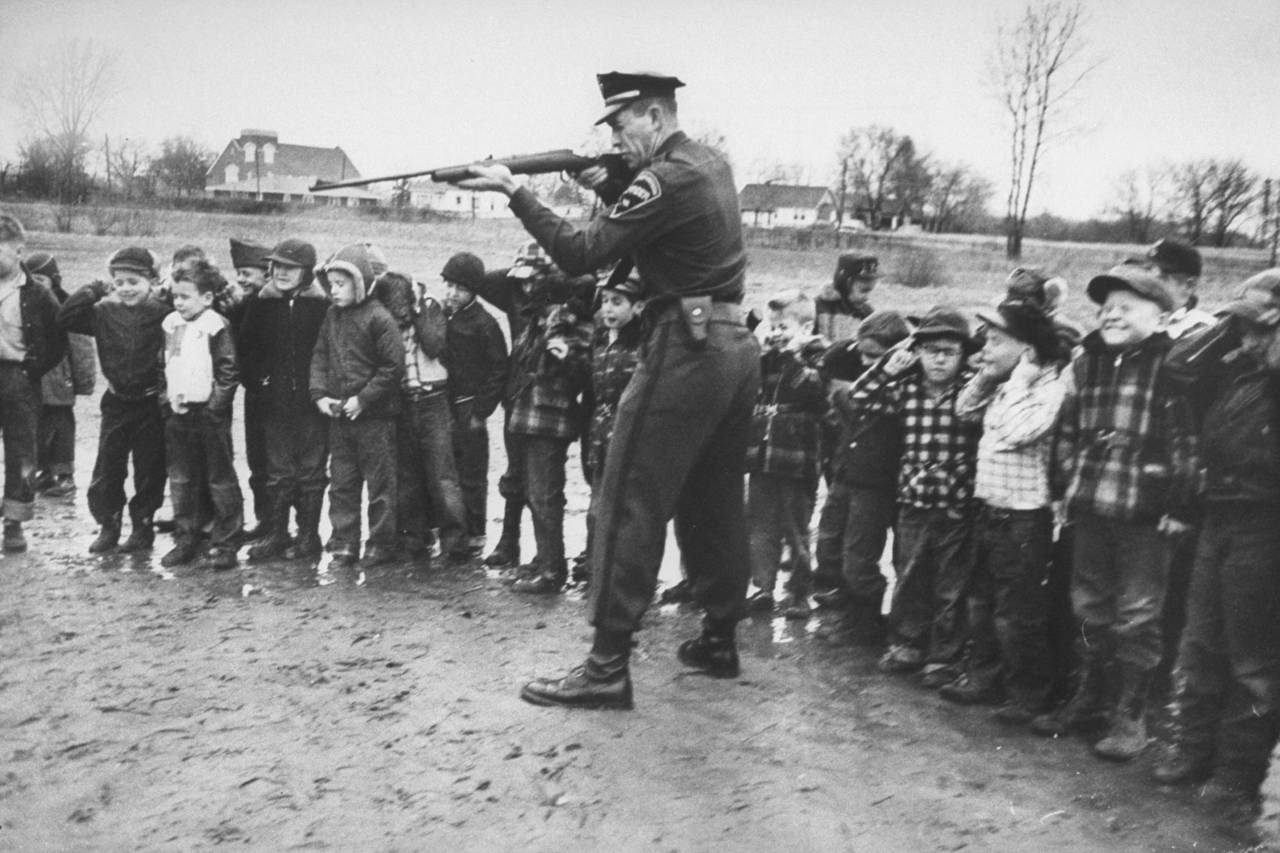
Recently I found a fascinating remnant of America’s long relationship with guns: a 1956 Life magazine about a conservation officer teaching firearm safety at an Indiana elementary school. The officer shows the kids his service revolver, a shotgun and a high-powered rifle. He lets 7-year-olds handle the guns, draw their bolt actions, feel their heft compared with the plastic toys they have at home. The kids’ awe and excitement sets their faces alight.
It’s familiar scene for me, since I used to teach riflery at a YMCA summer camp in the 1970s. An interesting thing about these photos, though: There isn’t a girl in sight. Apparently only boys took part.
Today, gender segregation is all but dead. In many ways that’s good, but it can complicate the job of teaching lessons that are unique to boys—like don’t use your size, strength and outside voice to get your way.
One result has been a polarization of manhood. The gentle, sharing guys congregate to one side, while the never-ask-directions fellows stomp off, swearing, to the other side. The center is starting to look as empty as Dodge City on the day of a gunfight.
We need our sons to repopulate that manhood middle. Teaching them firearms skills might help do that. It isn’t only about danger and power, which boys instinctively love, but also control, which they must be taught. That doesn’t mean they all react the same way, or that no girls overlap into this category. But like it or not, guns are catnip for most boys.
We laugh about them shooting each other with sticks, until years later a tiny number of them, foundering painfully in an onrushing manhood we haven’t prepared them for, start shooting at gang rivals or their schoolmates. Last week another young man shot two students at a high school in Maryland.
Boys who murder are statistically rare, but male aggression is a broader problem. Society used to understand the need to channel and discipline it. That meant athletics, serious academics, military service, even monastic life. In almost every historical culture, boys of a certain age were separated out for stern and strenuous lessons in controlling their violent impulses.
The YMCA riflery lessons I taught might have been a tiny remnant of that tradition. We used single-shot, bolt-action .22 rifles. The first day was all about safety, meaning the first round wasn’t usually fired until day two. The class was much less about marksmanship than establishing firm habits of safe gun handling—bolt open, safety on, finger off the trigger, always pointed downrange.
Even so, the kids, age 8 to 12, had a hard time restraining their excitement. I found the best way to keep them in order was to withhold shooting privileges and to offer a big prize at the end of the class. If they behaved themselves, I promised to shoot my .357 magnum revolver for them.
This was a loud, powerful gun. You could physically feel the discharge from a few feet away. Hands over their ears, eyes shining, the kids loved it—especially when I blew up some water-filled milk jugs. This is an old trick; water doesn’t compress, so it blasts the container apart very satisfactorily when struck by a decent sized bullet. The kids oohed and laughed with delight.
When my own kids attended a Y camp in the 2000s, they shot soda cans with air-rifles. Whisp. Spat. It isn’t quite the same. Sure, they learned precision, fine-muscle and breath control, even safety, but missing was the invaluable lesson of grasping and managing raw power.
In no way is riflery class a complete solution to America’s problem of boys turning deadly. The shooter in Parkland, Fla., was apparently in a National Rifle Association shooting club at one point, though it was an air-rifle class.
But the point really isn’t about the guns. We’ve tried to suppress the male hunger for power as pathological, instead of recognizing its ubiquity and teaching boys how to manage it. So it recurs in more-toxic forms. Some portion of the #MeToo movement was sparked by abusive men who were never taught how to manage their sexual urges. That America’s gun culture has become fixated on military-style weapons may be another symptom.
The final Life magazine photos from that 1956 gun-safety class show the officer taking the kids and the rifle outside to shoot a water-filled metal can. It detonates spectacularly; one picture catches it in mid-explosion as the gape-mouthed kids watch in the background. Another picture shows them handling the blasted shards with astonishment. Boys love this kind of destruction, which may seem off-putting. Still, it can imprint on them the terrible danger of these weapons.
Kids, especially boys, shouldn’t be kept strictly away from firearms. Instead guns can be used to teach them that merely wielding force is nothing compared with the power of controlling, disciplining and managing it. That’s a valuable lesson for boys as they turn into men—even if they never touch another gun.
Mr. Lee is an Indianapolis writer.