A progressive cultural institution issues a groveling mea culpa for a poorly worded job posting.
Indianapolis
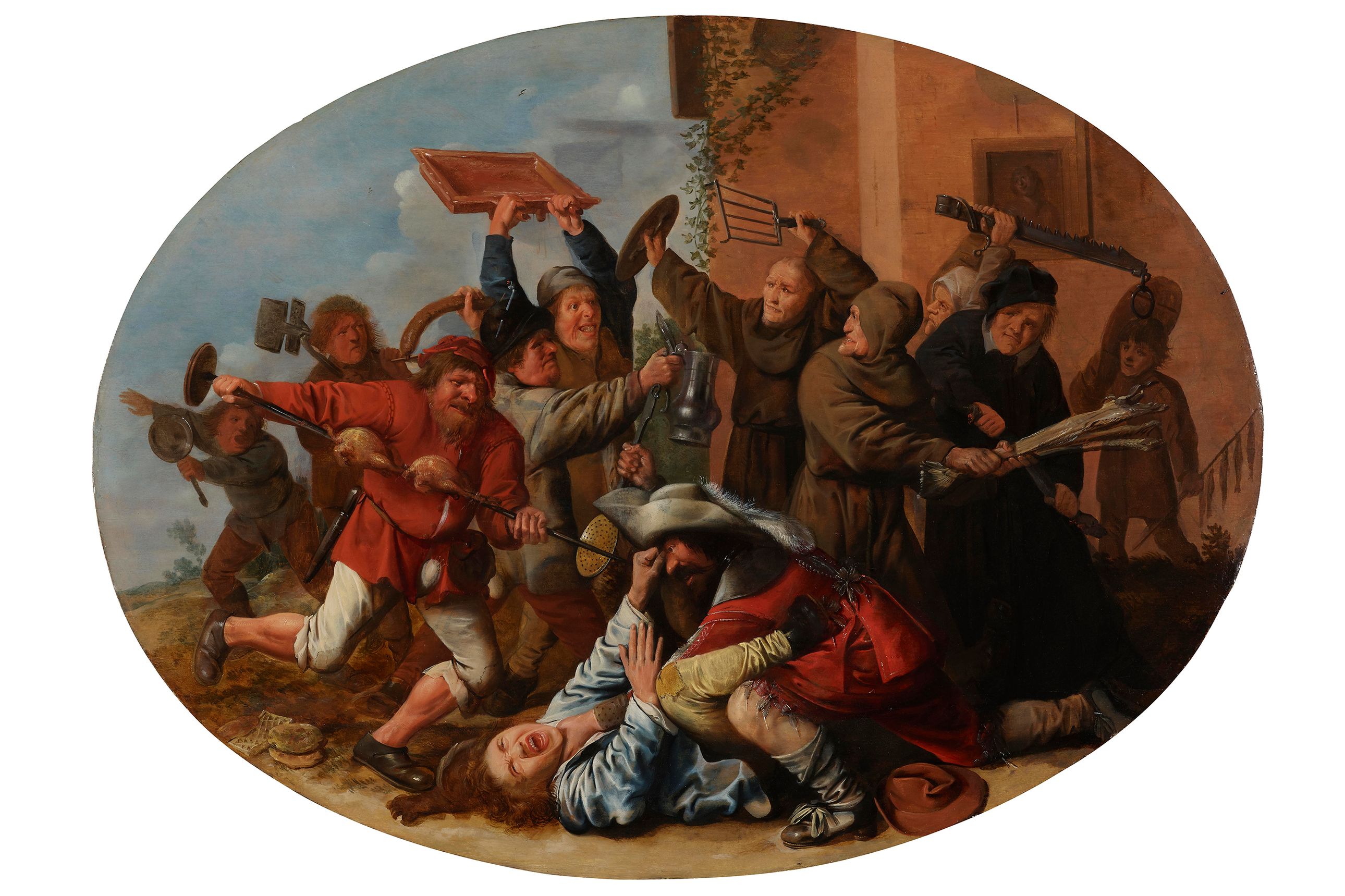
“Battle Between Carnival and Lent” is a 17th-century oil painting by Jan Miense Molenaer in the collection of the Indianapolis Museum of Art. “Carnival is personified by Dutch peasants who wield a large sausage, skewered birds, a beer tankard, and assorted cooking implements as weapons,” the museum says of the intentionally ridiculous scene. “Lent is embodied by a mob of clerics, including a monk who swings a bundle of dried codfish.”
A few weeks into this Lenten season no one at the museum or Newfields, its umbrella organization, has been hit with a codfish. Still, they might prefer a codfish to the bile hurled at them in response to a recent online job description referencing the museum’s “traditional, core, white art audience.” The outrage came even though the same paragraph promised “increased investment in works of art by women, people of color, indigenous, LGBTQ+ and other under-represented artists.”
No matter. Angry staffers wrote an open . They said the posting “centered whiteness,” which nullified any supposed work toward better diversity in workforce, acquisitions and exhibits: “We will not stand for performative measures, social media apologies, disingenuous recants of statements, or blame-shifting to third party vendors.”
Newfields capitulated in a garment-rending : “We are sorry. We have made mistakes. We have let you down.” The organization vowed to acquire more works by artists of color, welcome activists’ supervision of its leadership, submit to more racial sensitivity training, and offer free admission to residents of nearby, largely African-American neighborhoods. Then the organization’s president fell on his sword.
It was all very perplexing to longtime patrons of the beautiful and expertly curated museum and its several associated facilities on parklike grounds at 38th Street and Michigan Road, the old Lilly estate. It isn’t as though there have been no efforts at multiculturalism. An exhibit called “DRIP: Indy’s #BlackLivesMatter Street Mural,” was planned for April. It’s up in the air now. Two African-American guest curators announced they would withdraw in protest of the job-search language.
Recent exhibitions included “Samuel Levi Jones: Left of Center,” spotlighting an African-American artist who “the duplicitous and oppressive nature of American power structures, particularly those that substantiate our education system, the criminal justice system and healthcare, as well as the American historical narrative.” There was also “Sensual/Sexual/Social,” a collection of images by the boundary-pushing midcentury photographer George Platt Lynes, and “Hard Truths: The Art of Thornton Dial, ” featuring an African-American outsider artist from the American South.
Nor is the museum a dusty storehouse of third-tier European old masters and Chinese teapots. Modern and postmodern works are well represented, and below the facility’s hilltop site there’s a lovely 100-acre wooded area along the White River devoted to nature and contemporary installations. Hoosiers may giggle at the quirky features that have appeared—a giant plastic skeleton lying supine on the grass, a floating ship meant to dramatize climate change, a basketball court crowded with tubular steel arches—but they enjoy the trails.
If the exhibits weren’t enough, the museum’s 48-page 2018-19 was titled “Inclusive Experiences,” with chapter headings like “Newfield’s Partners for Impact,” “Exploring the Unconventional,” and “Enhancing Inclusivity Through Master Plan Projects.” It invited supporters to “discover how Newfields brought inclusivity to every season.”
The museum is clearly on board with the diversity mission, so it’s odd to see its leadership confessing so eagerly to error. But there they are, prostrate with regret over shortcomings beyond the mere use of the word “white.” In a posted on the Newfields website, the museum board wrote: “We are ashamed of Newfields’ leadership and of ourselves. We have ignored, excluded, and disappointed members of our community and staff. We pledge to do better.”
The contrition suits the Lenten season, as there’s a quasireligious character to the whole episode—sin committed, discovered, condemned and confessed, a willing self-abasement before priestly authority, the longing for absolution. But like medieval Christians caught in a dysfunctional power dynamic with a dominating church hierarchy, would-be woke institutions like the Indianapolis Museum of Art find themselves repeatedly being slapped with a dried codfish. They are trapped in codependency, addicted to the approval of people who are addicted to the power of withholding it.
The result has been a continuing upward spiral of demands for change. Efforts that were once acceptable—mission statements, inclusive initiatives, affirmative action—are now considered merely “performative,” posturing with no real change. Now required are structural alterations giving the most active of the activists outright policy oversight.
The museum is frantically signaling its submission to the new regime, but there is no reason to believe its future conciliatory offerings will be any more permanently acceptable than those made previously. And this isn’t unique to Indianapolis. Critical Race Theory spreads like kudzu on a Georgia hillside: The ’s 1619 Project brings racist complicity to school curricula; large corporations train their employees to be hyper-conscious of racial differences rather than color-blind; and this week Georgetown Law School fired an adjunct professor for expressing “angst” over how many of her black students get low grades. Another professor was put on administrative leave for nodding.
Racism has been redefined from an individual choice of evil to an original sin that stains the cultural soul. It can’t be expiated by good works. Rather, grace is bestowed by a racial-equity clerisy that undercuts its own power by doing so. In medieval times such a power imbalance resulted in a long and painful Reformation. The time has come to nail a new set of theses to this secular orthodoxy’s door.
Mr. Lee is an Indiana writer.