Online retailers are doing to the mall what the mall once did to my hometown of Princeton, Indiana.
Indianapolis
This time of year, the late-night sky southeast of the city sparkles with what looks like a long line of evening stars: transport jets carrying thousands of boxes of online purchases to the hub at Indianapolis International Airport. They rumble overhead at 90-second intervals, wingtip navigation lights blinking in festive red and green. The planes are essentially airborne department stores flying in to replace the brick-and-mortar retail shops gradually giving way to internet shopping. By 2022, has estimated, 1 in 4 U.S. shopping malls will close.
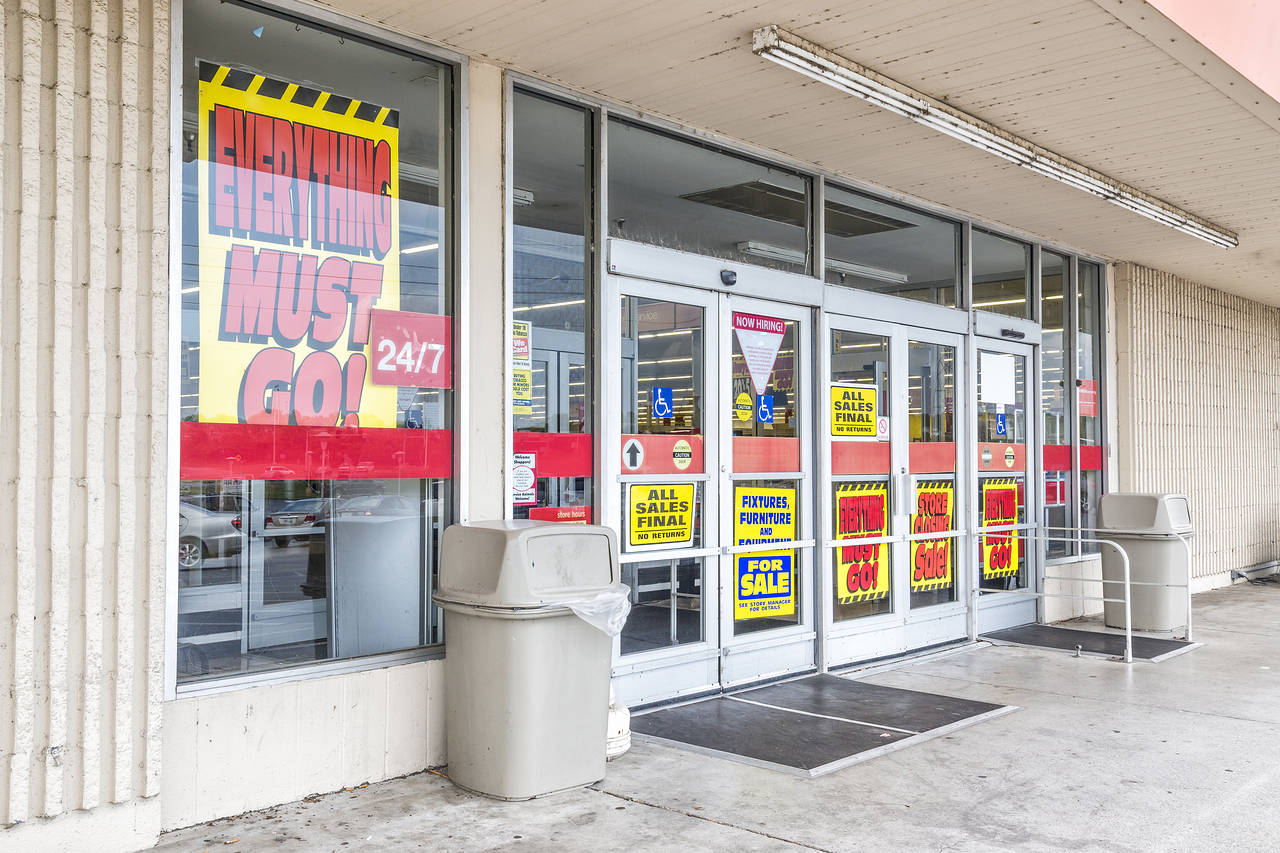
On the Indianapolis southside, where I live, the Greenwood Park Mall’s Sears is greeting the Christmas season with cheery “Store Closing” banners. It’s one of about 500 stores the legacy retailer has closed since 2008.
There’s good news: 2018 holiday hiring should reach 704,000 new employees, according to Chicago-based job-placement firm Challenger, Gray, & Christmas, Inc. The record, from 2014, was 696,000. The bad news for traditional retail is that Amazon will get about 100,000 of those workers and FedEx 55,000. Seasonal hires used to hand goods to customers with a smile; these days, many work in warehouses shipping goods far away.
Growing up in Princeton, Ind., the seat of Gibson County in the southwest corner of Indiana in the 1960s, I saw local commerce undergo a different transformation. I was reminded of it last Christmas, when somebody on posted a grainy film snippet of Princeton’s courthouse square on Christmas Eve, 1953. Men in flapping long coats clutched unironic fedoras against a biting wind. Women in headscarves protecting holiday hairdos shooed their excited children along. Farmers and workmen hurried through the frame, giving jerky, self-conscious waves before ducking into Beckner’s Jewelers, Shelby Stevens Fine Clothes, The Model, G.C. Murphy, Western Auto, —all gone now.
Villages like Princeton—population about 8,000 when I knew it—were worlds almost unto themselves right up until midcentury. In the 1950s, when that Christmas Eve was caught on film, U.S. 41 went four-lane and soon drained most local trade 30 miles south to Evansville, which had a shopping mall and a riverfront museum. It also had a , whose urbane, skinny french fries made our plump hometown fries look like fat peasant fingers. Stores closed, one by one, until courthouse square was a desert of T-shirt imprinting shops, here-and-gone cafes, Bible bookstores, antique malls, and—the final stop—consignment stores.
But now it’s the city retailers’ turn to watch their livelihoods going away, as the internet has paved a new kind of highway, with many more than four lanes, sucking away their share of possibly the most covetous consumer culture in history. Thirty minutes on Amazon.com accomplishes what used to take a logistically complicated day, including two hours wedged into a station wagon fighting heavy traffic and sometimes daunting weather.
Geographically remote communities are now on a level playing field when it comes to shopping. It’s one of the paradoxes of the internet age—the social isolation of outlying rural communities from their nearby metropolitan centers, even as they connect digitally with the entire world.
Meanwhile, the decline of the mall is creating new opportunities as entrepreneurs refashion abandoned retail space into parks, apartments, walk-in health clinics and even bowling alleys. The Greenwood Park Mall’s owners demolished the wing that had housed L.S. Ayers, a now defunct department store, replacing it with a line of Main Street-style shops and several midmarket restaurants. They put in a fountain, and there’s live music in the summer. At Christmas, shoppers bustle out of the winter wind into the haven of warm, candle-scented shops. Sometimes it looks and feels a little like that grainy 1953 film.
Now that small-town shoppers are finding their way home again—online and in faux small-town scenes—it would be poetic if the trend rebounded back to America’s actual small towns. People won’t travel an hour to buy a sweater when they can do it on their laptop at home, but they’ll drive 20 minutes to eat at a nice bistro in a pleasantly rustic, county-seat storefront—perhaps with a fountain and some live music.
Small towns like Princeton need to recognize the opportunity and gear up for the effort, or watch it slip away. Last December there was precious little information on the town’s website about holiday events. Christmas was misspelled.
Sigh.
There’s work to be done. Rome wasn’t rebuilt in a day.
Mr. Lee is an Indianapolis writer.