At the memory care unit where my mother lives, there are quite a few residents who are nonverbal. Mostly they sit propped in front of a TV in a comfortable lounger, or in a chair in the social room. Occasionally I will see someone sitting with them, speaking softly or just sitting in silence alongside them, sometimes holding their hand. Whether they have visitors by their side or they are alone, they look much the same: distant, unengaged, and, to my eye, unreachable.
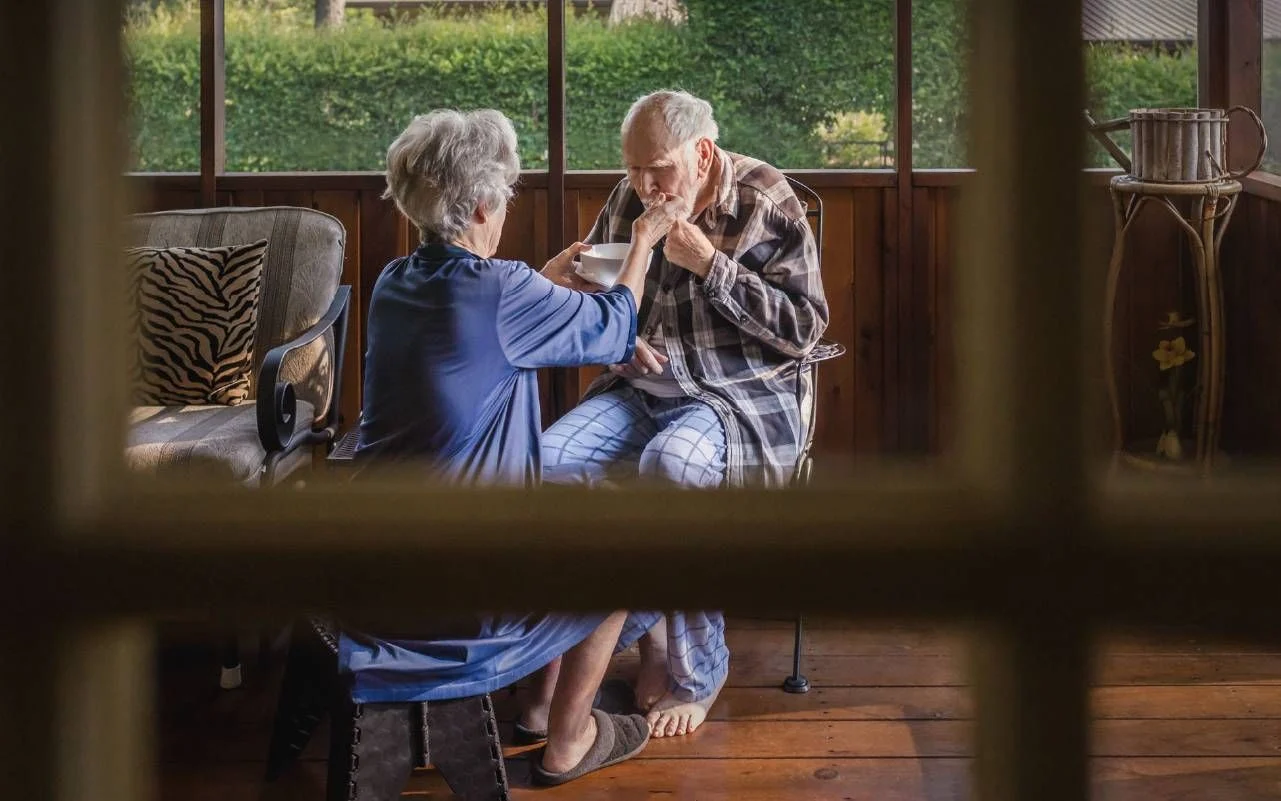
But are they? I often wonder what the internal landscape is of the person with advanced dementia who cannot speak (the technical term for this is expressive aphasia). What are their thoughts like? Are they capable of communicating in other ways? Are they, in fact, unreachable?
What are their thoughts like? Are they capable of communicating in other ways? Are they, in fact, unreachable?
I am not alone in wondering about the subjective experience of those living with dementia. In fact, curiosity about, and attempts to understand how those with dementia think and feel, is key to what is referred to in the literature as "person-centered care."
The idea behind it is that we — family members, friends, partners and caregivers — can work together to maximize their quality of life. This is important, because according to the World Health Organization (WHO), there are more than 55 million people worldwide with dementia, of which Alzheimer's Disease is thought to contribute to 60% to 70% of the cases. And while there is ongoing research into Alzheimer's disease, as of this writing, there is no cure.
Recommended
What is Aphasia? | Health
Before we learned about Bruce Willis’ diagnosis, aphasia was not well understoodTypes of Aphasia
Problems with language — speaking and understanding it — can occur with many types of dementia, as dementia can damage those parts of the brain responsible for it. How much difficulty a person will have with language, and when those difficulties will develop, varies from person to person and depends on the type of dementia they have.
Difficulties with speech can also vary from day to day and hour to hour as fatigue, pain, illness and the time of day can all make speech and language problems worse for some individuals. Another factor can be the environment: a noisy room, or competing sounds such as a television or radio, can be distracting, and can interfere with an individual's ability to think and speak clearly.
Some individuals with dementia suffer both receptive and expressive aphasia. As you might imagine, this makes verbal communication challenging, if not impossible.
With receptive aphasia, the person has difficulty understanding or making meaning out of the words and sentences they hear. Because they have trouble understanding the meaning of spoken language, they may have difficulty following directions or answering even simple questions.
Expressive aphasia is the inability to form words or sentences. With expressive aphasia (also called Broca's aphasia, after the area of the brain responsible for language processing), there are also problems communicating; an individual's speech may be halting or tentative, and they may substitute the wrong words — or nonsensical words — for the right words. Some bilingual individuals revert to speaking in the language of their childhood, even if they haven't spoken it for a very long time.
And some individuals with dementia suffer both receptive and expressive aphasia. As you might imagine, this makes verbal communication challenging, if not impossible.
Most Popular
- Documentary Faces the Reality of Lewy Body Dementia | Health
- 6 Must-Have Nutrients For Brain Health | Food and Nutrition
- 3 Foods That Help Regulate Blood Sugar | Health
- How To Support Your Prostate Health | Health
Advertisement
I asked Gary Small, M.D., chair of psychiatry at Hackensack University Medical Center, whether individuals with expressive aphasia — who appear disengaged or unreachable — are, in fact, either or both. I also wondered whether total aphasia affects an individual's level of consciousness. In other words, if they cannot make meaning of words, what are they, and are they not, conscious of? Does the inability to form language alter the content of their thoughts?
"In general," Small says, "one would expect language ability to impact thought, since language provides a framework for reasoning."
But he adds that thought can exist independent of language in the form of emotional or visual thinking.
Research suggests that humans "rely on at least two modes of thought: verbal (inner speech) and visual (imagery)." When instructed to "think visually" (in pictures or symbols) or to "think verbally" (in words and sentences), people generated visual images regardless. "One possible interpretation of these results is that visual thinking is somehow primary, given the relatively late emergence of verbal abilities during human development and in the evolution of our species."
If [people] cannot make meaning of words, what are they, and are they not, conscious of? Does the inability to form language alter the content of their thoughts?
In other words, we all understand, and express ourselves, in a variety of nonverbal ways.
"While we can't know for sure what a nonverbal person with dementia might be thinking," Small says, "we can interpret non-verbal clues depending on how well we know the individual."
The daughter of one patient Small followed from early to end stage Alzheimer's knew when her mother was anxious or sad, based on her facial expressions. Mother and daughter continued to communicate through "hand squeezes, shoulder shrugs and smiles."
As might be expected, the patient's attention span grew shortened toward the late stages of her illness; as language processing became more and more difficult, so did non-verbal communication.
AI's Future Role
Language difficulties including receptive and expressive aphasia aren't limited to people with Alzheimer's dementia. Strokes, accidents, Parkinson's disease and Functional Cognitive Disorder also can result in an inability to speak or understand the spoken word. The good news is there may be help on the horizon: the field of neurotechnology — the blending of neuroscience with artificial intelligence-powered technology — may change the way we think about neurological care.
"Innovations now on the horizon could translate thoughts to communicative intent, promising to restore the voices of those silenced by illness,"
"Innovations now on the horizon could translate thoughts to communicative intent, promising to restore the voices of those silenced by illness," says Neal Shah, CEO of CareYaya Health Technology. His program is on the forefront of research and implementation of AI-powered technologies that, using a combination of hardware and software innovations, "are learning to translate thoughts into communication intent."
"By training AI models on patterns of brain activity associated with certain words and topics, this technology could allow caregivers to understand the needs and desires of their loved ones, even in the later stages of dementia."
Shah expects one such technology, called Muse, to be widely available in the next three to six months to assisted living and memory care units.
Ways to Stay Connected
Until such technology becomes available, there are many ways to engage your loved one. Small recommends connecting in familiar ways.
"Since long-term memories are preserved longer and short-term memories disrupted sooner during the progression of dementia, talking about past, shared experiences can be comforting." One patient, he says, would tell his father old jokes in Yiddish; the father would laugh long after he'd lost the ability to communicate verbally. "Listening to familiar music, playing games from the past, or even watching an old movie or TV show that they enjoyed from the past are other strategies to feel connected to a non-verbal loved one with dementia."
Additional tips from the Alzheimer's Society include:
- Communicate your interest through physical contact, where appropriate: Hand-holding or an arm around the shoulders can be very reassuring.
- Sit or stand at eye level.
- Take care not to make sudden movements, and moderate the tone of your voice; loud or tense facial expressions can be upsetting.
- Try to read the person’s nonverbal communications and keep them engaged if they appear to get distracted.
- Visual prompts such as cue cards with pictures of food can help the person choose a meal and stimulate appetite.
- Sometimes those with comprehensive aphasia enjoy drawing, singing or dancing; always encourage what the individual is still able to do and has shown an interest in.
Caring for someone with dementia or other diseases of the brain is taxing, and can be sad. As research suggests, "There is uncertainty as to what the person … is now able to experience, and feelings of grief for the loss of the person they knew, described as being akin to a premature bereavement." Often all we can do is have patience, develop resilience and find ways to take care of ourselves in the process.
This last is very important, as caring for someone with dementia can feel all-consuming. As you work to keep the lines of communication open with your loved one, keep them open between yourself and those who can be of support to you. Local or online caregiver support groups can help, as can staying informed. Don't be afraid to reach out. Your life, and the lives of those you care for, depend on it.
Share
Dana Shavin’s essays and articles have appeared in Garden and Gun, Oxford American, The Sun, Fourth Genre, Today.com, Appalachian Review, Longridge Review, Psychology Today, Parade,Bark, The Writer, AARP’s The Ethel, and Travel+Leisure.com. She is an award-winning humor columnist for the Chattanooga Times Free Press, and the author of a memoir, The Body Tourist (Little Feather Books, 2014)and Finding the World: Thoughts on Life, Love, Home and Dogs, a collection of her most popular columns spanning twenty years. You can find more at Danashavin.com, and follow her on Facebook at Dana Shavin Writes.
Editors Recommendations
Strategies for Communication When Facing Alzheimer's Or Other Dementias

Your Guide to the 4 Most Common Types of Dementia

9 Ways to Cope With Dementia-Related Personality Changes
We Know We Have an Impact
Did you know that 98% of surveyed Next Avenue readers take action based on something they read on Next Avenue? Whether you've shared an article, had a conversation with a friend or tried a new exercise or activity — we are proud our content is resonating. Give now and make a difference, for us and everyone who relies on us.